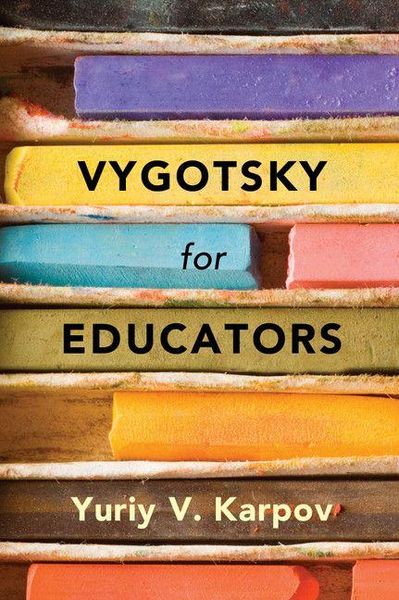
Vygotsky for Educators
-
- Hardcover
- Taschenbuch ausgewählt
- eBook
-
Sprache:Englisch
Fr. 55.90
inkl. gesetzl. MwSt.,
Beschreibung
Produktdetails
Einband
Taschenbuch
Erscheinungsdatum
17.08.2015
Verlag
Cambridge AcademicSeitenzahl
260
Maße (L/B/H)
22.9/15.2/1.5 cm
Gewicht
360 g
Sprache
Englisch
ISBN
978-1-107-63749-8
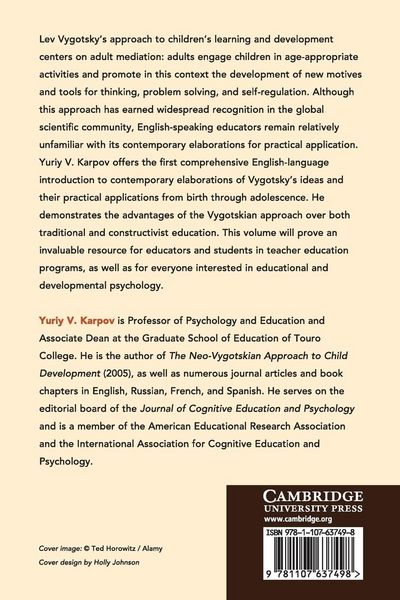
Lev Vygotsky's approach to children's learning and development centers on adult mediation: adults engage children in age-appropriate activities and promote in this context the development of new motives and tools for thinking, problem solving, and self-regulation. Although this approach has earned widespread recognition in the global scientific community, English-speaking educators remain relatively unfamiliar with its contemporary elaborations for practical application. Yuriy V. Karpov offers the first comprehensive English introduction to contemporary elaborations of Vygotsky's ideas and their practical applications from birth through adolescence. He demonstrates the advantages of the Vygotskian approach over both traditional and constructivist education. This volume will prove an invaluable resource for educators and students in teacher education programs, as well as for everyone interested in educational and developmental psychology.
Noch keine Bewertungen vorhanden
Verfassen Sie die erste Bewertung zu diesem Artikel
Helfen Sie anderen Kundinnen und Kunden durch Ihre Meinung.