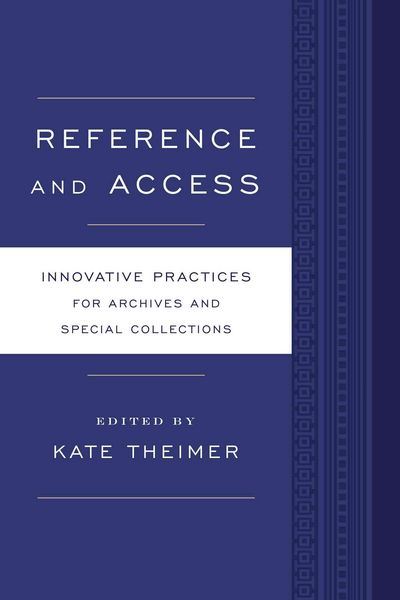
Reference and Access Innovative Practices for Archives and Special Collections
-
- Taschenbuch ausgewählt
- eBook
-
Sprache:Englisch
Fr. 123.00
inkl. gesetzl. MwSt.,
Beschreibung
Produktdetails
Einband
Taschenbuch
Erscheinungsdatum
22.05.2014
Herausgeber
Theimer KateVerlag
Rowman & LittlefieldSeitenzahl
204
Maße (L/B/H)
22.9/15.2/1.1 cm
Gewicht
313 g
Sprache
Englisch
ISBN
978-0-8108-9091-6
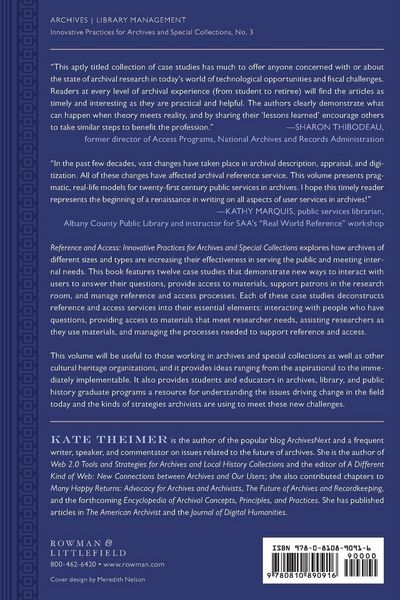
Reference and Access: Innovative Practices for Archives and Special Collections explores how archives of different sizes and types are increasing their effectiveness in serving the public and meeting internal needs. The book features twelve case studies that demonstrate new ways to interact with users to answer their questions, provide access to materials, support patrons in the research room, and manage reference and access processes. This volume will be useful to those working in archives and special collections as well as other cultural heritage organizations, and provides ideas ranging from the aspirational to the immediately implementable. It also provides students and educators in archives, library, and public history graduate programs a resource for understanding the issues driving change in the field today and the kinds of strategies archivists are using to meet these new challenges.
Kundinnen und Kunden meinen
Verfassen Sie die erste Bewertung zu diesem Artikel
Helfen Sie anderen Kund*innen durch Ihre Meinung