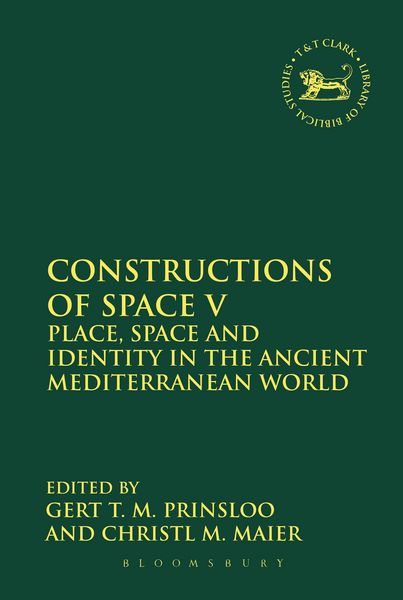
Constructions of Space V Place, Space and Identity in the Ancient Mediterranean World
-
- Hardcover
- Taschenbuch ausgewählt
- eBook
-
Sprache:Englisch
Fr. 76.90
inkl. gesetzl. MwSt.,
Beschreibung
Produktdetails
Einband
Taschenbuch
Erscheinungsdatum
28.08.2014
Herausgeber
Gert T. M. Prinsloo + weitereVerlag
T. & T. Clark Ltd.Seitenzahl
288
Maße (L/B/H)
23.4/15.6/1.6 cm
Gewicht
442 g
Sprache
Englisch
ISBN
978-0-567-65687-2
This fascinating collection investigates the inherent spatiality of human existence. The contributors discuss ancient Mediterranean texts and societies from a decidedly spatial perspective, debating over such issues as narratological space, critical spatiality, sociological theories on space, space and identity, space and body. The volume consists of three parts and commences with three studies focusing on theoretical approaches towards spatial analysis and application of the theory to specific Old and New Testament texts. The essays in the second part examine the sacred space and the formation of identity, with particular attention to Jerusalem and the temple seen as sacred space and the lived experience of authors describing this space in various ways. The third part discusses the spatial theory and its application to a variety of texts ranging from the Epic of Gilgamesh to the New Testament.
Noch keine Bewertungen vorhanden
Verfassen Sie die erste Bewertung zu diesem Artikel
Helfen Sie anderen Kundinnen und Kunden durch Ihre Meinung.