• Produktbild: Photoimmunology
  • Produktbild: Photoimmunology

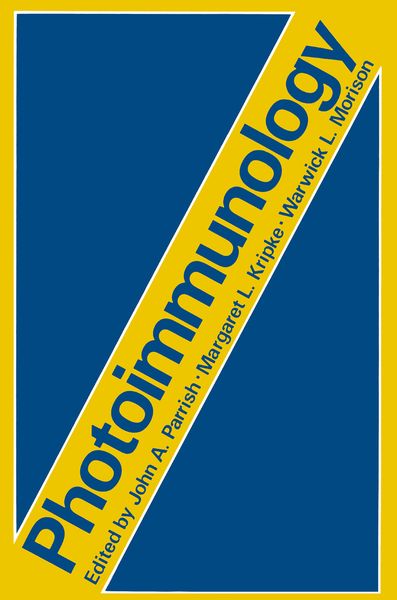
Photoimmunology

Fr. 137.00

inkl. gesetzl. MwSt., Versandkostenfrei


Beschreibung

Produktdetails

Einband

Taschenbuch

Erscheinungsdatum

13.10.2011

Herausgeber

John Parrish

Verlag

Springer Us

Seitenzahl

304

Maße (L/B/H)

22.9/15.2/1.8 cm

Gewicht

476 g

Auflage

1983

Sprache

Englisch

ISBN

978-1-4613-3672-3

Beschreibung

Produktdetails

Einband

Taschenbuch

Erscheinungsdatum

13.10.2011

Herausgeber

John Parrish

Verlag

Springer Us

Seitenzahl

304

Maße (L/B/H)

22.9/15.2/1.8 cm

Gewicht

476 g

Auflage

1983

Sprache

Englisch

ISBN

978-1-4613-3672-3

Herstelleradresse

Springer-Verlag GmbH
Tiergartenstr. 17
69121 Heidelberg
DE

Email: ProductSafety@springernature.com

Kundinnen und Kunden meinen

0 Bewertungen

Informationen zu Bewertungen

Zur Abgabe einer Bewertung ist eine Anmeldung im Konto notwendig. Die Authentizität der Bewertungen wird von uns nicht überprüft. Wir behalten uns vor, Bewertungstexte, die unseren Richtlinien widersprechen, entsprechend zu kürzen oder zu löschen.

Die Bewertungen sind nach Format, Anzahl Sterne und Datum sortiert.

Verfassen Sie die erste Bewertung zu diesem Artikel

Helfen Sie anderen Kund*innen durch Ihre Meinung

Kundinnen und Kunden meinen

0 Bewertungen filtern

  • Produktbild: Photoimmunology
  • Produktbild: Photoimmunology
  • I. Principles of Photoimmunology.- 1. Basic Concepts in Photobiology.- 1.1 Introduction.- 1.2 Absorption of Electromagnetic Radiation and Characterization of Excited-State Molecules.- 1.2.1 Electronic States of Molecules.- 1.2.2 Electromagnetic Radiation.- 1.2.3 Absorption of Electromagnetic Radiation.- 1.3 Reactions of Excited-State Molecules to Form Photoproducts.- 1.3.1 Alternative Processes Available to Excited-State Molecules.- 1.3.2 Types of Photochemical Reactions.- 1.4 The Relationship between Photoproducts and Biochemical and Cellular Changes.- 1.5 References.- 2. Photosensitization in Mammalian Cells.- 2.1 Introduction.- 2.2 Fundamental Aspects of Photosensitized Reactions at the Biomolecular Level.- 2.2.1 Introduction.- 2.2.2 Mechanisms Involved in Photosensitized Reactions in Biologic Systems.- 2.2.3 The Alteration of Biomolecules in Vitro by Photosensitization.- 2.3 Sensitized Photoreactions in Model Cell Systems.- 2.3.1 Introduction.- 2.3.2 Sensitizers Bound to Biologic Macromolecules.- 2.3.3 Aqueous Micellar Systems.- 2.3.4 Liposome Systems.- 2.4 Photosensitization Processes in Mammalian Cells.- 2.4.1 Introduction.- 2.4.2 Effects Mediated by Culture Medium Components and by Endogenous Sensitizers.- 2.4.3 Sensitizer Penetration and Subcellular Localization.- 2.4.4 The Kinetics of Cell Killing.- 2.4.5 Membrane Effects.- 2.4.6 Cytoplasmic Effects.- 2.4.7 Nuclear Effects.- 2.4.8 Immunologic Effects.- 2.4.9 Anaerobic Photosensitized Reactions.- 2.4.10 DNA Damage, Mutation, Transformation, and Carcinogenesis Induced by Photosensitization.- 2.5 References.- 3. Experimental Techniques in Photoimmunology.- 3.1 Introduction.- 3.2 Terminology.- 3.3 Sources of Nonionizing Radiation.- 3.3.1 Germicidal Lamps.- 3.3.2 Fluorescent Lamps.- 3.3.3 Xenon Arc Lamps.- 3.3.4 Other Radiation Sources.- 3.4 Spectral Filtering of Sources.- 3.5 Radiometry.- 3.5.1 Types of Radiometric Instruments.- 3.5.2 Factors of Measurement.- 3.6 References.- 4. Tissue Optics and Photoimmunology.- 4.1 Introduction.- 4.2 The Stratum Corneum and Epidermis.- 4.2.1 Structural Considerations.- 4.2.2 Scattering.- 4.2.3 Absorption.- 4.3 The Dermis.- 4.3.1 Structural Considerations.- 4.3.2 Scattering.- 4.3.3 Absorption and Optical Penetration.- 4.4 Summary and Conclusion.- 4.5 References.- 5. Acute Effects of Ultraviolet Radiation upon the Skin.- 5.1 Introduction.- 5.2 Erythema.- 5.2.1 Introduction.- 5.2.2 Time Course.- 5.2.3 Factors Influencing the Development of Erythema.- 5.2.4 Solar Erythemogenesis.- 5.3 Pathogenesis of UV-Radiation-Induced Erythema.- 5.4 Histopathologic Changes Associated with UV-Radiation-Induced Erythema.- 5.5 Pigmentation.- 5.5.1 Immediate Tanning.- 5.5.2 Delayed Tanning.- 5.6 Changes in the Kinetics of Epidermal Cells.- 5.7 References.- 6. SALT: Skin-Associated Lymphoid Tissues.- 6.1 Introduction.- 6.2 Skin as a Microenvironment for Antigen Presentation.- 6.3 Affinity between T Lymphocyte Subsets and the Skin.- 6.3.1 Preferential Migration of Malignant T Cells to Skin.- 6.3.2 Immunocompetent T Cells in Normal Skin.- 6.3.3 Immunocompetent T Cells in Benign Inflammatory States.- 6.3.4 Factors That Influence Localization of T Lymphocytes within Specific Tissues.- 6.4 Integration of Peripheral Lymph Nodes with T Lymphocytes and the Skin.- 6.5 Consideration of the Mechanisms Whereby Cells Become Skin-Specific.- 6.5.1 Relative Importance of Microenvironment in Which Proliferation Takes Place.- 6.5.2 Potential Contributions of Factors Released by and/or Expressed on the Surface of Keratinocytes That Influence the Migration-Localization of T Cells.- 6.6 A Comparison of SALT and GALT.- 6.7 The Nature and Biologic Meaning of SALT.- 6.8 References.- 7. Factors That Influence Photocarcinogenesis.- 7.1 Introduction.- 7.2 Radiation.- 7.2.1 Amount.- 7.2.2 Type (Quality) of UV Radiation.- 7.3 The Influence of the Animal Model on Tumor Response.- 7.3.1 Anatomic Differences.- 7.3.2 Differences in Tumor Response in the Absence of Anatomic Dissimilarity.- 7.3.3 Effects of Age.- 7.3.4 Indirect Effects.- 7.4 The Environment.- 7.4.1 The Chemical Environment.- 7.4.2 The Physical Environment.- 7.5 Conclusion.- 7.6 References.- II. Experimental Photoimmunology.- 8. Immunobiology of UV-Radiation-Induced Skin Cancer.- 8.1 Experimental Studies in Mice.- 8.2 Tumor Antigens.- 8.2.1 General Considerations.- 8.2.2 Antigens of UV-Radiation-Induced Tumors.- 8.2.3 Comparisons with Other Tumors.- 8.3 Significance of the Experimental Studies.- 8.4 Studies on Human Skin Cancer.- 8.5 Summary.- 8.6 References.- 9. Effects of UV Radiation on Immune Responses in Animals.- 9.1 Introduction.- 9.2 Mechanisms of Contact Hypersensitivity.- 9.2.1 Background.- 9.2.2 Contact Hypersensitivity as a Cell-Mediated Immune Response.- 9.2.3 Role of Antigen-Presenting Cells in Contact Hypersensitivity.- 9.3 Effects of UV Radiation on the Contact Hypersensitivity Reaction.- 9.3.1 Elicitation of Contact Hypersensitivity in UV-Irradiated Skin.- 9.3.2 Induction of Contact Hypersensitivity through UV-Irradiated Skin.- 9.3.3 Systemic Suppression of Contact Hypersensitivity by UV Radiation.- 9.3.4 Mechanisms.- 9.4 Effects of UV Radiation on Other Immune Responses.- 9.4.1 Allogeneic Reactions.- 9.4.2 Other Antigens.- 9.5 Significance of the Experimental Studies.- 9.6 References.- 10. Effects of UV Radiation on Immune Reactions in Humans.- 10.1 lntroduction.- 10.2 In Vivo Immune Responses.- 10.3 Effects of UV Radiation on Lymphocytes.- 10.4 In Vitro Exposure of Lymphocytes to UV Radiation.- 10.5 Significance.- 10.6 References.- III. Clinical Photoimmunology.- 11. Solar Urticaria.- 11.1 Introduction.- 11.2 Etiology.- 11.3 Clinical Features.- 11.4 Diagnosis.- 11.5 Prognosis.- 11.6 Treatment.- 11.7 Pathogenesis.- 11.7.1 Photobiologic Aspects.- 11.7.2 Immunologic Aspects.- 11.7.3 Other Factors.- 11.8 Conclusions.- 11.9 References.- 12. Photoallergy.- 12.1 Introduction.- 12.2 History.- 12.3 Photoallergic Chemicals.- 12.4 Incidence.- 12.5 Clinical Features.- 12.5.1 Photopatch Testing.- 12.5.2 Contact and Systemic Photoallergy.- 12.5.3 Persistent Light Reactor.- 12.6 Pathogenesis.- 12.6.1 Experimental Models.- 12.6.2 Photobiologic Aspects.- 12.6.3 Photochemical Aspects.- 12.6.4 Immunologic Aspects.- 12.7 Conclusions.- 12.8 References.- 13. Autoimmune Disease.- 13.1 Introduction.- 13.2 Lupus Erythematosus.- 13.2.1 Clinical Findings.- 13.2.2 Laboratory Abnormalities.- 13.2.3 Histology and Immunopathology of the Skin.- 13.2.4 Photobiologic Studies.- 13.2.5 Pathogenesis.- 13.2.6 Conclusions.- 13.3 Pemphigus and Bullous Pemphigoid.- 13.3.1 Pemphigus.- 13.3.2 Bullous Pemphigoid.- 13.4 References.- 14. Other Photodermatoses.- 14.1 Introduction.- 14.2 Polymorphic Light Eruption.- 14.3 Actinic Reticuloid-Photosensitive Eczema.- 14.4 References.- 15. Phototherapy and Photochemotherapy.- 15.1 Introduction.- 15.2 Treatment Regimens.- 15.2.1 Goeckerman Regimen.- 15.2.2 UVB Phototherapy.- 15.2.3 PWA Therapy.- 15.3 Clinical Applications.- 15.4 Immunologic Effects.- 15.4.1 Lymphocytes.- 15.4.2 Delayed Hypersensitivity Responses.- 15.4.3 Other Immunologic Functions.- 15.5 Clinical Effects of Immune Alterations.- 15.5.1 Skin Cancer.- 15.5.2 Systemic Lupus Erythematosus.- 15.5.3 Bullous Pemphigoid.- 15.6 Mechanisms.- 15.7 Conclusions.- 15.8 References.