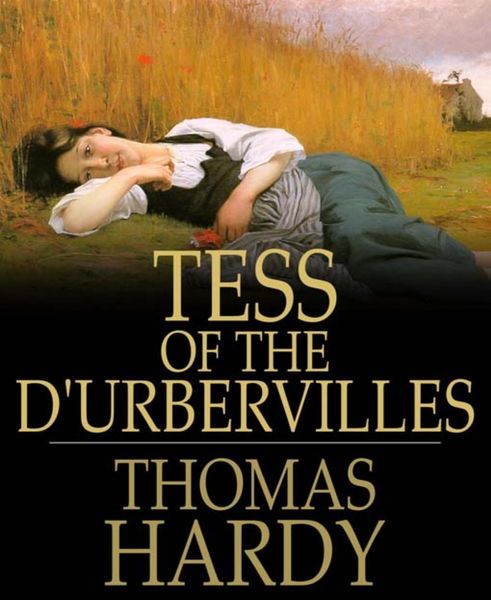
Tess of the d'Urbervilles
-
- Hardcover
- Taschenbuch
- eBook ausgewählt
- Hörbuch
-
Form:Einzelkauf Download
-
Sprache:Englisch
- Englisch ausgewählt
- Spanisch Fr. 1.00
- Französisch Fr. 0.00
-
eBook Format:ePUB
- ePUB 3 Fr. 0.00
- ePUB ausgewählt
-
Verlag:BookRix GmbH & Co. KG
- Phoenix Classics Fr. 0.50
- Dead Dodo Classic Press Fr. 1.00
- Seltzer Books Fr. 1.00
- Pulp the Classics Fr. 1.10
- Diamond Book Publishing Fr. 1.90
- Musaicum Books Fr. 1.00
- BookRix GmbH & Co. KG ausgewählt
- DigiCat Fr. 1.00
- DigiCat Fr. 1.00
- HarperCollins Canada Fr. 0.78
- Ktoczyta.pl Fr. 1.00
- Oregan Publishing Fr. 1.00
- HarperCollins Fr. 1.87
- Jazzybee Verlag Fr. 1.00
- Booklassic Fr. 1.00
- Ws Fr. 0.50
Fr. 3.00
inkl. gesetzl. MwSt.Beschreibung
Produktdetails
Format
ePUB
Kopierschutz
Nein
Family Sharing
Nein
Text-to-Speech
Ja
Erscheinungsdatum
10.06.2019
Verlag
BookRix GmbH & Co. KGSeitenzahl
595 (Printausgabe)
Dateigröße
1014 KB
Sprache
Englisch
EAN
9783736802797
Tess of the d'Urbervilles or just Tess, is a novel by Thomas Hardy. Though now considered an important work of English literature, the book received mixed reviews when it first appeared, in part because it challenged the sexual mores of Hardy's day. Hardy's writing often illustrates the "ache of modernism", and this theme is notable in Tess, which, as one critic noted, portrays "the energy of traditional ways and the strength of the forces that are destroying them". Hardy describes modern farm machinery with infernal imagery; also, at the dairy, he notes that the milk sent to the city must be watered down because the townspeople cannot stomach whole milk. Angel's middle-class fastidiousness makes him reject Tess, a woman whom Hardy often portrays as a sort of Wessex Eve, in harmony with the natural world. When he parts from her and goes to Brazil, the handsome young man gets so ill that he is reduced to a "mere yellow skeleton". All these instances are typically interpreted as indications of the negative consequences of man's separation from nature, both in the creation of destructive machinery and in the inability to rejoice in pure nature.
Another important theme of the novel is the sexual double standard to which Tess falls victim; despite being, in Hardy's view, a truly good woman, she is despised by society after losing her virginity before marriage. Hardy plays the role of Tess's only true friend and advocate, pointedly subtitling the book "a pure woman faithfully presented" and prefacing it with Shakespeare's words from The Two Gentlemen of Verona: "Poor wounded name! My bosom as a bed/ Shall lodge thee." However, although Hardy clearly means to criticise Victorian notions of female purity, the double standard also makes the heroine's tragedy possible, and thus serves as a mechanism of Tess's broader fate. Hardy variously hints that Tess must suffer either to atone for the misdeeds of her ancestors, or to provide temporary amusement for the gods, or because she possesses some small but lethal character flaw inherited from the ancient clan.
Another important theme of the novel is the sexual double standard to which Tess falls victim; despite being, in Hardy's view, a truly good woman, she is despised by society after losing her virginity before marriage. Hardy plays the role of Tess's only true friend and advocate, pointedly subtitling the book "a pure woman faithfully presented" and prefacing it with Shakespeare's words from The Two Gentlemen of Verona: "Poor wounded name! My bosom as a bed/ Shall lodge thee." However, although Hardy clearly means to criticise Victorian notions of female purity, the double standard also makes the heroine's tragedy possible, and thus serves as a mechanism of Tess's broader fate. Hardy variously hints that Tess must suffer either to atone for the misdeeds of her ancestors, or to provide temporary amusement for the gods, or because she possesses some small but lethal character flaw inherited from the ancient clan.
Kundinnen und Kunden meinen
Verfassen Sie die erste Bewertung zu diesem Artikel
Helfen Sie anderen Kund*innen durch Ihre Meinung