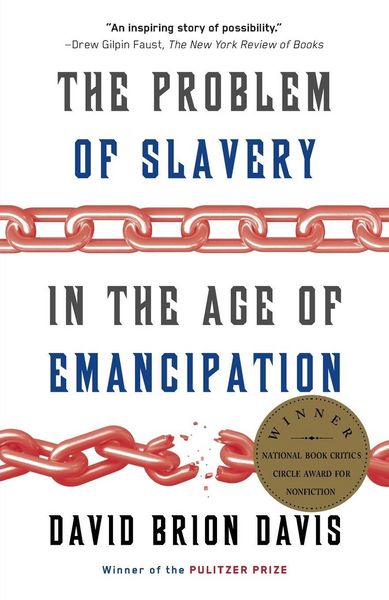
Produktbild: The Problem of Slavery in the Age of Emancipation

The Problem of Slavery in the Age of Emancipation

Fr. 35.90

inkl. gesetzl. MwSt., Versandkostenfrei


Beschreibung

Produktdetails

Einband

Taschenbuch

Erscheinungsdatum

06.01.2015

Verlag

Knopf Doubleday Publishing Group

Seitenzahl

448

Maße (L/B/H)

20.3/13.2/2.4 cm

Gewicht

496 g

Sprache

Englisch

ISBN

978-0-307-38969-5

Beschreibung

Produktdetails

Einband

Taschenbuch

Erscheinungsdatum

06.01.2015

Verlag

Knopf Doubleday Publishing Group

Seitenzahl

448

Maße (L/B/H)

20.3/13.2/2.4 cm

Gewicht

496 g

Sprache

Englisch

ISBN

978-0-307-38969-5

Herstelleradresse

Libri GmbH
Europaallee 1
36244 Bad Hersfeld
DE

Email: gpsr@libri.de

Noch keine Bewertungen vorhanden

Verfassen Sie die erste Bewertung zu diesem Artikel

Helfen Sie anderen Kundinnen und Kunden durch Ihre Meinung.

Kundinnen und Kunden meinen

Bewertungen (0)

Die Leseprobe wird geladen.
  • Produktbild: The Problem of Slavery in the Age of Emancipation
  • Preface
     
    Introduction
    Discovering Animalization
    Some Evidence of Animalization
     
    1 Some Meanings of Slavery and Emancipation: Dehumanization, Animalization, and Free Soil
    The Meaning of Animalization, Part I
    The Meaning of Animalization, Part II
    The Search for the Animalized Slave
    Domestication and Internalization
     
    2 The First emancipations: freedom
    and dishonor
    Self- Emancipation: Haiti as a Turning Point
    Freedmen and Slaves
    Freedmen’s Rights
    Loss of Mastery
    The “Horrors of Haiti”
     
    3 Colonizing Blacks, Part I: Migration and Deportation
    The Exodus Paradigm
    Precedents: Exiles
    Precedents: The Displaced
     
    4 Colonizing Blacks, Part II: The American Colonization Society and Americo-Liberians
    Liberating Liberia
     
    5 Colonizing Blacks, Part III: From Martin Delany to Henry Highland Garnet and Marcus Garvey
    Nationalism
     
    6 Colonizationist Ideology: Leonard Bacon and “Irremediable Degradation”
    Bacon’s “Report” of 1823
    The Paradox of Sin and “Irremediable Degradation”
    Some Black Response
     
    7 From Opposing Colonization to Immediate Abolition
    Paul Cuffe and Early Proposals for Emigration
    James Forten and Black Reactions to the American Colonization Society
    The Search for Black Identity and Emigration to Haiti
    Russwurm, Cornish, and Walker
    Blacks and Garrison
     
    8 Free Blacks as the Key to Slave Emancipation
    Recognition of the Issue
    Abolitionist Addresses to Free African Americans
    David Walker and Overcoming Slave Dehumanization
    James McCune Smith and Jefferson’s “What further is to be done with these people?”
     
    9 Fugitive Slaves, Free Soil, and the Question of Violence
    Frederick Douglass as a Fugitive
    The Underground Railroad and Runaway Slaves
    Harriet Jacobs as a Female Fugitive
    Fugitive Slaves and the Law
     
    10 The Great Experiment: Jubilee, Responses, and Failure
    An Eschatological Event and America’s Barriers
    The Enactment of British Emancipation
    Some American Responses to British Emancipation
    From Joseph John Gurney to the Issue of Failure
     
    11 The British Mystique: Black Abolitionists in Britain—the Leader of the Industrial Revolution and Center of “Wage Slavery”
    Frederick Douglass Confronts the World
    African Americans Embrace the Mother Country
    The Problems of Race, Dehumanization, and Wage Slavery
    Joseph Sturge, Frederick Douglass, and the Chartists— the Decline and Expansion of Antislavery in the 1850s
     
    Epilogue
     
    Acknowledgments