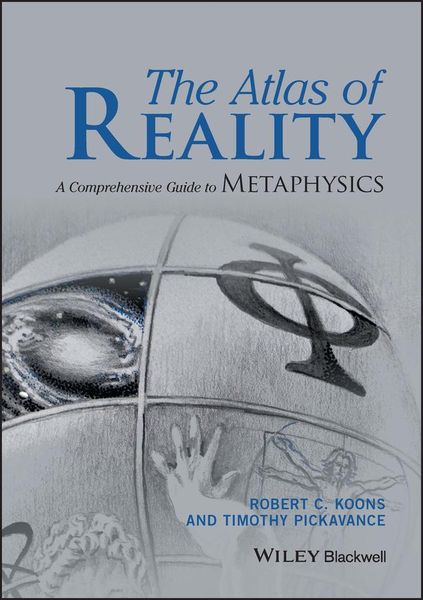
Produktbild: The Atlas of Reality

The Atlas of Reality A Comprehensive Guide to Metaphysics

Fr. 269.00

inkl. gesetzl. MwSt., Versandkostenfrei


Beschreibung

Produktdetails

Einband

Gebundene Ausgabe

Erscheinungsdatum

17.04.2017

Verlag

Wiley

Seitenzahl

720

Maße (L/B/H)

24.6/17.5/3.8 cm

Gewicht

1220 g

Sprache

Englisch

ISBN

978-1-119-11612-7

Beschreibung

Produktdetails

Einband

Gebundene Ausgabe

Erscheinungsdatum

17.04.2017

Verlag

Wiley

Seitenzahl

720

Maße (L/B/H)

24.6/17.5/3.8 cm

Gewicht

1220 g

Sprache

Englisch

ISBN

978-1-119-11612-7

Herstelleradresse

Libri GmbH
Europaallee 1
36244 Bad Hersfeld
DE

Email: gpsr@libri.de

Kundinnen und Kunden meinen

0 Bewertungen

Informationen zu Bewertungen

Zur Abgabe einer Bewertung ist eine Anmeldung im Konto notwendig. Die Authentizität der Bewertungen wird von uns nicht überprüft. Wir behalten uns vor, Bewertungstexte, die unseren Richtlinien widersprechen, entsprechend zu kürzen oder zu löschen.

Die Bewertungen sind nach Format, Anzahl Sterne und Datum sortiert.

Verfassen Sie die erste Bewertung zu diesem Artikel

Helfen Sie anderen Kund*innen durch Ihre Meinung

Kundinnen und Kunden meinen

0 Bewertungen filtern

Die Leseprobe wird geladen.
  • Produktbild: The Atlas of Reality
  • Acknowledgements xvii

    Part I Foundations

    1 Introduction 3

    1.1 A Brief History of Metaphysics 3

    1.2 Why Do Metaphysics? 5

    1.3 How to Use the Book 9

    2 Truthmakers 13

    2.1 Introduction 13

    2.2 Five Arguments for Classical Truthmaker Theory 19

    2.3 The Challenge of Deflationism 25

    2.4 Truthmaker Maximalism 30

    2.5 Alternatives to Truthmaker Maximalism 36

    2.6 Conclusion and Preview 44

    Notes 45

    3 Grounding, Ontological Dependence, and Fundamentality 47

    3.1 Is Grounding Real? 49

    3.2 Relation between Grounding and Truthmaking 55

    3.3 Relation between Grounding and Ontological Dependence 58

    3.4 Conceptual vs. Extra-Conceptual Grounding 62

    3.5 Alternatives to Grounding? 65

    3.6 Can Grounding Relations be Grounded? 69

    3.7 Connections between Grounding and Entailment 71

    3.8 How is Grounding Different from Causal Explanation? 72

    3.9 Conclusion: Grounding and Ontological Economy 72

    Notes 73

    Part II Dispositions

    4 Conditionals 77

    4.1 Counterfactual Conditionals: Semantics, Logic, and Metaphysics 78

    4.2 Hypotheticalism 84

    4.3 Anti-Hypotheticalism and Laws of Nature 86

    4.4 Strong Hypotheticalism: Counterfactual Accounts of Powers and Dispositions 90

    Notes 92

    5 Laws of Nature 94

    5.1 Strong Nomism: The Dretske-Armstrong-Tooley (DAT) Theory of Laws 94

    5.2 Neo-Humeism: Reduction of Conditionals, Laws, and Powers 99

    Notes 105

    6 Powers and Properties 106

    6.1 Advantages of Strong Powerism 106

    6.2 The Individuation of Properties 108

    6.3 Objections to Strong Powerism 118

    6.4 Conclusion 121

    Notes 121

    Part III Universals and Particulars

    7 Universals 125

    7.1 Introduction 125

    7.1.1 What properties must explain 126

    7.2 Realism 128

    7.3 Universals and the Problem of Intentionality 142

    7.4 Properties as the Ground of Causal Powers 145

    Notes 145

    8 Reductive Nominalism and Trope Theory 147

    8.1 Reductive Nominalism 147

    8.2 Trope Theory 165

    8.3 Conclusion 169

    Notes 169

    9 Particulars and the Problem of Individuation 171

    9.1 Introduction 171

    9.2 Facts 172

    9.3 Substances 175

    Notes 200

    10 Relations, Structures, and Quantities 201

    10.1 Accounts of Relational Facts 201

    10.2 Non-Symmetrical Relations and the Problem of Order 206

    10.3 Structural Universals and Constituent Ontology 215

    10.4 Determinables, Quantities, and Real Numbers 219

    10.5 Conclusion and Preview 225

    Notes 225

    Part IV The Nature of Reality

    11 Nihilism and Monism 229

    11.1 Nihilism and Aliquidism 229

    11.2 Monism 237

    Note 252

    12 The Non-Existent and the Vaguely Existing 253

    12.1 Does Everything Exist? 253

    12.2 Ontic Vagueness 271

    12.3 Conclusion 280

    13 Solipsism, Idealism, and the Problem of Perception 281

    13.1 Defining the Mental and the External 282

    13.2 Solipsism and Phenomenalism 284

    13.3 Theories of Perception 286

    13.4 Arguments against Phenomenalism 306

    13.5 Arguments against Solipsism 309

    13.6 Conclusion and Preview 312

    Notes 313

    Part V Modality

    14 Possibility, Necessity, and Actuality: Concretism 317

    14.1 Introduction 317

    14.2 Concretism:Worlds as Universes 321

    14.3 Problems for Concretism 327

    14.4 Conclusion 331

    Note 331

    15 Abstractionism:Worlds as Representations 332

    15.1 Magical Abstractionism 333

    15.2 Structural Abstractionism 341

    15.3 Aristotelian Theories of Possibility 348

    15.4 Conclusion 350

    Note 351

    16 De Re Modality and Modal Knowledge 352

    16.1 Modality De Re: Transworld Identity and Counterpart Theory 352

    16.2 Modality and Epistemology: Possibility and Conceivability 363

    16.3 Conclusion 369

    Notes 369

    Part VI Space and Time

    17 Is Space Merely Relational? 373

    17.1 The Nature of Location 373

    17.2 Spatial Substantivalism 375

    17.3 Spatial Relationism 381

    17.4 Absences and Vacuums 386

    17.5 Conclusion 388

    Notes 389

    18 Structure of Space: Points vs. Regions 390

    18.1 Constructing Points from Regions 391

    18.2 Points vs. Regions 394

    18.3 Arguments against Points as Fundamental 397

    18.4 Voluminism vs. Volume-Boundary Dualism 408

    18.5 Conclusion 414

    Note 414

    19 The Structure of Time 415

    19.1 Is Time Composed of Instants or Intervals? 415

    19.2 Instants as Dependent Entities 425

    19.3 Does Time have a Beginning? 427

    19.4 Conclusion 429

    20 Time's Passage 430

    20.1 Tensers and Anti-Tensers 432

    20.2 Varieties of Anti-Tensism 435

    20.3 Varieties of Tensism 437

    20.4 Presentism 439

    20.5 Arguments for Tensism 442

    20.6 Conclusion 456

    Note 457

    21 Arguments for Anti-Tensism 458

    21.1 How Fast Does Time Flow? 458

    21.2 Truthmakers for Truths about the Past 461

    21.3 The Theory of Relativity 469

    21.4 Epistemological Problems for Tensism 473

    21.5 McTaggart's Paradox 474

    21.6 Brute Necessities of Time 476

    21.7 Conclusion 478

    Part VII Unity

    22 Material Composition: The Special Question 481

    22.1 The Existence of Composite Things 482

    22.2 Are Composite Things an "Ontological Free Lunch"? 482

    22.3 Redundancy 485

    22.4 Fundamental Heaps 490

    22.5 Fundamental Artifacts 497

    22.6 Living Organisms vs. Mereological Nihilism 499

    22.7 Finding an Intelligible Principle of Composition 504

    Notes 513

    23 Composition: The General Question 514

    23.1 Formal Mereology: Le¿sniewski, Goodman, and Leonard 514

    23.2 Three (or Four) Answers to the General Composition Question 518

    23.3 Accounting for the Correct Principles of Mereology 523

    23.4 Parthood and Truthmaking 529

    Notes 530

    24 Change and Persistence 531

    24.1 Does Anything Change? Does Anything Persist? 532

    24.2 How Objects Change Properties: Substratism vs. Replacementism 537

    24.3 The Metaphysics of Motion 551

    Notes 554

    25 The Persistence of Composite Things 555

    25.1 Mereological Constancy and Inconstancy 556

    25.2 Coincident Things 564

    25.3 Conclusion 573

    Note 574

    Part VIII Causation

    26 The Existence and Scope of Causation 577

    26.1 Are there Causes? 577

    26.2 The Scope of Causation 583

    Note 589

    27 Causation: A Relation between Things or Truths? 591

    27.1 Causal Explanationism 592

    27.2 Causal Connectionism 605

    Notes 611

    28 Discrete and Continuous Causation 613

    28.1 Is All Causation Discrete? 614

    28.2 The Nature of Discrete Causation 614

    28.3 Is All Causation Continuous? 616

    28.4 The Nature of Continuous Processes 618

    28.5 Processes and the Direction of Continuous Causation 621

    28.6 Are Processes an Exception to Hume's Epistemic Principle? 622

    28.7 Conclusion: The Consequences of Causation 623

    Notes 623

    29 Conclusion: The Four Packages 624

    Appendix A 633

    Appendix B 651

    References 655

    Index 671