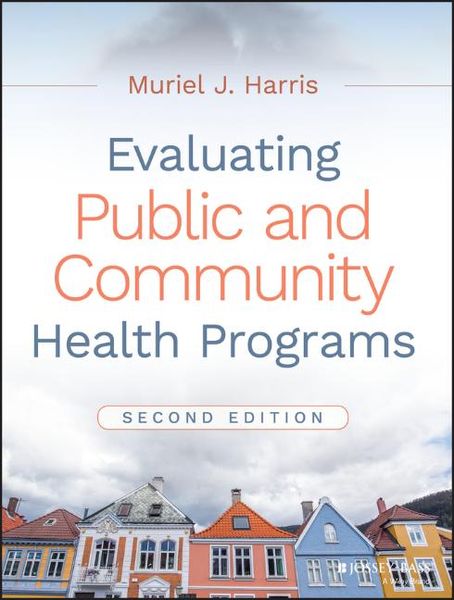
Evaluating Public and Community Health Programs
-
- Taschenbuch ausgewählt
- eBook
-
Sprache:Englisch
-
Verlag:John Wiley & Sons
Fr. 133.00
inkl. gesetzl. MwSt.,
Beschreibung
Produktdetails
Einband
Taschenbuch
Erscheinungsdatum
01.12.2017
Verlag
John Wiley & SonsSeitenzahl
416
Maße (L/B/H)
23.3/17.9/2.2 cm
Gewicht
665 g
Auflage
2nd edition
Sprache
Englisch
ISBN
978-1-119-15105-0
A practical introduction to participatory program evaluation
Evaluating Public and Community Health Programs provides a comprehensive introduction to the theory and practice of evaluation, with a participatory model that brings stakeholders together for the good of the program. Linking community assessment, program implementation, and program evaluation, this book emphasizes practical, ongoing evaluation strategies that connect theory with application. This updated second edition includes new discussion on planning policy change programs using logic models and theory of change, plus expanded coverage of processes, outcomes, data collection, and more. Each chapter includes classroom activities and group discussion prompts, and the companion website provides worksheets, lecture slides, and a test bank for instructors. Mini cases help illustrate the real-world applications of the methods described, and expanded case studies allow students to dig deeper into practice and apply what they've learned.
Accurate and effective evaluation is the key to a successful program. This book provides a thorough introduction to all aspects of this critical function, with a wealth of opportunities to apply new concepts.
* Learn evaluation strategies that involve all program stakeholders
* Link theory to practice with new mini cases and examples
* Understand the uses, processes, and approaches to evaluation
* Discover how ongoing evaluation increases program effectiveness
Public and community health programs are a vital part of our social infrastructure, and the more effective they are, the more people they can serve. Proper planning is important, but continued evaluation is what keeps a program on track for the long term. Evaluating Public and Community Health Programs provides clear instruction and insightful discussion on the many facets of evaluation, with a central focus on real-world service.
Evaluating Public and Community Health Programs provides a comprehensive introduction to the theory and practice of evaluation, with a participatory model that brings stakeholders together for the good of the program. Linking community assessment, program implementation, and program evaluation, this book emphasizes practical, ongoing evaluation strategies that connect theory with application. This updated second edition includes new discussion on planning policy change programs using logic models and theory of change, plus expanded coverage of processes, outcomes, data collection, and more. Each chapter includes classroom activities and group discussion prompts, and the companion website provides worksheets, lecture slides, and a test bank for instructors. Mini cases help illustrate the real-world applications of the methods described, and expanded case studies allow students to dig deeper into practice and apply what they've learned.
Accurate and effective evaluation is the key to a successful program. This book provides a thorough introduction to all aspects of this critical function, with a wealth of opportunities to apply new concepts.
* Learn evaluation strategies that involve all program stakeholders
* Link theory to practice with new mini cases and examples
* Understand the uses, processes, and approaches to evaluation
* Discover how ongoing evaluation increases program effectiveness
Public and community health programs are a vital part of our social infrastructure, and the more effective they are, the more people they can serve. Proper planning is important, but continued evaluation is what keeps a program on track for the long term. Evaluating Public and Community Health Programs provides clear instruction and insightful discussion on the many facets of evaluation, with a central focus on real-world service.
Noch keine Bewertungen vorhanden
Verfassen Sie die erste Bewertung zu diesem Artikel
Helfen Sie anderen Kundinnen und Kunden durch Ihre Meinung.