
• Produktbild: Successful STEM Mentoring Initiatives for Underrepresented Students
  • Produktbild: Successful STEM Mentoring Initiatives for Underrepresented Students

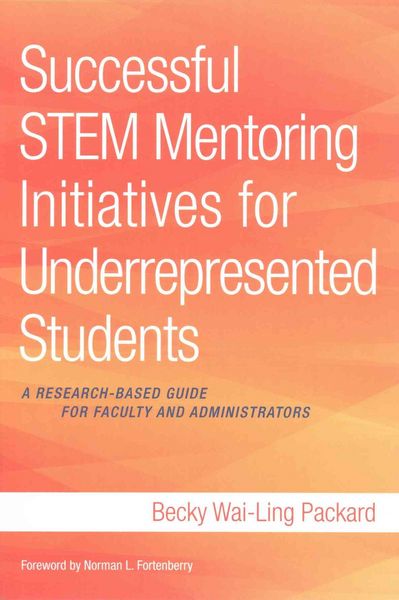
Successful STEM Mentoring Initiatives for Underrepresented Students A Research-Based Guide for Faculty and Administrators

Fr. 58.90

inkl. gesetzl. MwSt., Versandkostenfrei


Beschreibung

Produktdetails

Einband

Taschenbuch

Erscheinungsdatum

17.12.2015

Verlag

Taylor & Francis

Seitenzahl

158

Maße (L/B/H)

22.9/15.2/0.9 cm

Gewicht

232 g

Sprache

Englisch

ISBN

978-1-62036-296-9

Beschreibung

Produktdetails

Einband

Taschenbuch

Erscheinungsdatum

17.12.2015

Verlag

Taylor & Francis

Seitenzahl

158

Maße (L/B/H)

22.9/15.2/0.9 cm

Gewicht

232 g

Sprache

Englisch

ISBN

978-1-62036-296-9

Herstelleradresse

Libri GmbH
Europaallee 1
36244 Bad Hersfeld
DE

Email: gpsr@libri.de

Kundinnen und Kunden meinen

0 Bewertungen

Informationen zu Bewertungen

Zur Abgabe einer Bewertung ist eine Anmeldung im Konto notwendig. Die Authentizität der Bewertungen wird von uns nicht überprüft. Wir behalten uns vor, Bewertungstexte, die unseren Richtlinien widersprechen, entsprechend zu kürzen oder zu löschen.

Die Bewertungen sind nach Format, Anzahl Sterne und Datum sortiert.

Verfassen Sie die erste Bewertung zu diesem Artikel

Helfen Sie anderen Kund*innen durch Ihre Meinung

Kundinnen und Kunden meinen

0 Bewertungen filtern

Die Leseprobe wird geladen.
  • Produktbild: Successful STEM Mentoring Initiatives for Underrepresented Students
  • Produktbild: Successful STEM Mentoring Initiatives for Underrepresented Students
  • Acknowledgements Foreword Introduction: • Why do we need to recruit students into STEM and help them persist? • Why is diversity in STEM valuable? • Why is mentoring a worthy investment for STEM departments? • What will you gain from this book? 1. Map the Landscape, Choose a Focus • Map the landscape using the ecological model • Primary factors influencing persistence. Obstacles and opportunities • The big picture. The learning environment and department climate • Reader next steps. Choose a focus 2. Mentoring With Intention. What’s Your Strategy? • Intentional mentoring • Approaches to mentoring • Making decisions. Intensity and selectivity • Start small with a pilot • Reader next steps. Create a road map 3. What Works (and Why. During the Transition to College • What works and why • Improving the departmental climate for new students • Case study with Bill Gomez • Reader next steps. Explore your options during the transition to college 4. What Works (and Why. During the Transition to a STEM major • What works and why • Improving departmental climate for prospective and current majors • Case study with Susan Mason • Reader next steps. Explore your options during the transition to a STEM major 5. What Works (and Why. During the Transition to the Workplace or Graduate Studies • What Works and why • Improving departmental climate for upper-level students • Case Study with Mark Sanderson • Reader next steps. Explore your options for the transition to the workplace or graduate studies 6. Difficult Mentoring Moments. Framing Messages to Improve Impact • Why some mentoring moments are difficult • The benefits of mentor orientation sessions and other forms of practice • Reader next steps. Invest in conversations about difficult mentoring moments 7. Conversations Among Colleagues. Departmental Climate as a Collective Project • Changing climate, one conversation at a time • Tracking your progress • Reader next steps. Plan your department conversation Conclusion • Start small • The tipping point • Who do you want to be? • Reader next steps. Summarize what you have learned Resources • Professional organizations and consortia • Statistics, strategies, and tool kits • Recommended books and reports Index