• Produktbild: Teaching Visual Methods in the Social Sciences
  • Produktbild: Teaching Visual Methods in the Social Sciences

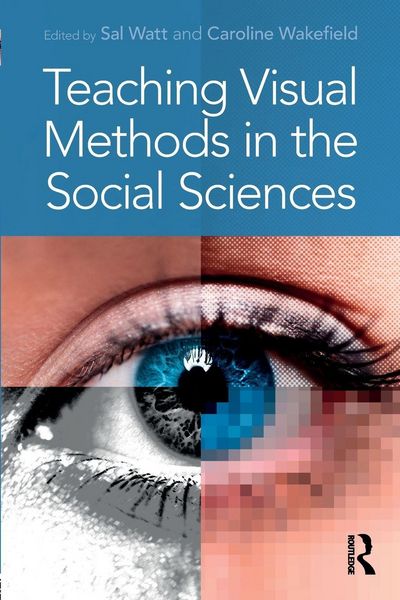
Teaching Visual Methods in the Social Sciences

Fr. 93.90

inkl. gesetzl. MwSt., Versandkostenfrei


Beschreibung

Produktdetails

Einband

Taschenbuch

Erscheinungsdatum

09.05.2017

Herausgeber

Sal Watt + weitere

Verlag

Routledge

Seitenzahl

248

Maße (L/B/H)

23.4/15.6/1.4 cm

Gewicht

383 g

Sprache

Englisch

ISBN

978-1-138-10135-7

Beschreibung

Produktdetails

Einband

Taschenbuch

Erscheinungsdatum

09.05.2017

Herausgeber

Verlag

Routledge

Seitenzahl

248

Maße (L/B/H)

23.4/15.6/1.4 cm

Gewicht

383 g

Sprache

Englisch

ISBN

978-1-138-10135-7

Herstelleradresse

Libri GmbH
Europaallee 1
36244 Bad Hersfeld
DE

Email: gpsr@libri.de

Noch keine Bewertungen vorhanden

Verfassen Sie die erste Bewertung zu diesem Artikel

Helfen Sie anderen Kundinnen und Kunden durch Ihre Meinung.

Kundinnen und Kunden meinen

Bewertungen (0)

Weitere Artikel finden Sie in

Die Leseprobe wird geladen.
  • Produktbild: Teaching Visual Methods in the Social Sciences
  • Produktbild: Teaching Visual Methods in the Social Sciences
  • List of contributors. Preface. Acknowledgements. Part 1: Thinking Through the use of Visual Methods in Learning and Teaching 1. Introduction (Sal Watt and Caroline Wakefield) 2. Looking back: The use of visual methods in the social sciences (Sal Watt and Caroline Wakefield) 3. Research ethics and visual methods (Julie Scott Jones) 4. Visual methods: developing pedagogical application (Caroline Wakefield and Sal Watt) Part 2: Teaching Visual Methods 5. Film: secondary data as a mechanism to support student learning (Moira Lafferty) 6. Drawing: a visual method as an expressive data collection technique (Edd Pitt) 7. Bricolage: Visual and creative arts in the design of applied psychology assessments (Julie Taylor) 8. Students: Examining photo-ethnography and documentary as an unorthodox learning and teaching strategy (Joel Rookwood) 9. Fieldwork: Using visual methods as a tool for field data collection (Janet Speake) 10. Crossing over cultures: Using visual methods in a cross-cultural context for teaching and research (Simon Davies and Lorna Bourke). Part 3: Reflections 11. Practical applications of teaching visual methods (Sal Watt and Caroline Wakefield) 12. Practitioner Resources. Index