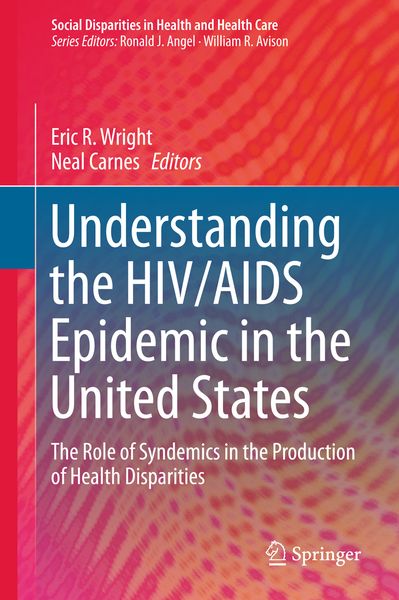
Produktbild: Understanding the HIV/AIDS Epidemic in the United States

Understanding the HIV/AIDS Epidemic in the United States The Role of Syndemics in the Production of Health Disparities

Fr. 172.00

inkl. gesetzl. MwSt., Versandkostenfrei


Beschreibung

Produktdetails

Einband

Gebundene Ausgabe

Erscheinungsdatum

09.08.2016

Abbildungen

X, 16 illus., schwarz-weiss Illustrationen

Herausgeber

Eric R. Wright + weitere

Verlag

Springer

Seitenzahl

302

Maße (L/B/H)

24.1/16/2.3 cm

Gewicht

641 g

Auflage

1st edition 2016

Sprache

Englisch

ISBN

978-3-319-34002-9

Beschreibung

Produktdetails

Einband

Gebundene Ausgabe

Erscheinungsdatum

09.08.2016

Abbildungen

X, 16 illus., schwarz-weiss Illustrationen

Herausgeber

Verlag

Springer

Seitenzahl

302

Maße (L/B/H)

24.1/16/2.3 cm

Gewicht

641 g

Auflage

1st edition 2016

Sprache

Englisch

ISBN

978-3-319-34002-9

Herstelleradresse

Springer-Verlag KG
Sachsenplatz 4-6
1201 Wien
AT

Email: ProductSafety@springernature.com

Kundinnen und Kunden meinen

0 Bewertungen

Informationen zu Bewertungen

Zur Abgabe einer Bewertung ist eine Anmeldung im Konto notwendig. Die Authentizität der Bewertungen wird von uns nicht überprüft. Wir behalten uns vor, Bewertungstexte, die unseren Richtlinien widersprechen, entsprechend zu kürzen oder zu löschen.

Die Bewertungen sind nach Format, Anzahl Sterne und Datum sortiert.

Verfassen Sie die erste Bewertung zu diesem Artikel

Helfen Sie anderen Kund*innen durch Ihre Meinung

Kundinnen und Kunden meinen

0 Bewertungen filtern

  • Produktbild: Understanding the HIV/AIDS Epidemic in the United States
  • Chapter 1. Understanding the HIV/AIDS Epidemic in the United States: The Role of Syndemics in Shaping the Public’s Health; Eric R. Wright, Neal Carnes, and Matthew Colón-Diaz.- Chapter 2. An Historical Overview of the Epidemiology of HIV/AIDS in the United States; Jamal Jones and Laura Salazar.- Chapter 3. Gay Men and Men Who Have Sex with Men: Intersectionality and Syndemics; Neal Carnes.- Chapter 4. The Role of Syndemic in Explaining Health Disparities among Bisexual Men: A Blueprint for a Theoretically Informed Perspective; Mackey Friedman and Brian Dodge.- Chapter 5. It’s Not Just about Condoms and Sex: Using Syndemic Theory to Examine Social Risks of HIV among Transgender Women; Dana Hines and Maura Ryan.- Chapter 6. The Social, Structural, and Clinical Context of HIV Prevention and Care for Black/African American and Hispanic Women/Latinas in the United States; Tiffiany Aholou, Ashley Murray, and Madeline Sutton.- Chapter 7. Sex Workers; Paul Draus and Juliette Roddy.- Chapter 8. A Syndemic Approach to Understanding HIV/AIDS among People Who Inject Drugs in the U.S.; Enrique Pouget and Alex Bennett.- Chapter 9. Understanding the Syndemic Connections between HIV and Incarceration among African American Men, especially African American Men Who Have Sex with Men; Erin McCarthy, Janet Myers, Keith Reeves, and Barry Zach.- Chapter 10. People with Serious Mental Illness; Karen McKinnon, Katherine Elkington, Francine Cournos, Veronica Pinho, Mark Guimaraes, and Milton Wainberg.- Chapter 11. HIV Housing Helps End Homelessness and HIV/AIDS in the United States; Julie Hilvers, Christine George, and Arturo Bendixen.- Chapter 12. The Potential and Limitations of Syndemic Theory in HIV/AIDS; Neal Carnes and Eric R. Wright.