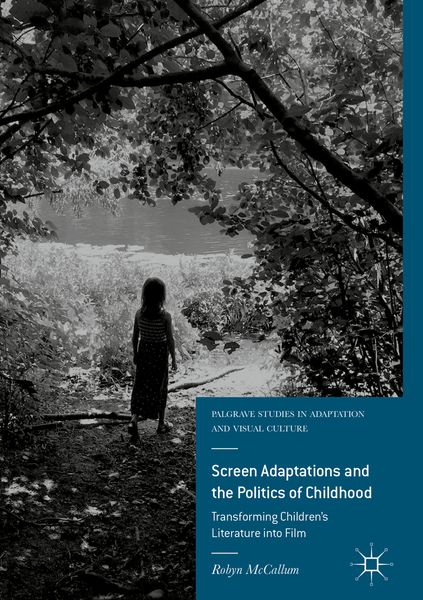
Screen Adaptations and the Politics of Childhood Transforming Children's Literature into Film
Fr. 150.00
inkl. gesetzl. MwSt.,
Beschreibung
Produktdetails
Einband
Gebundene Ausgabe
Erscheinungsdatum
31.01.2018
Verlag
Palgrave Macmillan UKSeitenzahl
280
Maße (L/B/H)
21.6/15.3/2.1 cm
Gewicht
493 g
Auflage
1st ed.
Sprache
Englisch
ISBN
978-1-137-39540-5
This book features a cutting edge approach to the study of film adaptations of literature for children and young people, and the narratives about childhood those adaptations enact. Historically, film media has always had a partiality for the adaptation of ‘classic’ literary texts for children. As economic and cultural commodities, McCallum points out how such screen adaptations play a crucial role in the cultural reproduction and transformation of childhood and youth, and indeed are a rich resource for the examination of changing cultural values and ideologies, particularly around contested narratives of childhood. The chapters examine various representations of childhood: as shifting states of innocence and wildness, liminality, marginalisation and invisibility. The book focuses on a range of literary and film genres, from ‘classic’ texts, to experimental, carnivalesque, magical realist, and cross-cultural texts.
Noch keine Bewertungen vorhanden
Verfassen Sie die erste Bewertung zu diesem Artikel
Helfen Sie anderen Kundinnen und Kunden durch Ihre Meinung.