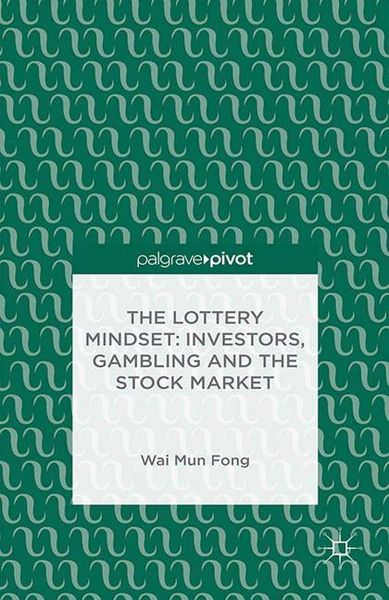
The Lottery Mindset: Investors, Gambling and the Stock Market
-
- Hardcover
- Taschenbuch ausgewählt
- eBook
-
Sprache:Englisch
Fr. 96.90
inkl. gesetzl. MwSt.,
Beschreibung
Produktdetails
Einband
Taschenbuch
Erscheinungsdatum
01.01.2014
Verlag
Palgrave Macmillan UKSeitenzahl
183
Maße (L/B/H)
21.6/14/1.1 cm
Gewicht
259 g
Auflage
1st ed. 2014
Sprache
Englisch
ISBN
978-1-349-47970-2
Financial markets are growing in complexity, and there is an increased risk that investors are led to investment products and strategies they do not fully understand. The crisis-ridden decade of the 2000s is a stark reminder of how poorly managed finances can wreak havoc on household finances.
Traditional finance assumes that all investors are risk-averse and require a risk premium from investing in risky assets such as stocks. However, recent developments in behavioural finance show that many individual investors often adopt strategies that lead to serious investment missteps, including over-investing in lottery-type stocks and securities. Lottery-type securities in fact attract investors who may be risk-seeking or are strongly influenced by cognitive biases ranging from overconfidence to being over-optimistic about future investment returns, especially during periods of high sentiment.
Drawing on existing and new research, The Lottery Mindset summarizes the behavioural motivations and detrimental impact of investment strategies which are popular with individual investors. Wai-Mun Fong provides insight and guidance on behavioural biases, and successful investment. By both reviewing and contributing to exiting literature on this topic, this book will be of use to academics and general readers alike.
Traditional finance assumes that all investors are risk-averse and require a risk premium from investing in risky assets such as stocks. However, recent developments in behavioural finance show that many individual investors often adopt strategies that lead to serious investment missteps, including over-investing in lottery-type stocks and securities. Lottery-type securities in fact attract investors who may be risk-seeking or are strongly influenced by cognitive biases ranging from overconfidence to being over-optimistic about future investment returns, especially during periods of high sentiment.
Drawing on existing and new research, The Lottery Mindset summarizes the behavioural motivations and detrimental impact of investment strategies which are popular with individual investors. Wai-Mun Fong provides insight and guidance on behavioural biases, and successful investment. By both reviewing and contributing to exiting literature on this topic, this book will be of use to academics and general readers alike.
Kundinnen und Kunden meinen
Verfassen Sie die erste Bewertung zu diesem Artikel
Helfen Sie anderen Kund*innen durch Ihre Meinung