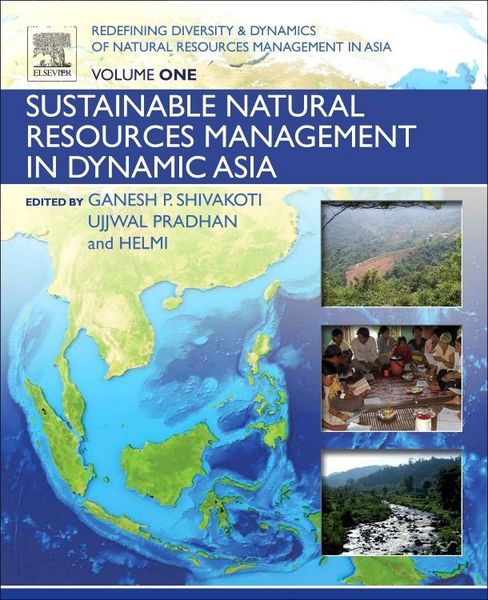
Shivakoti, G: Redefining Diversity and Dynamics of Natural R Sustainable Natural Resources Management in Dynamic Asia
-
- Taschenbuch ausgewählt
- eBook
-
Sprache:Englisch
-
Verlag:Elsevier Science & Technology
Fr. 123.00
inkl. gesetzl. MwSt.,
Beschreibung
Produktdetails
Einband
Taschenbuch
Erscheinungsdatum
11.09.2016
Herausgeber
Ganesh Shivakoti + weitereVerlag
Elsevier Science & TechnologyMaße (L/B/H)
23.6/19/2.1 cm
Gewicht
835 g
Sprache
Englisch
ISBN
978-0-12-805454-3
Redefining Diversity and Dynamics of Natural Resources Management in Asia, Volumes 1-4 brings together scientific research and policy issues across various topographical area in Asia to provide a comprehensive overview of the issues facing the region.
Sustainable Natural Resources Management in Dynamic Southeast Asia, Volume 1, pulls together regional experts in the field to look specifically at sustainability issues across the region, to see what has been implemented, what the impacts have been, and what other options are available. In the race to be a developed region, many Southeast Asian countries have foregone natural resources through haphazard use. As a result, the people are faced with numerous environmental challenges, particularly deforestation and forest degradation, biodiversity loss and ecosystem degradation, reduction in soil quality, and decreases in the quantity of available water.
Community-based forest management is the involvement of local communities in the protection, conservation and management of public forests to prevent degradation through sustainable practices while still responding to the basic social and economic needs of local populations. When the people who depend on forest resources for their livelihoods are jointly responsible for managing and protecting them, they tend to do so in a more sustainable manner by focusing on the long-term benefits rather than the immediate short-term gains. However, when tenure rights are weak, unclear, or insecure, or offer limited benefits, people are incited in extracting more immediate benefits, resulting in suboptimal forest management and the reduction of carbon stocks.
Noch keine Bewertungen vorhanden
Verfassen Sie die erste Bewertung zu diesem Artikel
Helfen Sie anderen Kundinnen und Kunden durch Ihre Meinung.