• Produktbild: Consumerism, Waste, and Re-Use in Twentieth-Century Fiction
  • Produktbild: Consumerism, Waste, and Re-Use in Twentieth-Century Fiction

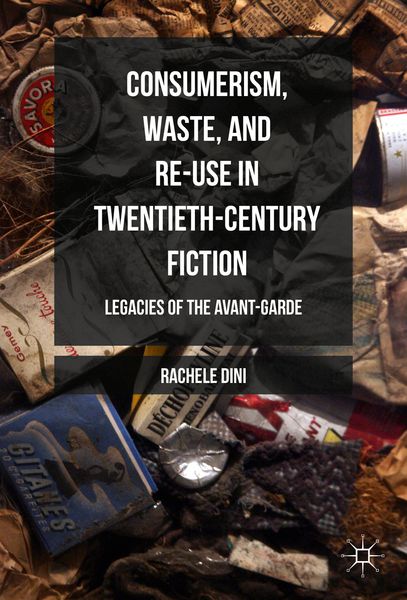
Consumerism, Waste, and Re-Use in Twentieth-Century Fiction Legacies of the Avant-Garde

Fr. 127.00

inkl. gesetzl. MwSt., Versandkostenfrei


Beschreibung

Produktdetails

Einband

Gebundene Ausgabe

Erscheinungsdatum

22.10.2016

Abbildungen

XIV, 15 illus., schwarz-weiss Illustrationen

Verlag

Palgrave Macmillan US

Seitenzahl

253

Maße (L/B/H)

21.6/15.3/2 cm

Gewicht

463 g

Auflage

1st ed. 2016

Sprache

Englisch

ISBN

978-1-137-59061-9

Beschreibung

Produktdetails

Einband

Gebundene Ausgabe

Erscheinungsdatum

22.10.2016

Abbildungen

XIV, 15 illus., schwarz-weiss Illustrationen

Verlag

Palgrave Macmillan US

Seitenzahl

253

Maße (L/B/H)

21.6/15.3/2 cm

Gewicht

463 g

Auflage

1st ed. 2016

Sprache

Englisch

ISBN

978-1-137-59061-9

Herstelleradresse

Palgrave Macmillan
Tiergartenstr. 17
69121 Heidelberg
DE

Email: ProductSafety@springernature.com

Noch keine Bewertungen vorhanden

Verfassen Sie die erste Bewertung zu diesem Artikel

Helfen Sie anderen Kundinnen und Kunden durch Ihre Meinung.

Kundinnen und Kunden meinen

Bewertungen (0)

  • Produktbild: Consumerism, Waste, and Re-Use in Twentieth-Century Fiction
  • Produktbild: Consumerism, Waste, and Re-Use in Twentieth-Century Fiction
  • Table of Contents

    Acknowledgements

    List of illustrations


    Introduction

    The commodity

    Waste and recuperation

    Human waste

    Symbols of transience and change

    The case for the novel, and for descendants of the avant-garde

    From scavenging to window-shopping

    Chapter overviews

    The case for pursuing “this unattractive occupation”


    Chapter One

       In search of an epiphany: Redeeming waste and irrupting into the everyday

    “The enigmatic side of beings and things”: Giorgio de Chirico’s Hebdomeros

           “Quite unexpected, quite improbable”: André Breton’s Nadja

     Human waste and the aesthetics of the “economically nude”: Mina Loy’s Insel


    Chapter Two

       Samuel Beckett’s : Human waste in

    The Trilogy, Texts for Nothing, and How it I

     “[A]ll these questions of worth and value”: Partial inventories, failing bodies

    “[I]n the rubbish dump”: Figurations of human waste

    “[S]omewhere someone is uttering”: Dwelling and speaking in waste


    Chapter Three

      Waste in Donald Barthelme, J.G Ballard, and William Gaddis

    The writing of “dreck”: Donald Barthelme’s Snow White

     “Things playing a more important part than people”: Ballard’s urban disaster trilogy

     “What America’s all about, waste disposal and all”: William Gaddis’ JR


    Chapter Four

       “Most of our longings go unfulfilled”:

        DeLillo’s historiographical readings of landfills and nuclear fallout

    “Garbage for 20 years”

    “Waste is the secret history”: Reading the past

    “Longing on a large scale”: Nostalgia, collecting and waste

    “The biggest secrets”: Fresh Kills, Consumerism and the Cold War

    “ [A] form of counterhistory”: Waste and language


    Conclusion

    “There lies a darker narrative”: Pynchon’s Bleeding Edge                                                

    “The only truthful thing civilisation produced”: Jonathan Miles’ Want Not                     

    “There’s always [an oil spill] happening”: Tom McCarthy’s Satin Island

     The future of waste


    Bibliography