KI-Beratung Beta

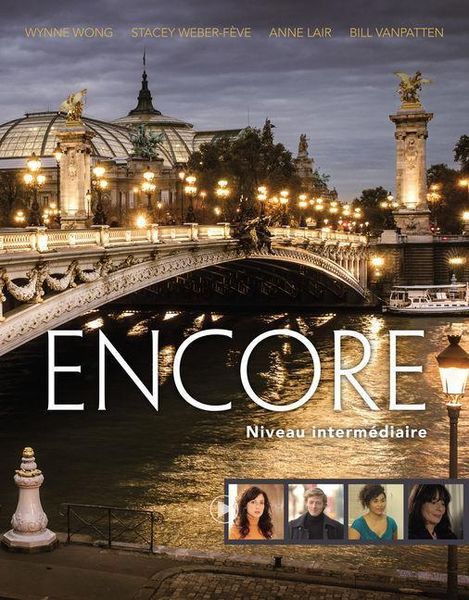
Produktbild: Encore Intermediate French Stu

Encore Intermediate French Stu

Fr. 203.00

inkl. gesetzl. MwSt., Versandkostenfrei


Produktdetails

ISBN

978-1-305-96709-0

Erscheinungsdatum

01.01.2017

Unterrichtsfächer

Französisch + weitere

Einband

Taschenbuch

Verlag

Cengage Learning

Seitenzahl

448

Maße (L/B/H)

27.2/21.3/1.5 cm

Gewicht

862 g

Sprache

Englisch

Produktdetails

ISBN

978-1-305-96709-0

Erscheinungsdatum

01.01.2017

Unterrichtsfächer

  • Französisch
  • Pädagogik

Einband

Taschenbuch

Verlag

Cengage Learning

Seitenzahl

448

Maße (L/B/H)

27.2/21.3/1.5 cm

Gewicht

862 g

Sprache

Englisch

Noch keine Bewertungen vorhanden

Verfassen Sie die erste Bewertung zu diesem Artikel

Helfen Sie anderen Kundinnen und Kunden durch Ihre Meinung.

Kundinnen und Kunden meinen

Bewertungen (0)

Weitere Artikel finden Sie in

  • Produktbild: Encore Intermediate French Stu
  • CHAPITRE PRÉLIMINAIRE: PREMIÈRES RENCONTRES. Vocabulaire: Nos amis francophones; Premières impressions. Grammaire: Idiomatic expressions with être and avoir; futur proche; present tense of stem-changing verbs; depuis; the imperative. 1. LES SYMBOLES. Vocabulaire: La fleur de lys; graffiti, tag, tatouages, henna. Grammaire: The present tense of the irregular verbs offrir, plaire, soutenir, construire, servir; Definite, indefinite, and partitive articles; Pronominal verbs: reflexive, reciprocal, and idiomatic; s’agir de. Les cultures francophones: Que signifie la Tour Eiffel?; Le tatouage des îles Marquises. Lecture: Calligrammes, Guillaume Apollinaire (poems). 2. LES VALEURS. Vocabulaire: Quelques valeurs du monde francophone; poser des questions sur des valeurs, c’est une bonne idée? Grammaire: Prepositions of location and for modes of transportation; the pronoun y; interrogative adverbs; the interrogative adjective quel; Interrogative pronouns. Les cultures francophones: Le Québec chante ses valeurs; Zachary Richard chante les valeurs des Amériques. Lecture: Les filles de Caleb, Arlette Cousture (excerpt from a novel). 3. LA FAMILLE. Vocabulaire: La famille franÃ
    aise en pleine évolution; L’influence de la famille sur qui nous sommes. Grammaire: Possessive adjectives and possessive pronouns; agreement and position of irregular adjectives; pronominal adjectives; le passé composé with avoir and être (including irregular past participles and reflexive verbs). Les cultures francophones: Vie de famille et une carrière professionnelle; l’adoption, un autre concept de la famille. Lecture: “Entretien avec Nathalie Monsaint-Baudry: L’éducation franÃ
    aise, un modèle unique et supérieur?” (excerpt from a magazine interview). 4. L’IDENTITÉ. Vocabulaire: Défense de l’identité culturelle; l’identité personnelle. Grammaire: Direct object pronouns with the present, the passé composé, and commands; the pronoun en; Indirect object pronouns with the present, the passé composé, and commands; The conditional: irregular verbs; double object pronouns. Les cultures francophones: Jamel Debbouze, humoriste d’identité franco-marocaine; Lalla Essaydi, photographe marocaine: L’identité de la femme. Lecture: Ru, Kim Thúy (excerpt from a novel). 5. L’AMITIÉ. Vocabulaire: Et pour vous, qu’est-ce que l’amitié?; De la camaraderie à l’amitié. Grammaire: The passé composé of courir, rire, suivre, mourir, conduire, savoir, connaître; time expressions (pendant, depuis, il y a (que), Ã
    a fait que, voilà que); Adverbs: categories of; position; The imparfait and the passé compose. Les cultures francophones: L’amitié franco-québécoise; L’amitié entre les nations. Lecture: Une si longue lettre, Mariama Bâ (excerpt from a novel). 6. LES APPARENCES. Vocabulaire: L’apparence physique dans le monde francophone; Notre apparence physique en fonction des circonstances. Grammaire: Comparatives and superlatives (nouns, adjectives, adverbs); Relative pronouns (qui, que, dont), and indefinite relative pronouns (ce qui, ce que, ce dont); Plus-que-parfait (form and use). Les cultures francophones: Chanel, symbole de l’élégance; La voile: mode (musulmane) ou religion. Lecture: La parure, Guy de Maupassant (excerpt from a short story). 7. LES DÉFIS. Vocabulaire: Quelques défis du monde francophone; La vie n’est pas un long fleuve tranquille. Grammaire: The subjunctive: expressing obligation, will, and emotion; The subjunctive and the indicative expressing: opinion, doubt, and uncertainty; The subjunctive with conjunctions; the past subjunctive. Les cultures francophones: La langue franÃ
    aise et ses défis; La rage de Katrina. Lecture: Entretien avec le chanteur Corneille: Corneille raconte son drame (excerpt from an online interview). 8. LA CONFIANCE. Vocabulaire: Confiance ou méfiance?; Faire confiance aux gens. Grammaire: Futur simple (regular, spelling-change, irregular forms; usage); Negative expressions; Demonstrative pronouns (celui, celle, ceux, celles, ceci, cela, Ã
    a); the pronou