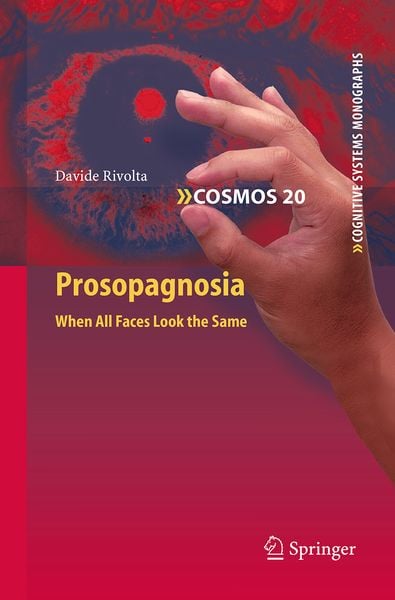
Prosopagnosia When all faces look the same
-
- Hardcover
- Taschenbuch ausgewählt
- eBook
-
Sprache:Englisch
Fr. 138.00
inkl. gesetzl. MwSt.,
Beschreibung
Produktdetails
Einband
Taschenbuch
Erscheinungsdatum
27.08.2016
Abbildungen
XII, 30 illus., 1 illus. in color., farbige Illustrationen, schwarz-weiss Illustrationen
Verlag
Springer BerlinSeitenzahl
95
Maße (L/B)
23.5/15.5 cm
Gewicht
178 g
Auflage
Softcover reprint of the original 1st ed. 2014
Sprache
Englisch
ISBN
978-3-662-52393-3
This book provides readers with a simplified and comprehensive account of the cognitive and neural bases of face perception in humans. Faces are ubiquitous in our environment and we rely on them during social interactions. The human face processing system allows us to extract information about the identity, gender, age, mood, race, attractiveness and approachability of other people in about a fraction of a second, just by glancing at their faces. By introducing readers to the most relevant research on face recognition, this book seeks to answer the questions: “Why are humans so fast at recognizing faces?”, “Why are humans so efficient at recognizing faces?”, “Do faces represent a particular category for the human visual system?”, What makes face perception in humans so special?, “Can our face recognition system fail”?. This book presents the author’s findings on face perception during his research studies on both normal subjects and subjects with prosopagnosia, a neurological disorder characterized by the inability to recognize faces. The book describes two known forms of prosopagnosia: acquired prosopagnosia, which is the result of a brain lesion, and congenital prosopagnosia, which refers to a lifelong, developmental impairment of face recognition. Written in a comprehensive and accessible style, this book addresses both experts (cognitive scientists, psychologists, neuroscientists and computer scientists) and the general public, and aims at raising awareness for a debilitating face recognition disorder, such as prosopagnosia, which is often ignored or misdiagnosed as autism, with serious consequences for the affected persons and their families.
Kundinnen und Kunden meinen
Verfassen Sie die erste Bewertung zu diesem Artikel
Helfen Sie anderen Kund*innen durch Ihre Meinung