Band 41
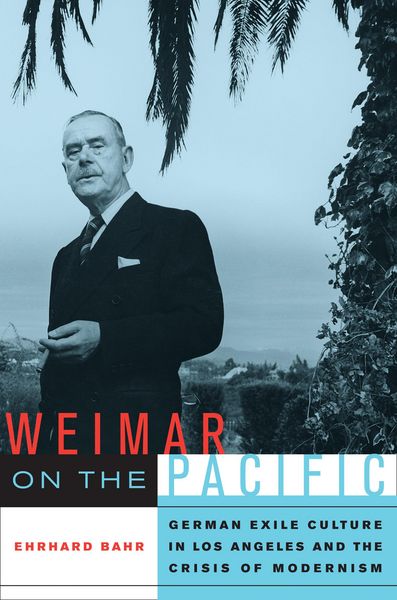
Weimar on the Pacific German Exile Culture in Los Angeles and the Crisis of Modernism
Aus der Reihe
Weimar and Now: German Cultural Criticism
-
- Taschenbuch
- eBook ausgewählt
-
Form:Einzelkauf Download
-
Sprache:Englisch
Fr. 38.90
inkl. gesetzl. MwSt.Beschreibung
Produktdetails
Format
Kopierschutz
Nein
Family Sharing
Nein
Text-to-Speech
Nein
Erscheinungsdatum
02.05.2007
Verlag
Naval Institute PressSeitenzahl
378 (Printausgabe)
Dateigröße
2028 KB
Auflage
1. Auflage
Sprache
Englisch
EAN
9780520933804
In the 1930s and 40s, Los Angeles became an unlikely cultural sanctuary for a distinguished group of German artists and intellectuals-including Thomas Mann, Theodore W. Adorno, Bertolt Brecht, Fritz Lang, and Arnold Schoenberg-who had fled Nazi Germany. During their years in exile, they would produce a substantial body of major works to address the crisis of modernism that resulted from the rise of National Socialism. Weimar Germany and its culture, with its meld of eighteenth-century German classicism and twentieth-century modernism, served as a touchstone for this group of diverse talents and opinions.
Weimar on the Pacific is the first book to examine these artists and intellectuals as a group. Ehrhard Bahr studies selected works of Adorno, Horkheimer, Brecht, Lang, Neutra, Schindler, Döblin, Mann, and Schoenberg, weighing Los Angeles's influence on them and their impact on German modernism. Touching on such examples as film noir and Thomas Mann's Doctor Faustus, Bahr shows how this community of exiles reconstituted modernism in the face of the traumatic political and historical changes they were living through.
Weimar on the Pacific is the first book to examine these artists and intellectuals as a group. Ehrhard Bahr studies selected works of Adorno, Horkheimer, Brecht, Lang, Neutra, Schindler, Döblin, Mann, and Schoenberg, weighing Los Angeles's influence on them and their impact on German modernism. Touching on such examples as film noir and Thomas Mann's Doctor Faustus, Bahr shows how this community of exiles reconstituted modernism in the face of the traumatic political and historical changes they were living through.
Noch keine Bewertungen vorhanden
Verfassen Sie die erste Bewertung zu diesem Artikel
Helfen Sie anderen Kundinnen und Kunden durch Ihre Meinung.