Gutscheinbedingungen

*Gültig bis 05.07.2026 auf (fast) alles. Ausgeschlossen sind Smartboxen, Zeitschriften, Tickets, Lebensmittel, Gaming-Elektroartikel, Tinte/Toner, Gutscheine, Geschenkkarten, Blumen und Abos | Einlösbar in allen Buchhandlungen von Orell Füssli, Barth Bücher, Buchladen Rapunzel, Papeterie Köhler, Schuler Orell Füssli, Stauffacher und ZAP unter Vorweisung des Gutscheins, auf www.orellfüssli.ch durch Eingabe des Gutscheincodes. Beim Service „eBooks verschenken“ und bei eBook-Käufen via eReader nicht einlösbar | Mindesteinkaufswert: Fr. 30.- | Nicht mit anderen Rabatten kumulierbar.

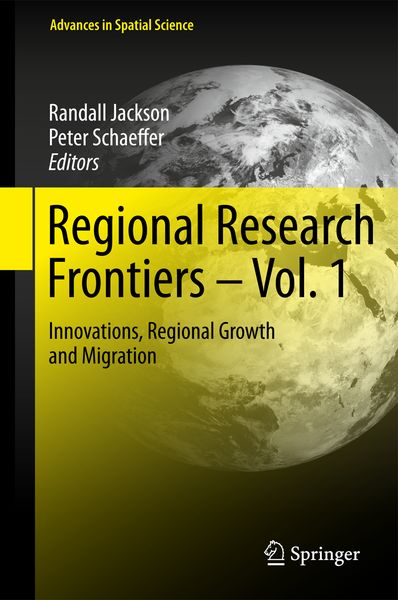
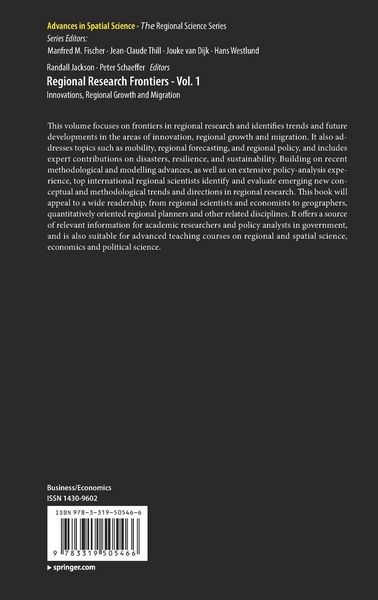
  • Produktbild: Regional Research Frontiers - Vol. 1
  • Produktbild: Regional Research Frontiers - Vol. 1

Regional Research Frontiers - Vol. 1 Innovations, Regional Growth and Migration

Fr. 182.00

inkl. gesetzl. MwSt., Versandkostenfrei


Beschreibung

Produktdetails

Einband

Gebundene Ausgabe

Erscheinungsdatum

25.04.2017

Abbildungen

XIII, 25 illus., 11 illus. in color., farbige Illustrationen, schwarz-weiss Illustrationen

Herausgeber

Randall Jackson + weitere

Verlag

Springer

Seitenzahl

346

Maße (L/B/H)

24.1/16/2.5 cm

Gewicht

705 g

Auflage

1st ed. 2017

Sprache

Englisch

ISBN

978-3-319-50546-6

Beschreibung

Portrait

Dr. Randall Jackson joined the West Virginia University faculty as Regional Research Institute Director and Professor of Geology and Geography in January 2002. Previous appointments include the geography department and the Center for Governmental Studies at Northern Illinois University and the geography department at The Ohio State University. While at OSU, he also served two years as Associate Director for Research Computing. He is Adjunct Professor in Economics and Agricultural and Resource Economics at WVU, and in Geography at The Ohio State University. He is a past-president and Fellow of the Southern Regional Science Association, and sits on the Board of Directors for the Western Regional Science Association. He was 2007 Chair of the North American Regional Science Council, and he has received the David E. Boyce Award for Distinguished Service to the Regional Science Association International, having served as its Newsletter Editor and established and maintained its primary Internet website. He has received the Benedum Distinguished Scholar Award, West Virginia University’s highest research and scholarship recognition.

Dr. Peter Schaeffer is Professor of Regional Economics and Public Policy at West Virginia University and a Faculty Research Associate in the Regional Research Institute. He has previously served on the faculties of the University of Illinois at Urbana-Champaign, University of Colorado at Denver, as a visiting professor at the Swiss Federal Institute of Technology, Zurich, and a visiting scholar at the International Labor Organization in Geneva. He has consulted on regional economic development in North America, Europe, and the People’s Republic of China. Dr. Schaeffer is a past chair of the North American Regional Science Council and past-president of the Southern Regional Science Association. He obtained a licentiate in economics from the University of Zurich and the M.A. and Ph.D. in economics from the University of Southern California. 

Produktdetails

Einband

Gebundene Ausgabe

Erscheinungsdatum

25.04.2017

Abbildungen

XIII, 25 illus., 11 illus. in color., farbige Illustrationen, schwarz-weiss Illustrationen

Herausgeber

Verlag

Springer

Seitenzahl

346

Maße (L/B/H)

24.1/16/2.5 cm

Gewicht

705 g

Auflage

1st ed. 2017

Sprache

Englisch

ISBN

978-3-319-50546-6

Herstelleradresse

Springer-Verlag KG
Sachsenplatz 4-6
1201 Wien
AT

Email: GPSR Kontakt

Noch keine Bewertungen vorhanden

Verfassen Sie die erste Bewertung zu diesem Artikel

Helfen Sie anderen Kundinnen und Kunden durch Ihre Meinung.

Kundinnen und Kunden meinen

Bewertungen (0)

  • Produktbild: Regional Research Frontiers - Vol. 1
  • Produktbild: Regional Research Frontiers - Vol. 1
  • Preface.- Part I: Technology, Innovation, Gender, and Entrepreneurship.- Part II: Regional Growth, Regional Forecasts, and Policy.- Part III: Disaster and Resilience.- Part IV: Migration, Demography, and Human Capital.