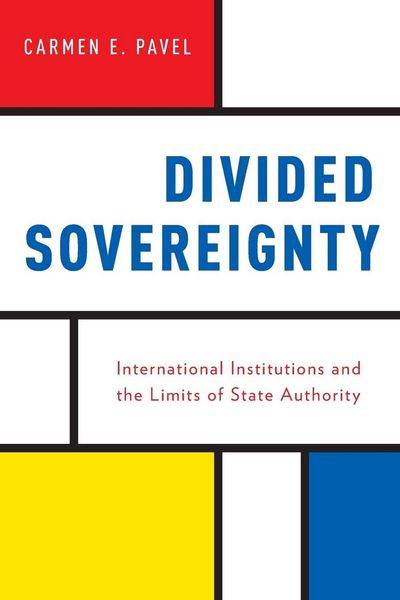
Divided Sovereignty International Institutions and the Limits of State Authority
-
- Hardcover
- Taschenbuch ausgewählt
- eBook
-
Sprache:Englisch
Fr. 55.90
inkl. gesetzl. MwSt.,
Beschreibung
Produktdetails
Einband
Taschenbuch
Erscheinungsdatum
01.07.2017
Verlag
Oxford University PressSeitenzahl
240
Maße (L/B/H)
23.4/15.6/1.4 cm
Gewicht
340 g
Sprache
Englisch
ISBN
978-0-19-069217-9
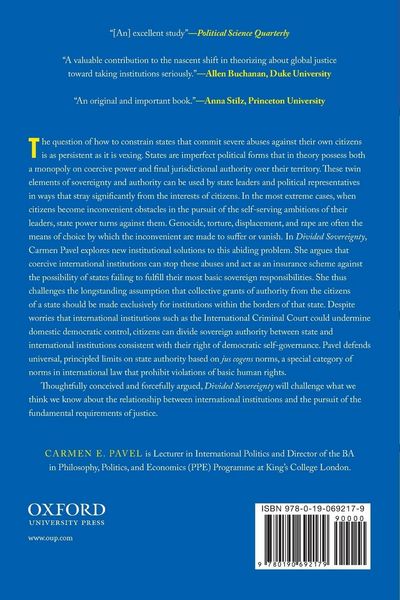
The question of how to constrain states that commit severe abuses against their own citizens is as persistent as it is vexing. States are imperfect political forms that in theory possess both a monopoly on coercive power and final jurisdictional authority over their territory. These twin elements of sovereignty and authority can be used by state leaders and political representatives in ways that stray significantly from the interests of citizens. In the most extreme cases, when citizens become inconvenient obstacles in the pursuit of the self-serving ambitions of their leaders, state power turns against them. Genocide, torture, displacement, and rape are often the means of choice by which the inconvenient are made to suffer or vanish. In Divided Sovereignty, Carmen Pavel explores new institutional solutions to this abiding problem. She argues that coercive international institutions can stop these abuses and act as an insurance scheme against the possibility of states failing to fulfill their most basic sovereign responsibilities. She thus challenges the longstanding assumption that collective grants of authority from the citizens of a state should be made exclusively for institutions within the borders of that state. Despite worries that international institutions such as the International Criminal Court could undermine domestic democratic control, citizens can divide sovereign authority between state and international institutions consistent with their right of democratic self-governance. Pavel defends universal, principled limits on state authority based on jus cogens norms, a special category of norms in international law that prohibit violations of basic human rights. Against skeptics, she argues that many of the challenges of building an additional layer of institutions can be met if we pay attention to the conditions of institutional success, which require experimentation with different institutional forms, limitations on the scope of authority for coercive international institutions, and an appreciation of the limits of existing knowledge on institutional design. Thoughtfully conceived and forcefully argued, Divided Sovereignty will challenge what we think we know about the relationship between international institutions and the pursuit of the fundamental requirements of justice.
Noch keine Bewertungen vorhanden
Verfassen Sie die erste Bewertung zu diesem Artikel
Helfen Sie anderen Kundinnen und Kunden durch Ihre Meinung.