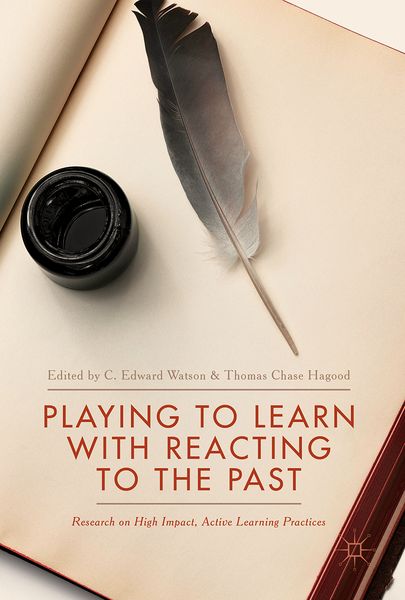
Playing to Learn with Reacting to the Past Research on High Impact, Active Learning Practices
-
- Hardcover ausgewählt
- Taschenbuch
- eBook
-
Sprache:Englisch
Fr. 150.00
inkl. gesetzl. MwSt.,
Beschreibung
Produktdetails
Einband
Gebundene Ausgabe
Erscheinungsdatum
18.10.2017
Abbildungen
XXIV, 7 illus., 6 illus. in color., schwarz-weiss Illustrationen, farbige Illustrationen
Herausgeber
C. Edward Watson + weitereVerlag
SpringerSeitenzahl
229
Maße (L/B/H)
21.6/15.3/1.9 cm
Gewicht
448 g
Auflage
1st edition 2018
Sprache
Englisch
ISBN
978-3-319-61746-6
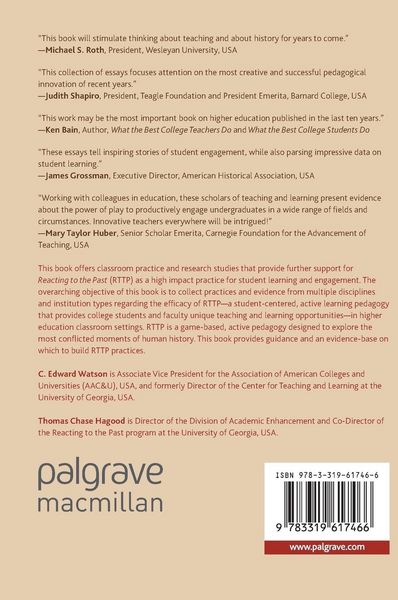
This book provides classroom practice and research studies that verify Reacting to the Past (RTTP)—a student-centered, active learning pedagogy that provides college students and faculty unique teaching and learning opportunities—as a high impact practice for student learning and engagement. The overarching objective of this book is to collect practices and evidence from multiple disciplines and institution types regarding the efficacy of RTTP in higher education classroom settings. At its core, RTTP is a game-based pedagogy with published games on some of the most conflicted moments of human history. While RTTP is deeply grounded in theory and literature that suggests its approaches can be impactful, deep and broad examinations of RTTP pedagogies in a range of course settings have not been extensively performed until now. This book provides guidance and an evidence-base on which to build RTTP practices.
Noch keine Bewertungen vorhanden
Verfassen Sie die erste Bewertung zu diesem Artikel
Helfen Sie anderen Kundinnen und Kunden durch Ihre Meinung.