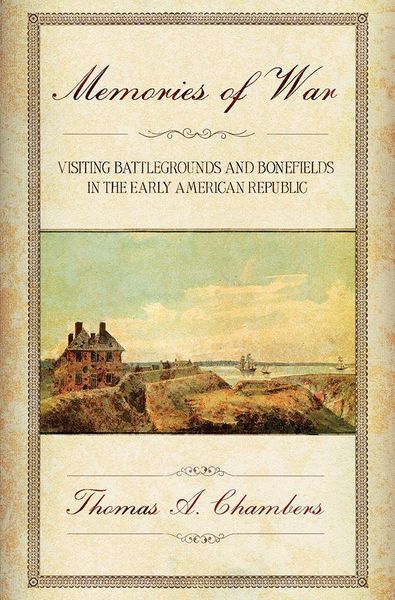
Memories of War Visiting Battlegrounds and Bonefields in the Early American Republic
-
- Hardcover
- Taschenbuch
- eBook ausgewählt
-
Form:Einzelkauf Download
-
Sprache:Englisch
-
eBook Format:ePUB
- PDF Fr. 104.90
- ePUB Fr. 8.90 ausgewählt
Fr. 8.90
inkl. gesetzl. MwSt.Beschreibung
Produktdetails
Format
ePUB
Kopierschutz
Nein
Family Sharing
Nein
Text-to-Speech
Ja
Erscheinungsdatum
18.09.2012
Verlag
Cornell University PressSeitenzahl
252 (Printausgabe)
Dateigröße
4821 KB
Sprache
Englisch
EAN
9780801465239
Even in the midst of the Civil War, its battlefields were being dedicated as hallowed ground. Today, those sites are among the most visited places in the United States. In contrast, the battlegrounds of the Revolutionary War had seemingly been forgotten in the aftermath of the conflict in which the nation forged its independence. Decades after the signing of the Constitution, the battlefields of Yorktown, Saratoga, Fort Moultrie, Ticonderoga, Guilford Courthouse, Kings Mountain, and Cowpens, among others, were unmarked except for crumbling forts and overgrown ramparts. Not until the late 1820s did Americans begin to recognize the importance of these places.
In Memories of War, Thomas A. Chambers recounts America's rediscovery of its early national history through the rise of battlefield tourism in the first half of the nineteenth century. Travelers in this period, Chambers finds, wanted more than recitations of regimental movements when they visited battlefields; they desired experiences that evoked strong emotions and leant meaning to the bleached bones and decaying fortifications of a past age. Chambers traces this impulse through efforts to commemorate Braddock's Field and Ticonderoga, the cultivated landscapes masking the violent past of the Hudson River valley, the overgrown ramparts of Southern war sites, and the scenic vistas at War of 1812 battlefields along the Niagara River. Describing a progression from neglect to the Romantic embrace of the landscape and then to ritualized remembrance, Chambers brings his narrative up to the beginning of the Civil War, during and after which the memorialization of such sites became routine, assuming significant political and cultural power in the American imagination.
Kundinnen und Kunden meinen
Verfassen Sie die erste Bewertung zu diesem Artikel
Helfen Sie anderen Kund*innen durch Ihre Meinung