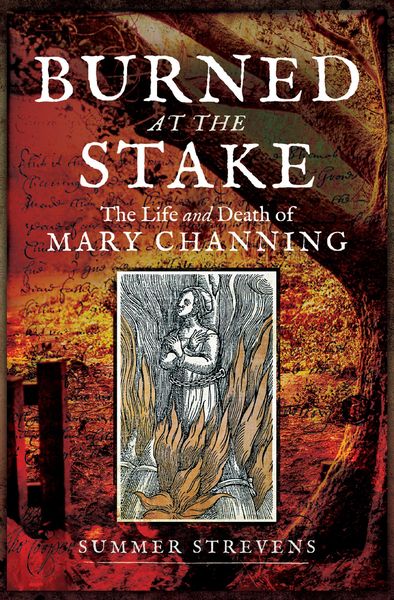
Burned at the Stake The Life and Death of Mary Channing
-
- Einzelkauf Download ausgewählt
-
Sprache:Englisch
Fr. 19.90
inkl. gesetzl. MwSt.Beschreibung
Produktdetails
Format
ePUB 3
Kopierschutz
Nein
Family Sharing
Nein
Text-to-Speech
Ja
Erscheinungsdatum
20.02.2019
Verlag
Pen & Sword HistorySeitenzahl
136 (Printausgabe)
Dateigröße
5062 KB
Sprache
Englisch
EAN
9781473898745
A true story of crime and punishment in eighteenth-century England, and the first trial in recorded history to employ forensic evidence.
In 1706, nineteen-year-old Mary Channing was convicted of poisoning her husband and became the last woman to be burned at the stake in Dorset. Despite the likely culpability of her lover, and her impressive attempts to defend herself, the jury took only half an hour to find her guilty, having accepted the groundbreaking toxicological evidence by prosecutors. When the day finally arrived, Mary's execution was made into something of a county fair, with ten thousand spectators gathering to see the young mother consigned to the flames upon the floor of Dorchester's ancient Roman amphitheater, Maumbury Rings.
More than three hundred years after her barbaric demise, Mary's fate still holds a macabre fascination, as it did then for author Thomas Hardy, for whom it became an obsession. Hardy recorded the details of Mary's execution in his notebooks, expressed doubt of her guilt, and used her as the inspiration for his poem, "The Mock Wife". Yet while Mary Channing has been granted a kind of grim celebrity, as well as an established place in the annals of female murderers, a measure of compelling sympathy for her case is another lasting aspect of her legacy is this "dramatic and fascinating" chronicle of a woman accused (
Ripperologist Magazine).
In 1706, nineteen-year-old Mary Channing was convicted of poisoning her husband and became the last woman to be burned at the stake in Dorset. Despite the likely culpability of her lover, and her impressive attempts to defend herself, the jury took only half an hour to find her guilty, having accepted the groundbreaking toxicological evidence by prosecutors. When the day finally arrived, Mary's execution was made into something of a county fair, with ten thousand spectators gathering to see the young mother consigned to the flames upon the floor of Dorchester's ancient Roman amphitheater, Maumbury Rings.
More than three hundred years after her barbaric demise, Mary's fate still holds a macabre fascination, as it did then for author Thomas Hardy, for whom it became an obsession. Hardy recorded the details of Mary's execution in his notebooks, expressed doubt of her guilt, and used her as the inspiration for his poem, "The Mock Wife". Yet while Mary Channing has been granted a kind of grim celebrity, as well as an established place in the annals of female murderers, a measure of compelling sympathy for her case is another lasting aspect of her legacy is this "dramatic and fascinating" chronicle of a woman accused (
Ripperologist Magazine).
Kundinnen und Kunden meinen
Verfassen Sie die erste Bewertung zu diesem Artikel
Helfen Sie anderen Kund*innen durch Ihre Meinung