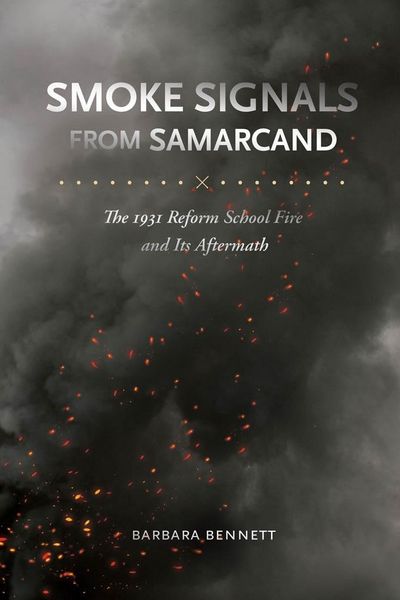
Smoke Signals from Samarcand The 1931 Reform School Fire and Its Aftermath
Fr. 32.90
inkl. gesetzl. MwSt.Beschreibung
Produktdetails
Format
ePUB
Kopierschutz
Nein
Family Sharing
Nein
Text-to-Speech
Ja
Erscheinungsdatum
15.05.2018
Verlag
University Of South Carolina PressSeitenzahl
136 (Printausgabe)
Dateigröße
2579 KB
Sprache
Englisch
EAN
9781611178616
A case study and dramatic retelling of young girls on trial for arson at a reform school
In 1931 sixteen poor, white girls-all teenaged inmates at Samarcand Manor, officially named the State Home and Industrial School for Girls, in Samarcand, North Carolina-were accused of burning down two campus buildings in protest against living conditions. Barbara Bennett offers not only a dramatic retelling of this historic case in Smoke Signals from Samarcand, but also reveals a case study of the misguided social engineering schemes-fraught with racism, classism, and sexual stereotypes-that churned through North Carolina and other southern states during this time.
The girls, who became known as the "Samarcand Sixteen," were described by administrators and the media as incorrigible and troublesome. Bennett additionally reveals their grim backgrounds and details the harsh disciplinary methods, including savage whippings, that were dispensed at Samarcand and other reform schools in the early twentieth century. Arson was a capital offense in North Carolina at the time, and the girls were put on trial for their lives.
The sensational trial took place in the midst of a strong eugenics movement that was sweeping the state and the South. The girls' newly minted lawyer, Nell Battle Lewis, argued that the treatment the girls endured at Samarcand had forced them to take drastic action and therefore should result in lenient sentences. Instead the state of North Carolina used bogus "scientific" theories-such as "bad blood genetics"-to create legal policy and criminal justice practices that were heavily prejudiced against powerless people, particularly girls and women.
In the end the girls received sentences of eighteen months to five years in the state penitentiary, although the trial and its publicity did lead to improvements in the physical conditions and disciplinary methods at Samarcand and other juvenile facilities in North Carolina.
Noch keine Bewertungen vorhanden
Verfassen Sie die erste Bewertung zu diesem Artikel
Helfen Sie anderen Kundinnen und Kunden durch Ihre Meinung.