Gutscheinbedingungen

*Gültig bis 05.07.2026 auf (fast) alles. Ausgeschlossen sind Smartboxen, Zeitschriften, Tickets, Lebensmittel, Gaming-Elektroartikel, Tinte/Toner, Gutscheine, Geschenkkarten, Blumen und Abos | Einlösbar in allen Buchhandlungen von Orell Füssli, Barth Bücher, Buchladen Rapunzel, Papeterie Köhler, Schuler Orell Füssli, Stauffacher und ZAP unter Vorweisung des Gutscheins, auf www.orellfüssli.ch durch Eingabe des Gutscheincodes. Beim Service „eBooks verschenken“ und bei eBook-Käufen via eReader nicht einlösbar | Mindesteinkaufswert: Fr. 30.- | Nicht mit anderen Rabatten kumulierbar.

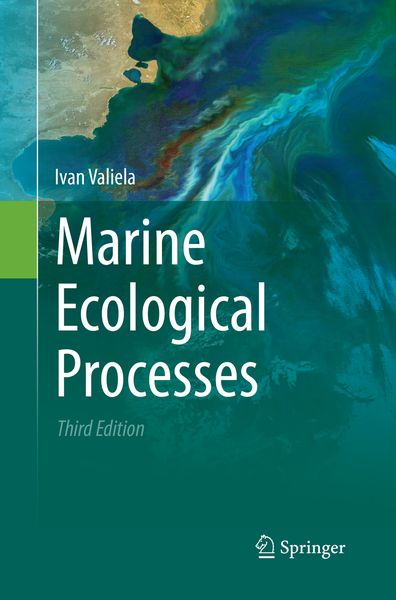
Produktbild: Marine Ecological Processes

Marine Ecological Processes

Fr. 119.00

inkl. gesetzl. MwSt., Versandkostenfrei


Beschreibung

Produktdetails

Einband

Taschenbuch

Erscheinungsdatum

14.04.2018

Verlag

Springer Us

Seitenzahl

702

Maße (L/B/H)

23.5/15.5/3.7 cm

Gewicht

1209 g

Auflage

Softcover reprint of the original 3rd edition 2015

Sprache

Englisch

ISBN

978-1-4939-7909-7

Beschreibung

Produktdetails

Einband

Taschenbuch

Erscheinungsdatum

14.04.2018

Verlag

Springer Us

Seitenzahl

702

Maße (L/B/H)

23.5/15.5/3.7 cm

Gewicht

1209 g

Auflage

Softcover reprint of the original 3rd edition 2015

Sprache

Englisch

ISBN

978-1-4939-7909-7

Herstelleradresse

Springer-Verlag KG
Sachsenplatz 4-6
1201 Wien
AT

Email: GPSR Kontakt

Noch keine Bewertungen vorhanden

Verfassen Sie die erste Bewertung zu diesem Artikel

Helfen Sie anderen Kundinnen und Kunden durch Ihre Meinung.

Kundinnen und Kunden meinen

Bewertungen (0)

  • Produktbild: Marine Ecological Processes
  • ContentsPreface to the Third EditionPreface to the Second EditionPreface to the First EditionPart I        Primary production in marine environmentsChapter 1       Primary producers in the sea      1.1       Phytoplankton      1.2       Benthic producersChapter 2      Production: the formation of organic matter      2.1       Photosynthesis      2.2       Chemosynthesis      2.3       Measurement of producer biomass and primary production      2.4       Contributions by different marine primary producersChapter 3       Factors affecting primary production      2.1       Light      2.2       The Uptake and Availability of Nutrients      2.3       Temperature and Interactions with Other Factors      2.4       Distribution of Phytoplankton Production Over the World OceanPart II       Consumers in Marine EnvironmentsChapter 3       Dynamics of Populations of Consumers      3.1       Elements of the Mathematical Description of Growth of Populations      3.2       Survival Life Tables      3.3       Fecundity Life Tables      3.4       Some Properties of Life Table Variables      3.5       Reproductive TacticsChapter 4       Competition for Resources Among Consumers      4.1       Population Growth in Environments with Finite Resources      4.2       The Nature of Competition      4.3       Density-Dependent Control of Abundance      4.4       Density-Dependent Versus Density-Independent Effects on Abundance      4.5       Resource Partitioning      4.6       Niche Breadth and Species PackingChapter 5       Feeding and Responses to Food Abundance      5.1       Introduction      5.2       Functional Response to Prey Density<      5.3       Numerical Responses by the Predator to Density of Prey      5.4       Developmental Response to Prey DensityChapter 6       Food Selection by Consumers      6.1       Introduction      6.2       Behavioral Mechanisms Involved in Finding and Choosing Food      6.3       Factors Affecting Food Selection by Consumers      6.4       Examples of Feeding Mechanisms at Work: Suspension Feeding      6.5       Optimization in Food Selection by Consumers      6.6       Vulnerability and Accessibility of Food Items      6.7       The Importance of Alternate Prey      6.8       Interaction of Mechanisms of Predation      6.9       Predation and Stability of Prey PopulationsChapter 7       Processing of Consumed Energy      7.1       Flow of Energy Through Consumers      7.2       Assimilation      7.3       Respiration      7.4       Growth    7.5       Production      7.6       Energy Budgets for PopulationsPart III     Structure and Dynamics of Marine CommunitiesChapter 8       Trophic Structure 1: Controls in Benthic Food Webs      8.1       Defining Food Webs      8.2       Controls of Community Structure      8.3       Control Mechanisms in Benthic CommunitiesChapter 9       Trophic Structure 2: Components and Controls in Water Column Food Webs      9.1       Food Webs in Marine Water Columns      9.2       Microbial Food Webs      9.3       The Classic Microplankton Food Web      9.4       Speculations as to Control of Prey Populations by Larger Predators in the Marine Water ColumnChapter 10     Taxonomic Structure: Species Diversity      10.1     Introduction      10.2     Measurement of Diversity      10.3     Factors Affecting Diversity      10.4     Integration of Factors Affecting Diversity and Some ConsequencesChapter 11     Spatial Structure: Patchiness      11.1     Scales of Patchiness      11.2     Description of Spatial Distributions      11.3     Sources of Patchiness      11.4     Ecological Consequences of Patchiness      11.5     The Problem of UpscalingChapter 12     Development of Structure in Marine Communities: Colonization and Succession      12.1     Introduction      12.2     Colonization Processes      12.3     Case Histories of Colonization and Succession      12.4     Interaction Among Communities at Different Stages of Succession      12.5     Generalized Properties of Succession in Marine EnvironmentsPart IV     Functioning of Marine EcosystemsChapter 13     The Carbon Cycle: Production and Transformations of Organic Matter                13.1     Inorganic Carbon      13.2     The Carbon Cycle in Aerobic Environments      13.3     The Carbon Cycle in Anoxic EnvironmentsChapter 14     Nutrient Cycles and Ecosystem Stoichiometry      14.1     Phosphorus      14.2     Nitrogen      14.3     Sulfur      14.4     Ecosystem Energetics and StoichiometryChapter 15     Seasonal Changes in Marine Ecosystems      15.1     Introduction      15.2     Water Column Seasonal Cycles      15.3     Benthic Seasonal Cycles      15.4     Control of Seasonal CyclesChapter 16     Long-Term and Large-Scale Change in Marine Ecosystems      16.1     Introduction      16.2     Large-Scale Effects of Long-Term Atmospheric Changes      16.3     Depletion of Fishery Stocks      16.4     Eutrophication      16.5     Toxic Contamination      16.6     Spread of Exotic Species      16.7     Harmful Algal Blooms      16.8     Interception of Freshwater Inputs and Sediment Loads      16.9     Multiple Factors in Concert: The Case of Black Sea      16.10   Implications of Long-Term, Large-Scale ChangesReferencesIndex