Gutscheinbedingungen

*Gültig bis 05.07.2026 auf (fast) alles. Ausgeschlossen sind Smartboxen, Zeitschriften, Tickets, Lebensmittel, Gaming-Elektroartikel, Tinte/Toner, Gutscheine, Geschenkkarten, Blumen und Abos | Einlösbar in allen Buchhandlungen von Orell Füssli, Barth Bücher, Buchladen Rapunzel, Papeterie Köhler, Schuler Orell Füssli, Stauffacher und ZAP unter Vorweisung des Gutscheins, auf www.orellfüssli.ch durch Eingabe des Gutscheincodes. Beim Service „eBooks verschenken“ und bei eBook-Käufen via eReader nicht einlösbar | Mindesteinkaufswert: Fr. 30.- | Nicht mit anderen Rabatten kumulierbar.

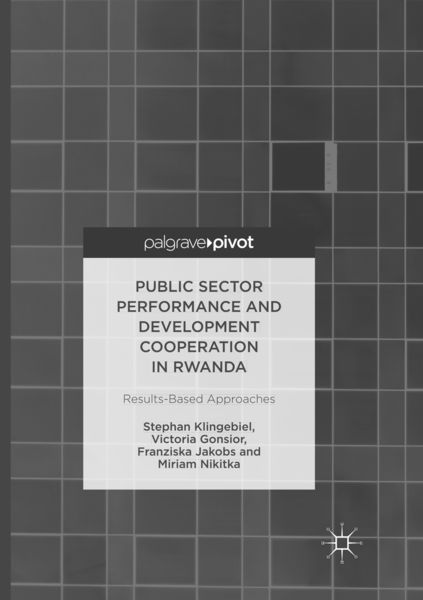
Produktbild: Public Sector Performance and Development Cooperation in Rwanda

Public Sector Performance and Development Cooperation in Rwanda Results-Based Approaches

Fr. 81.90

inkl. gesetzl. MwSt., Versandkostenfrei


Beschreibung

Produktdetails

Einband

Taschenbuch

Erscheinungsdatum

11.07.2018

Abbildungen

XII, 5 illus. in color., farbige Illustrationen

Verlag

Springer

Seitenzahl

96

Maße (L/B)

21/14.8 cm

Gewicht

158 g

Auflage

Softcover reprint of the original 1st ed. 2016

Sprache

Englisch

ISBN

978-3-319-82509-0

Beschreibung

Produktdetails

Einband

Taschenbuch

Erscheinungsdatum

11.07.2018

Abbildungen

XII, 5 illus. in color., farbige Illustrationen

Verlag

Springer

Seitenzahl

96

Maße (L/B)

21/14.8 cm

Gewicht

158 g

Auflage

Softcover reprint of the original 1st ed. 2016

Sprache

Englisch

ISBN

978-3-319-82509-0

Herstelleradresse

Springer Nature Customer Service Center GmbH
Europaplatz 3
69115 Heidelberg
DE
ProductSafety@springernature.com

Noch keine Bewertungen vorhanden

Verfassen Sie die erste Bewertung zu diesem Artikel

Helfen Sie anderen Kundinnen und Kunden durch Ihre Meinung.

Kundinnen und Kunden meinen

Bewertungen (0)

  • Produktbild: Public Sector Performance and Development Cooperation in Rwanda
  • Abbreviations............................................................................................................................. IVContents..................................................................................................................................... VIBoxes, Figures and Tables........................................................................................................ VIIAbstract....................................................................................................................................... 11.    Introduction......................................................................................................................... 21.1.    Conceptual Background and Purpose of the Study....................................................... 21.2.    Case Selection: Rwanda´s DPA - Imihigo...................................................................... 31.3.    Research Design and Used Methods............................................................................ 41.4.    Outline of the Report.................................................................................................... 82.    Theoretical Framework: RBApps......................................................................................... 82.1.    Conceptual Debates...................................................................................................... 8<2.1.1.    Performance as in Public Sector Reform/New Public Management.................... 92.1.2.    Results as in Development Cooperation and Aid Effectiveness.......................... 102.2.    The Concept RBApp.................................................................................................... 122.2.1.    Actor Constellations............................................................................................. 122.2.2.    Characteristics..................................................................................................... 142.3.    RBApps and the Usage of Country Systems................................................................ 172.4.    Critique, Challenges and Limitations of RBApps........................................................ 182.4.1.    RBApps and development cooperation................................................................ 182.4.2.    Performance indicators....................................................................................... 192.4.3.    Incentive schemes................................................................................................ 20<2.5.    Concluding Remarks................................................................................................... 213.    Case Study: Imihigo – a Traditional Rwandan Concept as a RBApp................................. 223.1.    Country Context.......................................................................................................... 233.2.    Actor Constellation..................................................................................................... 263.2.1.    Responsibilities at the Central and the District Level.......................................... 273.2.2.    Discussions........................................................................................................... 323.3.    Characteristics............................................................................................................ 333.3.1.    Target Setting....................................................................................................... 333.3.2.    Monitoring, Evaluation and Verification............................................................. 363.3.3.    Reward Mechanism............................................................................................. 393.4.    Concluding Remarks................................................................................................... 414.    Imihigo and Development Cooperation: What kind of relationship?............................... 434.1.    The Rwandan Aid Policy.............................................................................................. 434.2.    Imihigo: a Country System for Development Cooperation?....................................... 445.    Final Conclusion................................................................................................................. 49References................................................................................................................................... I