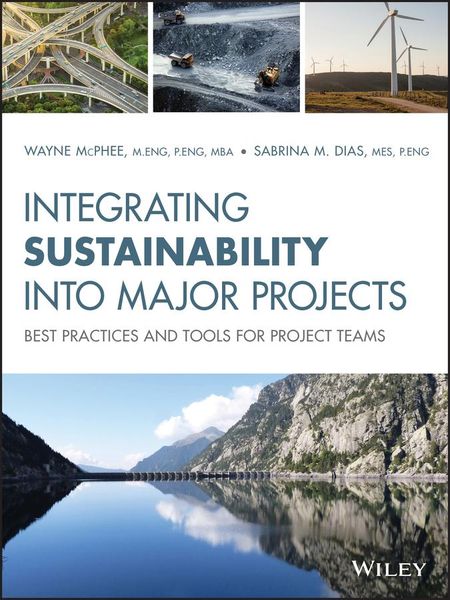
Integrating Sustainability Into Major Projects Best Practices and Tools for Project Teams
-
- Englisch ausgewählt
Fr. 129.00
inkl. gesetzl. MwSt.,
Beschreibung
Produktdetails
Einband
Gebundene Ausgabe
Erscheinungsdatum
05.02.2020
Verlag
John Wiley & Sons IncSeitenzahl
272
Maße (L/B/H)
23.9/18.8/1.8 cm
Gewicht
612 g
Auflage
1. Auflage
Sprache
Englisch
ISBN
978-1-119-55790-6
A practitioner-focused guide featuring tools, models, and experience from the front lines of sustainability management on major projects
With the growing need for sustainability management on large resource, infrastructure and power projects, this book provides project teams and sustainability practitioners with the practical advice, tools, and resources they need to create better projects. It offers extensive guidance for integrating sustainability into project design, planning and delivery. In each chapter, the authors provide invaluable sustainability management strategies and sample tools for project execution plans, engineering decision-making, stakeholder engagement tracking, logging commitments and follow-up actions, permit tracking, and construction management.
Integrating Sustainability into Major Projects: Best Practices and Tools for Project Teams begins by introducing readers to the topic, as well as the common terminology. It then offers readers an overview of major projects, covering types of projects and project structures, the key players, and how to understand and manage different perspectives of time and space. Next, it looks at standards and guidelines, followed by chapters on: Project Management; Managing Risk and Opportunity; Sustainability Management Tools; Approvals and Permits; Design; Procurement; Construction Management; Commissioning; and more. This book:
* Provides analysis tools and resources that practitioners and project teams can use to successfully integrate and manage sustainability into major project design and delivery including industrial, resource, power, and infrastructure projects;
* Guides readers on how to work with local communities, engage with stakeholders and develop sustainability programs that support project financing;
* Includes case studies, lessons learned and expertise from a wide range of actual major projects and the authors' professional experiences with integrating sustainability;
* Leads practitioners through the major project types and their typical components, structure, and timelines, and demonstrates how sustainability can be effectively integrated into each type of major project.
Integrating Sustainability into Major Projects provides the tools project teams need to successfully integrate sustainability into project design and management, making it an ideal tool for project teams and sustainability practitioners working on major resource, power, or infrastructure projects. It will also benefit project owners, organizational leaders, project finance professionals, government regulators and graduate students in engineering, project management, sustainability management, or environmental design and architecture.
With the growing need for sustainability management on large resource, infrastructure and power projects, this book provides project teams and sustainability practitioners with the practical advice, tools, and resources they need to create better projects. It offers extensive guidance for integrating sustainability into project design, planning and delivery. In each chapter, the authors provide invaluable sustainability management strategies and sample tools for project execution plans, engineering decision-making, stakeholder engagement tracking, logging commitments and follow-up actions, permit tracking, and construction management.
Integrating Sustainability into Major Projects: Best Practices and Tools for Project Teams begins by introducing readers to the topic, as well as the common terminology. It then offers readers an overview of major projects, covering types of projects and project structures, the key players, and how to understand and manage different perspectives of time and space. Next, it looks at standards and guidelines, followed by chapters on: Project Management; Managing Risk and Opportunity; Sustainability Management Tools; Approvals and Permits; Design; Procurement; Construction Management; Commissioning; and more. This book:
* Provides analysis tools and resources that practitioners and project teams can use to successfully integrate and manage sustainability into major project design and delivery including industrial, resource, power, and infrastructure projects;
* Guides readers on how to work with local communities, engage with stakeholders and develop sustainability programs that support project financing;
* Includes case studies, lessons learned and expertise from a wide range of actual major projects and the authors' professional experiences with integrating sustainability;
* Leads practitioners through the major project types and their typical components, structure, and timelines, and demonstrates how sustainability can be effectively integrated into each type of major project.
Integrating Sustainability into Major Projects provides the tools project teams need to successfully integrate sustainability into project design and management, making it an ideal tool for project teams and sustainability practitioners working on major resource, power, or infrastructure projects. It will also benefit project owners, organizational leaders, project finance professionals, government regulators and graduate students in engineering, project management, sustainability management, or environmental design and architecture.
Kundinnen und Kunden meinen
Verfassen Sie die erste Bewertung zu diesem Artikel
Helfen Sie anderen Kund*innen durch Ihre Meinung