Gutscheinbedingungen

*Gültig bis 21.06.2026 auf (fast) alles. Ausgeschlossen sind Smartboxen, Zeitschriften, Tickets, Lebensmittel, Gaming-Elektroartikel, Tinte/Toner, Gutscheine, Geschenkkarten, Blumen und Abos | Einlösbar in allen Buchhandlungen von Orell Füssli, Barth Bücher, Buchladen Rapunzel, Schuler Orell Füssli, Stauffacher und ZAP unter Vorweisung des Gutscheins, auf www.orellfüssli.ch durch Eingabe des Gutscheincodes. Beim Service „eBooks verschenken“ und bei eBook-Käufen via eReader nicht einlösbar | Mindesteinkaufswert: Fr. 30.- | Nicht mit anderen Rabatten kumulierbar.

  • Produktbild: Brains As Engines Of Association C
  • Produktbild: Brains As Engines Of Association C

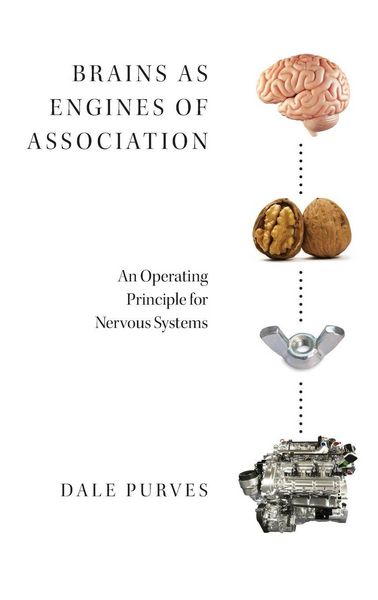
Brains As Engines Of Association C An Operating Principle for Nervous Systems

Fr. 58.90

inkl. gesetzl. MwSt., Versandkostenfrei


Beschreibung

Produktdetails

Einband

Gebundene Ausgabe

Erscheinungsdatum

30.05.2019

Verlag

Oxford Academic

Seitenzahl

212

Maße (L/B/H)

24/16.1/1.8 cm

Gewicht

499 g

Sprache

Englisch

ISBN

978-0-19-088016-3

Beschreibung

Produktdetails

Einband

Gebundene Ausgabe

Erscheinungsdatum

30.05.2019

Verlag

Oxford Academic

Seitenzahl

212

Maße (L/B/H)

24/16.1/1.8 cm

Gewicht

499 g

Sprache

Englisch

ISBN

978-0-19-088016-3

Herstelleradresse

Libri GmbH
Europaallee 1
36244 Bad Hersfeld
DE

Email: gpsr@libri.de

Kundinnen und Kunden meinen

0 Bewertungen

Informationen zu Bewertungen

Zur Abgabe einer Bewertung ist eine Anmeldung im Konto notwendig. Die Authentizität der Bewertungen wird von uns nicht überprüft. Wir behalten uns vor, Bewertungstexte, die unseren Richtlinien widersprechen, entsprechend zu kürzen oder zu löschen.

Die Bewertungen sind nach Format, Anzahl Sterne und Datum sortiert.

Verfassen Sie die erste Bewertung zu diesem Artikel

Helfen Sie anderen Kund*innen durch Ihre Meinung

Kundinnen und Kunden meinen

0 Bewertungen filtern

Die Leseprobe wird geladen.
  • Produktbild: Brains As Engines Of Association C
  • Produktbild: Brains As Engines Of Association C
    • Preface

    • PART I. What Nervous Systems Do for Animals

    • Chapter 1. Putting the Question in Perspective

    • Introduction

    • Life on Earth

    • Defining life

    • Energy

    • Evolution

    • Mechanisms

    • Teleology

    • Conclusion

    • Suggested Reading

    • Chapter 2. Organisms without Nervous Systems

    • Introduction

    • Bacteria

    • Protists

    • Plants

    • The general strategy

    • Conclusion

    • Suggested Reading

    • Chapter 3. Organisms with Nervous Systems

    • Introduction

    • Defining nervous systems

    • The emergence of nervous systems

    • The emergence of central nervous systems

    • What do nervous systems add?

    • What do brains add?

    • Conclusion

    • Suggested Reading

    • PART II. Neural Systems as Engines of Association

    • Chapter 4. The Organization of Nervous Systems

    • Introduction

    • Stimuli

    • Pre-neural processing

    • Neural processing

    • Behavioral output

    • Neural systems and subsystems are interactive

    • Conclusion

    • Suggested Reading

    • Chapter 5. The Problem

    • Introduction

    • Vision as an example

    • The basic challenge

    • The answer in general terms

    • Qualia determined by empirical ranking

    • Perceptual discrepancies

    • Mechanisms

    • Other modalities

    • The meaning of 'illusions'

    • Conclusion

    • Suggested Reading

    • Chapter 6. Neural Associations

    • Introduction

    • Associations wrought be evolution

    • Associations wrought by lifetime learning

    • Associations wrought by culture

    • Behavioral categories of associations

    • Reward

    • Behavioral responses as reflexes

    • What gets associated?

    • Counterarguments

    • Conclusion

    • Suggested Reading

    • PART III. Evidence that Neural Systems Operate EMPIRICALLY

    • Chapter 7. Evidence from Lightness and Color

    • Introduction

    • Luminance and lightness

    • Analyzing the occurrence of luminance patterns

    • Effects of other luminance patterns

    • Spectral energy and color

    • The general strategy

    • Conclusion

    • Suggested Reading

    • Chapter 8. Evidence from Geometry

    • Introduction

    • Seeing intervals

    • Seeing angles

    • Seeing object sizes in 2-D

    • Seeing object sizes in 3-D

    • Seeing stereo depth

    • Conclusion

    • Suggested Reading

    • Chapter 9. Evidence from Motion

    • Introduction

    • Apparent motion

    • The perception of speed

    • Implications for the perception of time

    • The perception of direction

    • Conclusion

    • Suggested Reading

    • Chapter 10. Evidence from Audition

    • Introduction

    • Sound signals

    • Sources of tones

    • Sound signal spectra

    • The problem in audition

    • An empirical approach

    • Evidence from speech

    • Evidence from music

    • Implications for any sensory system

    • Conclusion

    • Suggested Reading

    • PART IV. alternative Concepts Neural Function

    • Chapter 11. The Major Options

    • Introduction

    • Neural function as feature detection

    • Neural function as statistical inference

    • Neural function as efficient coding

    • Neural function as computation

    • Conclusion

    • Suggested Reading

    • Chapter 12. Summing Up

    • Introduction

    • A way around some fundamental obstacles

    • Empirical ranking

    • Insight from games

    • Artificial intelligence

    • Consequences for neuroscience

    • The status of reasoning

    • Novel situations

    • Choice

    • Culture

    • The frequency of stimuli

    • Conclusion

    • Suggested Reading

    • Bibliography

    • Glossary

    • Index

    • Acknowledgments