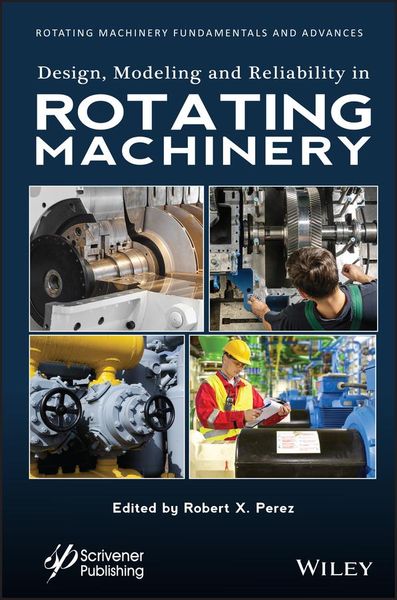
Design, Modeling and Reliability in Rotating Machinery
-
- Englisch ausgewählt
Fr. 313.00
inkl. gesetzl. MwSt.,
Beschreibung
Produktdetails
Einband
Gebundene Ausgabe
Erscheinungsdatum
08.02.2022
Herausgeber
Robert X. PerezVerlag
John Wiley & SonsSeitenzahl
384
Maße (L/B/H)
23/15.4/2.4 cm
Gewicht
567 g
Auflage
1. Auflage
Sprache
Englisch
ISBN
978-1-119-63168-2
Design, Modeling, and Reliability in ROTATING MACHINERY
This broad collection of current rotating machinery topics, written by industry experts, is a must-have for rotating equipment engineers, maintenance personnel, students, and anyone else wanting to stay abreast with current rotating machinery concepts and technology.
Rotating machinery represents a broad category of equipment, which includes pumps, compressors, fans, gas turbines, electric motors, internal combustion engines, and other equipment, that are critical to the efficient operation of process facilities around the world. These machines must be designed to move gases and liquids safely, reliably, and in an environmentally friendly manner. To fully understand rotating machinery, owners must be familiar with their associated technologies, such as machine design, lubrication, fluid dynamics, thermodynamics, rotordynamics, vibration analysis, condition monitoring, maintenance practices, reliability theory, and other topics.
The goal of the "Advances in Rotating Machinery" book series is to provide industry practitioners a time-savings means of learning about the most up-to-date rotating machinery ideas and best practices. This three-book series will cover industry-relevant topics, such as design assessments, modeling, reliability improvements, maintenance methods and best practices, reliability audits, data collection, data analysis, condition monitoring, and more.
This first volume begins the series by focusing on rotating machinery design assessments, modeling and analysis, and reliability improvement ideas. This broad collection of current rotating machinery topics, written by industry experts, is a must-have for rotating equipment engineers, maintenance personnel, students, and anyone else wanting to stay abreast with current rotating machinery concepts and technology.
Design, Modeling, and Reliability in Rotating Machinery covers, among many other topics:
* Rotordynamics and torsional vibration modeling
* Hydrodynamic bearing design theory and current practices
* Centrifugal and reciprocating compressor design and analysis
* Centrifugal pump design, selection, and monitoring
* General purpose steam turbine sizing
This broad collection of current rotating machinery topics, written by industry experts, is a must-have for rotating equipment engineers, maintenance personnel, students, and anyone else wanting to stay abreast with current rotating machinery concepts and technology.
Rotating machinery represents a broad category of equipment, which includes pumps, compressors, fans, gas turbines, electric motors, internal combustion engines, and other equipment, that are critical to the efficient operation of process facilities around the world. These machines must be designed to move gases and liquids safely, reliably, and in an environmentally friendly manner. To fully understand rotating machinery, owners must be familiar with their associated technologies, such as machine design, lubrication, fluid dynamics, thermodynamics, rotordynamics, vibration analysis, condition monitoring, maintenance practices, reliability theory, and other topics.
The goal of the "Advances in Rotating Machinery" book series is to provide industry practitioners a time-savings means of learning about the most up-to-date rotating machinery ideas and best practices. This three-book series will cover industry-relevant topics, such as design assessments, modeling, reliability improvements, maintenance methods and best practices, reliability audits, data collection, data analysis, condition monitoring, and more.
This first volume begins the series by focusing on rotating machinery design assessments, modeling and analysis, and reliability improvement ideas. This broad collection of current rotating machinery topics, written by industry experts, is a must-have for rotating equipment engineers, maintenance personnel, students, and anyone else wanting to stay abreast with current rotating machinery concepts and technology.
Design, Modeling, and Reliability in Rotating Machinery covers, among many other topics:
* Rotordynamics and torsional vibration modeling
* Hydrodynamic bearing design theory and current practices
* Centrifugal and reciprocating compressor design and analysis
* Centrifugal pump design, selection, and monitoring
* General purpose steam turbine sizing
Noch keine Bewertungen vorhanden
Verfassen Sie die erste Bewertung zu diesem Artikel
Helfen Sie anderen Kundinnen und Kunden durch Ihre Meinung.