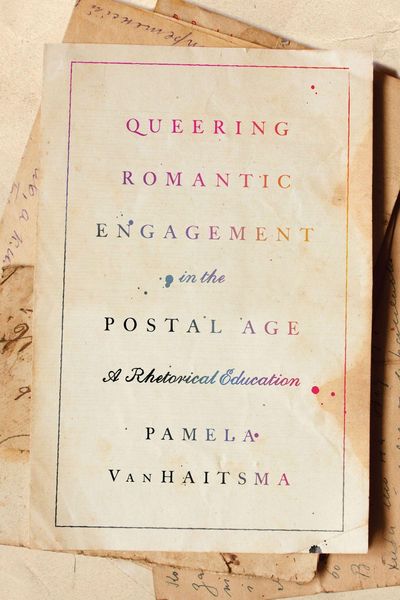
Queering Romantic Engagement in the Postal Age A Rhetorical Education
-
- Hardcover ausgewählt
- Taschenbuch
- eBook
-
Sprache:Englisch
Fr. 101.00
inkl. gesetzl. MwSt.,
Beschreibung
Produktdetails
Einband
Gebundene Ausgabe
Erscheinungsdatum
18.09.2019
Verlag
University Of South Carolina PressSeitenzahl
176
Maße (L/B/H)
23.1/16/1.8 cm
Gewicht
363 g
Sprache
Englisch
ISBN
978-1-61117-990-3
Romantic letters are central to understanding same-sex romantic relationships from the past, with debates about so-called romantic friendship turning on conflicting interpretations of letters. Too often, however, these letters are treated simply as unstudied expressions of heartfelt feeling. In Queering Romantic Engagement in the Postal Age: A Rhetorical Education, Pamela VanHaitsma nuances such approaches to reading letters, showing how the genre should be understood instead as a learned form of epistolary rhetoric.
Through archival study of instruction in the romantic letter genre, VanHaitsma challenges the normative scholarly focus on rhetorical education as preparing citizen Subjects for civic engagement. She theorizes a new concept of rhetorical education for romantic engagement--defined as instruction in Language practices for composing romantic relations--to prompt histories that account for the significant yet unrealized role that rhetorical training plays in inventing both civic and romantic life.
VanHaitsma's history of epistolary instruction in the nineteenth-century United States is grounded in examining popular manuals that taught the romantic letter genre; romantic correspondence of Addie Brown and Rebecca Primus, both freeborn African American women; and multigenre epistolary rhetoric by Yale student Albert Dodd. These case studies span rhetors who are diverse by gender, race, class, and educational background but who all developed creative ways of queering cultural norms and generic conventions in developing their same-sex romantic relationships. Ultimately, Queering Romantic Engagement in the Postal Age argues that such rhetorical training shaped citizens as romantic Subjects in predictably heteronormative ways and simultaneously opened up possibilities for their queer rhetorical practices.
Noch keine Bewertungen vorhanden
Verfassen Sie die erste Bewertung zu diesem Artikel
Helfen Sie anderen Kundinnen und Kunden durch Ihre Meinung.