Gutscheinbedingungen

*Gültig bis 05.07.2026 auf (fast) alles. Ausgeschlossen sind Smartboxen, Zeitschriften, Tickets, Lebensmittel, Gaming-Elektroartikel, Tinte/Toner, Gutscheine, Geschenkkarten, Blumen und Abos | Einlösbar in allen Buchhandlungen von Orell Füssli, Barth Bücher, Buchladen Rapunzel, Papeterie Köhler, Schuler Orell Füssli, Stauffacher und ZAP unter Vorweisung des Gutscheins, auf www.orellfüssli.ch durch Eingabe des Gutscheincodes. Beim Service „eBooks verschenken“ und bei eBook-Käufen via eReader nicht einlösbar | Mindesteinkaufswert: Fr. 30.- | Nicht mit anderen Rabatten kumulierbar.

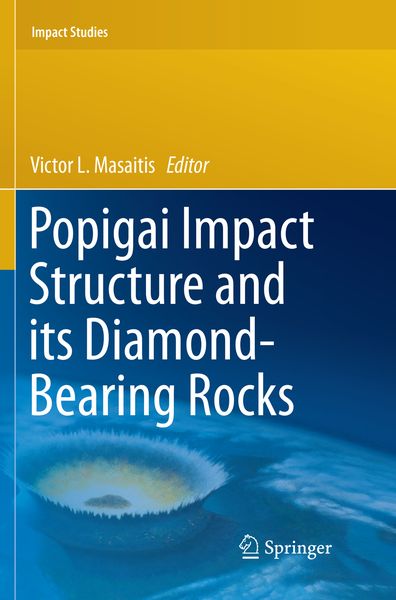
Produktbild: Popigai Impact Structure and its Diamond-Bearing Rocks

Popigai Impact Structure and its Diamond-Bearing Rocks

Aus der Reihe Impact Studies

Fr. 138.00

inkl. gesetzl. MwSt., Versandkostenfrei


Beschreibung

Produktdetails

Einband

Taschenbuch

Erscheinungsdatum

05.01.2019

Abbildungen

XIV, 85 illus., 13 illus. in color., schwarz-weiss Illustrationen, farbige Illustrationen

Herausgeber

Victor L. Masaitis

Verlag

Springer

Seitenzahl

204

Maße (L/B/H)

23.5/15.5/1.3 cm

Gewicht

341 g

Auflage

Softcover reprint of the original 1st ed. 2019

Originaltitel

Алмазоносные импактиты Попигайской астроблемы

Sprache

Englisch

ISBN

978-3-030-08592-6

Beschreibung

Produktdetails

Einband

Taschenbuch

Erscheinungsdatum

05.01.2019

Abbildungen

XIV, 85 illus., 13 illus. in color., schwarz-weiss Illustrationen, farbige Illustrationen

Herausgeber

Victor L. Masaitis

Verlag

Springer

Seitenzahl

204

Maße (L/B/H)

23.5/15.5/1.3 cm

Gewicht

341 g

Auflage

Softcover reprint of the original 1st ed. 2019

Originaltitel

Алмазоносные импактиты Попигайской астроблемы

Sprache

Englisch

ISBN

978-3-030-08592-6

Herstelleradresse

Springer-Verlag KG
Sachsenplatz 4-6
1201 Wien
AT

Email: GPSR Kontakt

Noch keine Bewertungen vorhanden

Verfassen Sie die erste Bewertung zu diesem Artikel

Helfen Sie anderen Kundinnen und Kunden durch Ihre Meinung.

Kundinnen und Kunden meinen

Bewertungen (0)

  • Produktbild: Popigai Impact Structure and its Diamond-Bearing Rocks
  • INTRODUCTION

    CHAPTER 1. MAIN GEOLOGICAL FEATURES OF IMPACT CRATER AND ITS ENVIRONMENT

    1.1. Crystalline basement

    1.2. Platform cover

    1.3. Topography of the hollow and its surroundings

    1.4. Gravity and magnetic fields

    1.5. Morphology and inner geological structure

    1.6. Subdivision of impact lithological units and impact rocks

    1.7. Crater age

    CHAPTER 2. CONCENTRIC STRUCTURAL ZONES AND ITS IMPACT BRECCIA AND IMPACTITES

    2.1. Outer zone of sin-impact deformations and outer slope of the ring trough

    2.1.1. Area of the Sogdoku Upland

    2.1.2. Area of the middle course of the Chordy-Daldyn River

    2.1.3. Area of the up-stream of the Tongulakh River

    2.1.4. Area of the up-stream of the  Arylakh-Yurjage River

    <

    2.2. Ring trough and ring uplift (peak ring)

    2.2.1. Area of the up-stream and middle courses of the Balagan-Yurjage River

    2.2.2. Area of the Majachica Upland

    2.3. Central depression. Area of the lower course of Daldyn River

    2.4. Post-impact   deformations

    CHAPTER 3.  SHOCK-METAMORPHOSED CRYSTALLINE ROCKS, IMPACT BRECCIAS  AND IMPACTITES

    3.1. Crystalline target rocks and their shock metamorphic features

    3.1.1. Brief characteristic of gneisses and plagiogneisses

    3.1.2. Mineralogical criterions   of the shock metamorphic parameters

    3.1.3. Weakly and moderately shock-metamorphosed rocks

    3.1.4. Intensely  shock-metamorphosed  rocks

    3.1.5. Very intensely  shock-metamorphosed  rocks

    3.2. Impact lithic breccias

    3.2.1. Autochtonous and paraautochtonous lithic breccia

    3.2.3. Allochtonous lithic breccia

    3.2.3.1. Mega- and mesobreccia

    3.2.3.2. Microbreccia (coptoclastite)

    3.3. Tagamites

    3.3.1. Composition, texture and principles of subdivision

    3.3.2. Low-temperature tagamites (LT)

    3.3.3. High-temperature tagamites (HT)

    3.4. Suevites

    3.4.1. Composition, texture, and principles of subdivision

    3.4.2. Suevites, enriched by epiclasts

    3.4.3. Suevites, enriched by vitroclasts

    3.4.4. Impact glasses from suevites and coptoclastites

    3.5. Hydrothermal alterations of impact breccias and impactites

    CHAPTER 4. PETROCHEMISTRY AND GEOCHEMISTRY  OF IMPACTITES AND TARGET ROCKS

    4.1. Petrochemistry and geochemistry

    4.2. Isotopic composition

    4.3. Geochemical evidence of impactor’s matter

    CHAPTER 5. IMPACT DIAMONDS FROM SHOCKED CRYSTALLINE ROCKS AND IMPACTITES

    5.1. Morphology of diamond paramorphs

    5.2. Phase composition and microtexture

    5.3. Physical properties

    5.4. Isotopic composition

    CHAPTER 6. GENERAL PATTERNS  OF IMPACT DIAMOND DISTRIBUTION  

    6.1. General characteristics on sampling

    6.2. Distribution of impact diamonds  over the impact structure

    6.3. Impact diamond content and composition of host rocks

    6.4. Distribution of impact diamonds in sheet-like tagamite bodies

    6.5. Impact diamonds in placers

    6.6. Deposits of impact diamonds and their resources

    CHAPTER 7. ORIGIN OF DIAMOND-BEARING  IMPACTITES

    7.1. Reconstruction of the impact event

    7.2. Main features of evolution of impact melt-forming and rock-forming petrological systems

    7.2.1. Initial petrological systems

    7.2.2. Transitional petrological systems

    7.2.3. Final petrological systems

    CONCLUSION

    REFERENCES