
The Hispanic-Mapuche Parlamentos: Interethnic Geo-Politics and Concessionary Spaces in Colonial America
-
- Hardcover ausgewählt
- Taschenbuch
- eBook
-
Sprache:Englisch
Fr. 162.00
inkl. gesetzl. MwSt.,
Beschreibung
Produktdetails
Einband
Gebundene Ausgabe
Erscheinungsdatum
20.09.2019
Abbildungen
X, 21 illus., 18 illus. in color., schwarz-weiss Illustrationen, farbige Illustrationen
Herausgeber
José Manuel Zavala + weitereVerlag
SpringerSeitenzahl
227
Maße (L/B/H)
24.1/16/1.9 cm
Gewicht
530 g
Auflage
1st ed. 2020
Sprache
Englisch
ISBN
978-3-030-23017-3
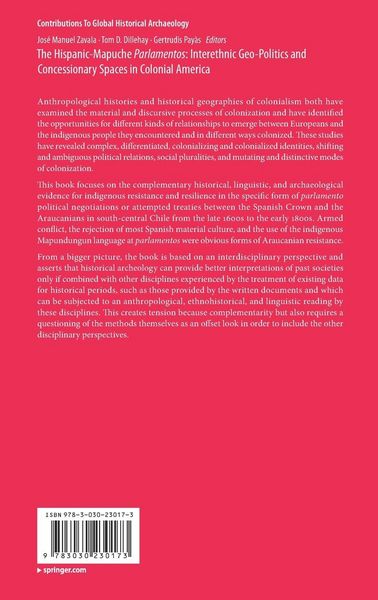
Anthropological histories and historical geographies of colonialism both have examined the material and discursive processes of colonization and have identified the opportunities for different kinds of relationships to emerge between Europeans and the indigenous people they encountered and in different ways colonized. These studies have revealed complex, differentiated, colonializing and colonialized identities, shifting and ambiguous political relations, social pluralities, and mutating and distinctive modes of colonization.
This book focuses on the complementary historical, linguistic, and archaeological evidence for indigenous resistance and resilience in the specific form of parlamento political negotiations or attempted treaties between the Spanish Crown and the Araucanians in south-central Chile from the late 1600s to the early 1800s. Armed conflict, the rejection of most Spanish material culture, and the use of the indigenous Mapundungun language at parlamentos were obvious forms of Araucanian resistance.From a bigger picture, the book is based on an interdisciplinary perspective and asserts that historical archeology can provide better interpretations of past societies only if combined with other disciplines experienced by the treatment of existing data for historical periods, such as those provided by the written documents and which can be subjected to an anthropological, ethnohistorical, and linguistic reading by these disciplines. This creates tension because complementarity but also requires a questioning of the methods themselves as an offset look in order to include the other disciplinary perspectives.
Kundinnen und Kunden meinen
Verfassen Sie die erste Bewertung zu diesem Artikel
Helfen Sie anderen Kund*innen durch Ihre Meinung