Gutscheinbedingungen

*Gültig bis 07.06.2026 auf (fast) alles. Ausgeschlossen sind Smartboxen, Zeitschriften, Tickets, Lebensmittel, Gaming-Elektroartikel, Tinte/Toner, Gutscheine, Geschenkkarten, Blumen und Abos | Einlösbar in allen Buchhandlungen von Orell Füssli, Barth Bücher, Buchladen Rapunzel, Schuler Orell Füssli, Stauffacher und ZAP unter Vorweisung des Gutscheins, auf www.orellfüssli.ch durch Eingabe des Gutscheincodes. Beim Service „eBooks verschenken“ und bei eBook-Käufen via eReader nicht einlösbar | Mindesteinkaufswert: Fr. 100.- | Nicht mit anderen Rabatten kumulierbar.

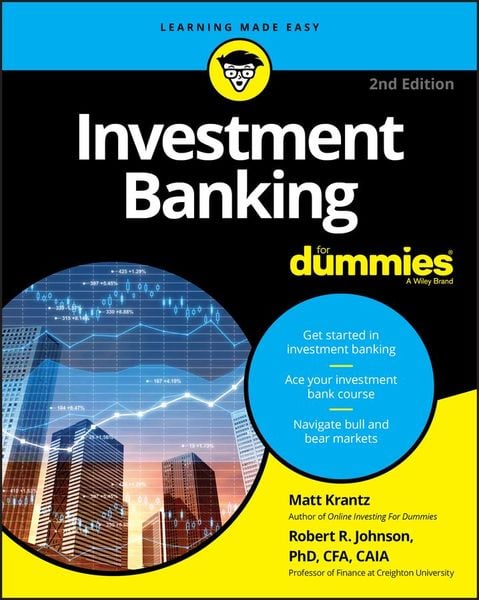
Produktbild: Investment Banking For Dummies

Investment Banking For Dummies 2nd Edition

Aus der Reihe For Dummies

Fr. 38.90

inkl. gesetzl. MwSt., Versandkostenfrei


Beschreibung

Produktdetails

Einband

Taschenbuch

Erscheinungsdatum

27.08.2020

Verlag

John Wiley & Sons Inc

Seitenzahl

400

Maße (L/B/H)

18.5/23.1/2.2 cm

Gewicht

752 g

Auflage

2. Auflage

Sprache

Englisch

ISBN

978-1-119-65859-7

Beschreibung

Produktdetails

Einband

Taschenbuch

Erscheinungsdatum

27.08.2020

Verlag

John Wiley & Sons Inc

Seitenzahl

400

Maße (L/B/H)

18.5/23.1/2.2 cm

Gewicht

752 g

Auflage

2. Auflage

Sprache

Englisch

ISBN

978-1-119-65859-7

Herstelleradresse

Libri GmbH
Europaallee 1
36244 Bad Hersfeld
DE

Email: gpsr@libri.de

Kundinnen und Kunden meinen

0 Bewertungen

Informationen zu Bewertungen

Zur Abgabe einer Bewertung ist eine Anmeldung im Konto notwendig. Die Authentizität der Bewertungen wird von uns nicht überprüft. Wir behalten uns vor, Bewertungstexte, die unseren Richtlinien widersprechen, entsprechend zu kürzen oder zu löschen.

Die Bewertungen sind nach Format, Anzahl Sterne und Datum sortiert.

Verfassen Sie die erste Bewertung zu diesem Artikel

Helfen Sie anderen Kund*innen durch Ihre Meinung

Kundinnen und Kunden meinen

0 Bewertungen filtern

Die Leseprobe wird geladen.
  • Produktbild: Investment Banking For Dummies
  • Introduction 1

    About This Book 1

    Foolish Assumptions 3

    Icons Used in This Book 3

    Beyond the Book 4

    Where to Go from Here 4

    Part 1: Getting Started With Investment Banking 5

    Chapter 1: Introducing Investment Banking 7

    What Investment Banking Is 8

    The role investment banking plays 8

    How investment banking differs from traditional banking 10

    The services investment banks provide 11

    How investment banks are organized 12

    The current lay of the investment banking land 14

    Types of investment banking operations 15

    How investment banks get paid 15

    How Investment Banking Is Done 17

    Finding the financial statements 18

    Understanding the importance of financial statements and ratios 18

    Zeroing in on past transactions 18

    Seeing the value of fixed income 19

    Turning Into an Investment Banking Pro 19

    Putting the discounted cash flow analysis to work 19

    Seeing how leverage becomes a force in investment banking 20

    Pinpointing buyout targets 20

    Putting Investment Banking to Work 21

    Staying in compliance with the rules 21

    Looking beyond the published financial statements 21

    Making adjustments to financial statements for comparability 22

    Chapter 2: The Purpose of Investment Banking: What Investment Bankers Do 23

    Putting the For-Sale Sign on Corporate America 24

    Mergers and acquisitions 25

    Leveraged buyouts 27

    Private business sales 29

    Initial public offerings 32

    Helping Investors Decide Whether to Buy or Sell 36

    The importance of research 36

    What do the analysts do? 37

    Digging Into the Role of the Trading Desk 38

    Why investment banks are into trading 39

    How investment banks turn pennies into billions 40

    The type of analysis used in trading operations 40

    Chapter 3: How Investment Bankers Sell Companies 43

    Getting Companies Ready for Sale on Public Markets 44

    Meeting the requirements to make an IPO happen 45

    Writing the prospectus 47

    Supporting the IPO: Making success last 51

    Seeing What Sell-Side Analysts Do 53

    The goals of the sell-side analyst 54

    What investors look to sell-side analysts for 55

    Spreading the word: Disseminating sell-side research 55

    Examining a Sample Research Report 57

    What to look for in the document 57

    The main sections of a research report 58

    Ways to look beyond the "buy" or "sell" 59

    Chapter 4: How Investment Banking Is Used in Mergers and Acquisitions 61

    Come Here Often? The Basics of Mergers and Acquisitions 62

    Kinds of mergers 62

    Why companies merge instead of simply growing organically 63

    Firms that make attractive acquisition targets 66

    How companies identify firms to merge with 67

    The nature of the merger: Friendly or hostile? 68

    Tools Used to Analyze the M&A Deal 70

    The role of the buy-side M&A advisor 70

    The role of the sell-side M&A advisor 75

    Why Many M&A Deals Go Wrong 76

    Misplaced incentives 76

    Faulty analysis 77

    Overstated synergies 78

    Culture wars 78

    The winner's curse: Overpaying 78

    Chapter 5: How Investment Banking Is Used in Leveraged Buyouts 81

    In This Corner: Introducing the Players 82

    Investment banks 83

    Big institutions 84

    Management 85

    Stock and bond investors 86

    Aiming for the Right Targets in a Leveraged Buyout 87

    Identifying companies that can work in a leveraged buyout 88

    Appreciating the power of cash flow 89

    Coming to terms with the return analysis: Internal rate of return 90

    Finding the Exit 91

    Setting a target for exit in time 92

    Considering how the exit will happen 92

    Part 2: Digging In: Performing Investment Banking 95

    Chapter 6: Finding the Data: Documents and Reports 97

    Finding What You Need on the Securities and Exchange Commission's Website 98

    What types of information you can find 98

    The key types of documents 99

    How to use EDGAR to pinpoint information 100

    Getting Data in a Format You Can Work With 105

    Assembling the tools you need 105

    Importing financial information into Excel 107

    Getting in tune with interactive data 109

    Paying Attention to the Non-Financial Information 110

    Monitoring news streams for investment banking ideas 110

    Quickly processing information with aggregators 112

    Doing research on the key players in a deal 114

    Chapter 7: Making Sense of Financial Statements 115

    Income Statements 116

    Locating the areas of interest to investment bankers 118

    Tweaking the statement with different assumptions 119

    Finding investment banking opportunities 120

    Balance Sheets 121

    Finding your way around the key parts 122

    Understanding a company's financial strength 124

    Locating pitfalls and opportunities 126

    Statement of Cash Flows 127

    Seeing why the cash flow statement is so important in deal making 127

    Understanding the key parts of the document 127

    Calculating free cash flow 130

    Proxy Statements 131

    Learning about the key players in a deal 131

    Identifying the management team's incentives 132

    Analyzing management pay packages 133

    Chapter 8: Perfecting the Financial Ratios for Investment Banking 135

    Valuation Multiples: Assessing How Much the Company Is Worth 136

    Investors' favorite valuation tool: P/E ratio 137

    Going old school with price-to-book 137

    Putting a price on profitability 138

    Liquidity Multiples: Checking Companies' Staying Power 140

    Deciphering debt to equity 141

    Getting up to speed with the quick ratio 142

    Interpreting interest coverage 142

    Profitability Ratios: Seeing How a Company's Bottom Line Measures Up 143

    Why gross margin isn't so gross after all 144

    Income from continuing operations: Looking at profit with a keen eye 144

    Keying into profits with net margin 145

    Efficiency Ratios: Knowing How Well the Company Is Using Investors' Money 146

    Finding out about return on assets 147

    Digging into return on capital 148

    Uncovering company secrets with return on equity 149

    Calculating a company's growth rate 150

    Chapter 9: Sizing Up the Industry 153

    Performing an Industry Analysis 154

    Understanding why industry analysis is important 154

    Creating a comparison universe 155

    Adjusting the industry comparison universe 158

    Unearthing Company Trends and Common sizing the Financial Statements 159

    Comparing growth rates 160

    Comparing leverage 163

    Comparing various profit margins 165

    How a Company Stacks Up: Comparing the Key Ratios 166

    Sizing up valuation 167

    Comparing total debt-to-equity 169

    Sizing up companies on their efficiency 170

    Industry ratios 170

    Chapter 10: Understanding Stocks and Focusing on Past Transactions 171

    Introducing Stock 172

    Characteristics of stock 173

    Types of stock 174

    Understanding stock pricing 175

    Finding Past Transactions 176

    Tracking the stock market 177

    Studying private deals 177

    Looking at pre-IPO marketplaces 179

    Examining buyouts 179

    Analyzing Past Transactions 180

    Knowing what the market will bear 180

    Knowing when the market is distorted 180

    Tabulating key ratios for past deals 182

    Understanding the pitfalls 184

    Chapter 11: Applying Investment Banking to Fixed Income 185

    Introducing Bonds 186

    Identifying the Various Types of Bonds 188

    Convertible bonds 188

    Callable bonds 189

    Puttable bonds 189

    Floating-rate bonds 189

    Zero-coupon bonds 190

    Knowing Their Place: The Position of Bondholders 190

    Understanding Bond Pricing 192

    Introducing the concept of present value 192

    Relating yield to maturity and price 195

    Playing the spread: How different factors affect bond prices 196

    Considering bond sensitivity to changes in interest rates 197

    Tracking the Bond Market 200

    Debt or Equity: How a Company Chooses 202

    Part 3: Taking Investment Banking to the Next Level 205

    Chapter 12: Doing a Discounted Free Cash Flow Analysis 207

    Gearing Up for Discounted Free Cash Flow 208

    Computing free cash flow 210

    Forecasting free cash flow 211

    Calculating the Weighted Average Cost of Capital 212

    Understanding why the weighted average cost of capital is so important 213

    Measuring the cost of debt and equity 214

    Understanding the capital asset pricing model 217

    Going for Terminal Value 220

    Knowing the perpetuity growth formula 220

    Applying the constant growth formula 221

    Applying the two-stage growth model 222

    Stress-testing the results 223

    Valuing a Share of Stock 224

    Chapter 13: Structuring a Leveraged Buyout 227

    Seeing How Leveraged Buyouts Are Structured 228

    The types of financing 228

    Understanding seniority and maturity 235

    Building a Leveraged Buyout Model 236

    Creating a pro forma model 236

    Deciding on methods of financing 238

    Seeing how the results work out 239

    The importance of taxes in a leveraged buyout 240

    What can go right and what can go wrong 240

    Chapter 14: Determining the Strength of a Company's Return on Equity 243

    Understanding the Importance of Return on Equity 244

    What return on equity shows 245

    Pros and cons of return on equity versus other profitability measures 247

    How return on equity can help guide an investment banking deal 249

    Using a DuPont Analysis 250

    The three-factor DuPont method 251

    The five-factor DuPont method 253

    Interpreting the Results 255

    Cola wars 255

    What the numbers mean 256

    Looking past the numbers for insight 256

    Telling companies how to react to the numbers 257

    Part 4: Applying Investment Banking 259

    Chapter 15: Knowing the Rules 261

    The History of Regulation of Investment Banking 262

    The goals of investment banking regulation 262

    Why the rules of today are the result of days past 262

    How regulations have shaped the investment banking industry 263

    The Ins and Outs of Modern Investment Banking Rules 264

    The types of rules imposed on investment banking 264

    How investment banking rules changed after the financial crisis 267

    The Rules on Analysts 270

    Why rules were needed 270

    The not-so-delicate balancing act analysts play 271

    What disclosure and compliance are required 272

    Why Simply Making Rules Isn't Enough 274

    Chapter 16: How Some Companies Lie, Cheat, and Steal Their Way to the Top 277

    Did You Really Sell That? When Companies Aggressively Report Revenue 278

    Don't let the sun go down on me 279

    The truth? 280

    Lucy, You Got Some 'Splainin' to Do: When Companies Understate Their Expenses 282

    What a waste 282

    Crazy like a fox 283

    Missed It by That Much: When Companies Overstate Their Financial Position 284

    Those pesky pensions: The epidemic of firms understating pension liabilities 284

    We are the world 288

    Keeping Investors Off-Balance 289

    Enron's special purpose 290

    A mountain of a scandal 292

    Swap meet 293

    What Should an Investment Banker Do? 295

    Chapter 17: Understanding Alternative Investments and Asset Management 297

    Knowing Your Alternatives 298

    Hedge funds 298

    Venture capital 301

    Commodities 302

    Real estate 303

    Currencies and cryptocurrencies 305

    Digging Into Asset Management 306

    Attracting investors to asset management 306

    Creating asset management tools 307

    Managing Potential Conflicts with Clients 309

    How asset management can cause conflicts 310

    How to eliminate and manage conflicts 312

    Chapter 18: Trying Your Hand at Investment Banking with a Case Study 315

    Setting the Scene 316

    The acquirer 316

    The target 317

    Considering the Options 317

    Identifying the options 318

    Looking at financing 318

    Creating the Analysis 319

    An analysis of the financial statements 320

    Structuring a Deal 322

    Form of acquisition 323

    Creating pro forma statements 324

    Success or Failure 326

    Part 5: The Part of Tens 327

    Chapter 19: Ten of the Biggest Debacles in Investment Banking History 329

    The Dot-Com Boom and Bust 330

    Tainted Research Scandals 331

    Enron and the Accounting Scams 332

    The Mortgage Debacle and Collapse of Lehman 333

    The Flash Crash 333

    The London Whale at JPMorgan Chase and Barings Bank 334

    Long-Term Capital Management 334

    Bankruptcy in Jefferson County, Alabama 335

    IPO Allocations with CSFB 336

    Bad Mergers and Acquisitions Like AOL Time Warner 337

    Chapter 20: Ten Ways to Improve a Discounted Cash Flow Analysis 339

    Financial Analysis Isn't Physics 339

    Show Your Sensitive Side 340

    Monte Carlo Isn't Just for High Rollers 341

    What Can Go Wrong Will Go Wrong 342

    It's Tough to Make Predictions, Especially about the Future 342

    The Investor of Today Doesn't Profit from Yesterday's Growth 343

    Garbage In, Garbage Out 344

    Rates Are Falling - It's a Better Deal! 345

    Read Your Putt from Several Angles 346

    The Weighting is the Hardest Part 346

    Chapter 21: Ten (Or So) of the Best Online Resources for Investment Bankers 349

    Bloomberg 350

    Reuters 350

    Standard & Poor's 350

    Renaissance Capital and IPOScoop.com 351

    The Securities and Exchange Commission 351

    Moody's 351

    MarketSmith 352

    Index Fund Advisors 352

    Morningstar 352

    Bureau of Labor Statistics 353

    Department of Commerce 353

    Federal Reserve 354

    Trefis 354

    Appendix: Where Investment Banking Came From 355

    Index 361