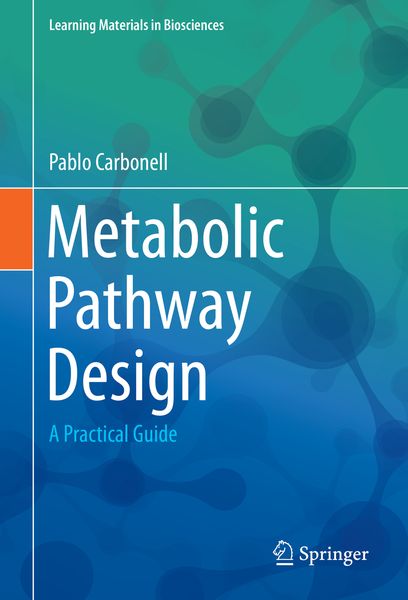
Metabolic Pathway Design A Practical Guide
-
- Taschenbuch ausgewählt
- eBook
-
Sprache:Englisch
Fr. 106.00
inkl. gesetzl. MwSt.,
Beschreibung
Produktdetails
Einband
Taschenbuch
Erscheinungsdatum
14.11.2019
Verlag
SpringerSeitenzahl
168
Maße (L/B/H)
24/16.8/1.1 cm
Gewicht
313 g
Auflage
1st ed. 2019
Sprache
Englisch
ISBN
978-3-030-29864-7
This textbook presents solid tools for in silico engineering biology, offering students a step-by-step guide to mastering the smart design of metabolic pathways. The first part explains the Design-Build-Test-Learn-cycle engineering approach to biology, discussing the basic tools to model biological and chemistry-based systems. Using these basic tools, the second part focuses on various computational protocols for metabolic pathway design, from enzyme selection to pathway discovery and enumeration. In the context of industrial biotechnology, the final part helps readers understand the challenges of scaling up and optimisation. By working with the free programming language Scientific Python, this book provides easily accessible tools for studying and learning the principles of modern in silico metabolic pathway design. Intended for advanced undergraduates and master’s students in biotechnology, biomedical engineering, bioinformatics and systems biology students, the introductory sections make it also useful for beginners wanting to learn the basics of scientific coding and find real-world, hands-on examples.
Noch keine Bewertungen vorhanden
Verfassen Sie die erste Bewertung zu diesem Artikel
Helfen Sie anderen Kundinnen und Kunden durch Ihre Meinung.