
Gutscheinbedingungen

*Gültig bis 05.07.2026 auf (fast) alles. Ausgeschlossen sind Smartboxen, Zeitschriften, Tickets, Lebensmittel, Gaming-Elektroartikel, Tinte/Toner, Gutscheine, Geschenkkarten, Blumen und Abos | Einlösbar in allen Buchhandlungen von Orell Füssli, Barth Bücher, Buchladen Rapunzel, Papeterie Köhler, Schuler Orell Füssli, Stauffacher und ZAP unter Vorweisung des Gutscheins, auf www.orellfüssli.ch durch Eingabe des Gutscheincodes. Beim Service „eBooks verschenken“ und bei eBook-Käufen via eReader nicht einlösbar | Mindesteinkaufswert: Fr. 30.- | Nicht mit anderen Rabatten kumulierbar.

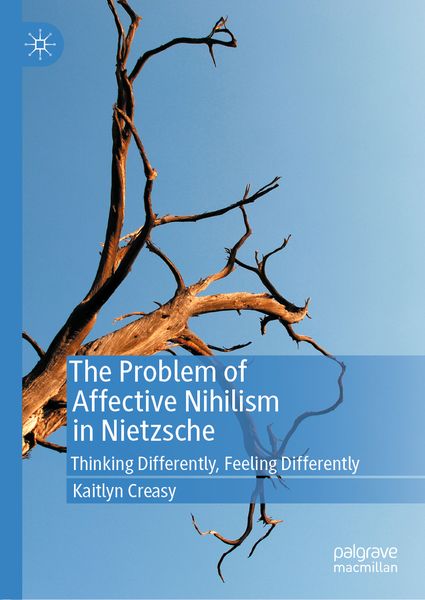
  • Produktbild: The Problem of Affective Nihilism in Nietzsche
  • Produktbild: The Problem of Affective Nihilism in Nietzsche

The Problem of Affective Nihilism in Nietzsche Thinking Differently, Feeling Differently

Fr. 112.00

inkl. gesetzl. MwSt., Versandkostenfrei


Beschreibung

Produktdetails

Einband

Gebundene Ausgabe

Erscheinungsdatum

11.06.2020

Verlag

Springer

Seitenzahl

188

Maße (L/B/H)

21.6/15.3/1.6 cm

Gewicht

378 g

Auflage

1st ed. 2020

Sprache

Englisch

ISBN

978-3-030-37132-6

Beschreibung

Produktdetails

Einband

Gebundene Ausgabe

Erscheinungsdatum

11.06.2020

Verlag

Springer

Seitenzahl

188

Maße (L/B/H)

21.6/15.3/1.6 cm

Gewicht

378 g

Auflage

1st ed. 2020

Sprache

Englisch

ISBN

978-3-030-37132-6

Herstelleradresse

Springer-Verlag GmbH
Tiergartenstr. 17
69121 Heidelberg
DE

Email: ProductSafety@springernature.com

Noch keine Bewertungen vorhanden

Verfassen Sie die erste Bewertung zu diesem Artikel

Helfen Sie anderen Kundinnen und Kunden durch Ihre Meinung.

Kundinnen und Kunden meinen

Bewertungen (0)

  • Produktbild: The Problem of Affective Nihilism in Nietzsche
  • Produktbild: The Problem of Affective Nihilism in Nietzsche
  • 1        Introduction


    2        Nietzsche’s Genealogy of Nihilism

    a.       Introduction

    b.      European nihilism: A genealogy

    c.       European nihilism and the structure of life-denial

    d.      Conclusion


    3        Nihilism as Life-Denial

    a.       Introduction

    b.      Life-denial as a cognitive phenomenon: beliefs, judgments of life, and epistemic practices

                                                                  i.      Belief in a “beyond”

                                                                ii.      Belief in a higher purpose

                                                              iii.      Belief in objectivity or “knowledge as such”

                                                              iv.      Life-denying morality: The harm of the “the Good”

                                                                v.      Life-denying epistemic orientations and practices

    c.       Life-denial as socio-cultural: institutions and ideologies

    d.      Life-denial as psychophysiological: drives, affects, and the will

    e.       Conclusion


    4        Before Affective Nihilism, Understanding Affect

    a.       Introduction

    b.      Affect in Nietzsche

                                                                  i.      Affects as inclinations and disinclinations (with a first-personal, phenomenal character) that produce beliefs, experience, and behavior

                                                                ii.      Affects as drive-induced evaluative orientations

                                                              iii.      Second-order affects and the transpersonal nature of affect

    c.       Conclusion


    5        The Problem of Affective Nihilism

    a.       Introduction

    b.      Affective nihilism

                                                                  i.      On the problem of affective nihilism

                                                                ii.      The psychophysiology of affective nihilism

                                                              iii.      The transpersonal dynamics of affective nihilism

    c.       Conclusion


    6        Affective Nihilists, Weak Agents

    a.       Introduction

    b.      Affective nihilists, weak agents: nihilism as a (variety of) psychological states

                                                                  i.      N1: Affective nihilism involving drive suppression

                                                                ii.      N2: Affective nihilism involving the fragmentation of the will

    c.       Conclusion

    7        Who is Nietzsche’s Affective Nihilist?: Thinking Cognitive Nihilism, Affective Nihilism, and their Interplay

    a.       Introduction

    b.      The scope of affective nihilism in Nietzsche

    c.       A crucial interplay: The relationship between affective and cognitive nihilism

    d.      Conclusion


    8        Overcoming Affective Nihilism

    a.       Introduction

    b.      Affective nihilism, redux: Getting the problem in full view

    c.       Overcoming affective nihilism: What it isn’t

    d.      Overcoming affective nihilism: What it is

                                                                  i.      Psychophysiological and affective features

                                                                ii.      Characteristic beliefs, judgments, and epistemic tendencies manifest by the individual with an attitude of radical affirmation

                                                              iii.      An ability to maintain the conditions of one’s flourishing

    e.       Nietzschean Strategies for Overcoming Affective Nihilism

                                                                  i.      Experimentation and the production of affect

                                                                ii.      Self-knowledge as self-narration

                                                              iii.      Self-genealogy: Learning to master the affects and creating the conditions of one’s flourishing

    f.        Conclusion