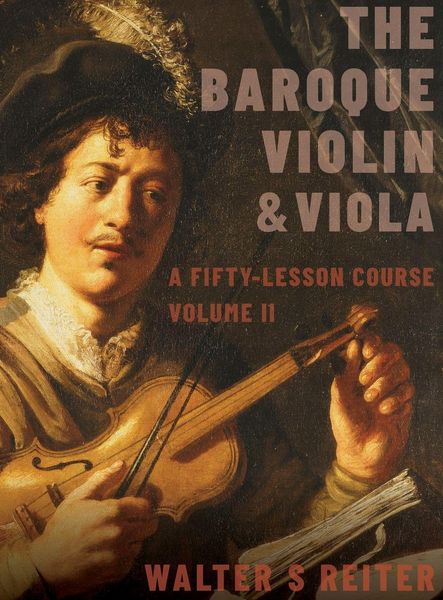
Produktbild: The Baroque Violin & Viola, vol. II

The Baroque Violin & Viola, vol. II A Fifty-Lesson Course

Fr. 213.00

inkl. gesetzl. MwSt., Versandkostenfrei


Beschreibung

Produktdetails

Einband

Gebundene Ausgabe

Erscheinungsdatum

19.02.2020

Abbildungen

191 music ex., 14 illustrations, 26 figures

Verlag

Oxford Academic

Seitenzahl

362

Maße (L/B/H)

28.6/22.1/2.4 cm

Gewicht

1052 g

Sprache

Englisch

ISBN

978-0-19-752511-1

Beschreibung

Produktdetails

Einband

Gebundene Ausgabe

Erscheinungsdatum

19.02.2020

Abbildungen

191 music ex., 14 illustrations, 26 figures

Verlag

Oxford Academic

Seitenzahl

362

Maße (L/B/H)

28.6/22.1/2.4 cm

Gewicht

1052 g

Sprache

Englisch

ISBN

978-0-19-752511-1

Herstelleradresse

Libri GmbH
Europaallee 1
36244 Bad Hersfeld
DE

Email: gpsr@libri.de

Noch keine Bewertungen vorhanden

Verfassen Sie die erste Bewertung zu diesem Artikel

Helfen Sie anderen Kundinnen und Kunden durch Ihre Meinung.

Kundinnen und Kunden meinen

Bewertungen (0)

Die Leseprobe wird geladen.
  • Produktbild: The Baroque Violin & Viola, vol. II
    • Foreword

    • Introductory quotes

    • Questions and Answers

    • Part Three

    • Approaching the Early Seventeenth Century Italian Sonata

    • Lesson Twenty-Four. Stepping Back in Time: Division Manuals 1535-1624. Ornamentation, Module Two

    • Divisions - Learning to Dare: Developing Basic Improvisational Skills - Sylvestro Ganassi's 'Fontegara' (Venice, 1535) - Studying Divisions from Ganassi's 'Fontegara' - Learning to Read Sixteenth and Seventeenth-century Music from Facsimiles - Note Values - Giovanni Bassano: 'Ricercate, passaggi et cadentie,' (Venice 1585) - Cadences - Aurelio Virgiliano: 'Regole Della Diminutione' (c 1600) - G. B. Spadi: 'Libro de passaggi ascendenti e descendenti' (Venice, 1624).

    • A Florentine Interlude. Towards 'The New Music:' from Plato to Caccini

    • Lesson Twenty-Five. The Noble Manner of Singing: Caccini's 'Le Nuove Musiche' (1602)

    • Passaggi - Three ways to Sing a Note - The Intonatio - Con Grazia - The Esclamazione - Transferring Caccini's 'Cor mio, deh! non languire' to the Violin - The Trillo and the Gruppo - Transferring the Vocal Trillo to the Violin - The Gruppo - Transferring the Vocal Gruppo to the Violin - Rhythmic Alteration - Transferring the Vocal Cascata to the Violin - Sprezzatura - Transferring Caccini's 'Deh, dove son fuggiti' to the Violin.

    • Lesson Twenty-Six. A Lesson from Francesco Rognoni Taeggio: Applying Vocal Technique to the Violin

    • El Portar della Voce - The Accento - The Tremolo - The Groppo - Del principiar sotto la nota - The Esclamatione - La Selva, Part Two - Francesco Rognoni's 'Way of slurring' -

    • Lesson Twenty-Seven. Giovanni Battista Fontana (1589 (?) - 1630) Sonata Terza

    • The Tactus - Reading this Sonata in the Original Notation Clefs - Rests - Coloration - Tempo Relationships and Proportional Notation.

    • Lesson Twenty-Eight. Dario Castello: Sonata Prima, for Soprano Solo

    • Lesson Twenty-Nine. Giovanni Antonio Pandolfi Mealli: Sonata Quarta Opus 4, La Biancuccia

    • 'Stylus Phantasticus' - Musica Ficta.

    • Lesson Thirty: Ornamentation, Module Three, including Tables of Ornaments Derived from the Sonatas of Corelli and Babell

    • A Roman Interlude: Transforming Visual Gestures into Sound

    • Part Four

    • Church Militant: The Sonatas of Schmelzer and Biber

    • Lesson Thirty-One. Johann Heinrich Schmelzer: Sonata Quarta from 'Sonatae unarum fidium' (1664)

    • Lesson Thirty-Two. Heinrich Ignaz Franz von Biber: the Mystery Sonatas. Sonata No 1: the Annunciation

    • The Mystery Sonatas: an Introduction - Reference to the Texts.

    • Lesson Thirty-Three. Heinrich Ignaz Franz von Biber: the Mystery Sonatas. Sonata No 10: The Crucifixion

    • Scordatura - Symbolism and the Jesuits - The Rhetorical Fragments Described.

    • Part Five

    • Supreme Refinement of the Human Spirit

    • Franà ois Couperin and the Music of France

    • Interlude in Versailles: Approaching the Music of the French Baroque

    • The Sun King and the Culture of Versailles - The Social Status of the Violin in France.

    • Lesson Thirty-Four. The 'Concerts Royaux' of Franà ois Couperin. Ornamentation, Module Four

    • The 'Concerts Royaux,' an Introduction - Couperin's AgrÃ(c)mens, as found in the SeptiÃ(c)me Concert Royal - The Tremblement - The PincÃ(c) - The Port de voix - The Tierce de coulÃ(c) - The comma (petit silence) - Notes inÃ(c)gales - Slurs - Pitch - Addendum: The DoublÃ(c) - The Aspiration - The Suspension.

    • Lesson Thirty-Five. To Soothe the Sorrows of a King. Franà ois Couperin: SeptiÃ(c)me Concert Royal (I)

    • Movement One (no title) - Allemande, Gayement - Postscript: Dynamic and Rhythmical inÃ(c)galitÃ(c), a Personal View.

    • Lesson Thirty-Six. Franà ois Couperin: SeptiÃ(c)me Concert Royal (II)

    • Sarabande Grave - Georg Muffat on Lully's Bowings.

    • Lesson Thirty-Seven. Franà ois Couperin: SeptiÃ(c)me Concert Royal (III)

    • FuguÃ(c)te - Gavote - SiciliÃ(c)ne.

    • Part Six

    • Approaching the Galant

    • Lesson Thirty-Eight. Beyond 'Beautiful': Searching for Meaning in Music. Handel: Sonata in A Major

    • Beautiful Sights and Beautiful Sounds - Handel and Mattheson - Der Vollkommene Capellmeister - Identifying Affects in the Handel Sonata Movement - Punctuation.

    • Lesson Thirty-Nine. Into the Galant: Tartini, Telemann, Quantz and Zuccari. Ornamentation Module Five

    • Tartini: Grace notes - Trills - Vibrato (Tremolo) - The Turn - The Mordent - Cadences. Telemann's Methodical Sonatas. Telemann's Ornaments: Rising and falling appoggiaturas - Trills - Passing notes - Harmonising ornaments - Turns - Rhythmic variation - Ornamented Cadences - Tiratas. Quantz - A Lesson from the Master: Quantz's Notated Adagio - Zuccari.

    • Part Seven

    • J.S. Bach

    • Lesson Forty. A Brief History of Baroque Romanticism: Bach's 'Sei Solo'

    • Lesson Forty-One. Johann Sebastian Bach, Sonata I, BWV 1001. Adagio

    • Bach's Written-out Ornamentation - The Necessity of Illusion - A Controversial Note - Afterthought.

    • Lesson Forty-Two. Johann Sebastian Bach, Sonata I, BWV 1001. Fuga

    • A Note on Resonance

    • Lesson Forty-Three. Johann Sebastian Bach, Sonata I, BWV 1001. Siciliana

    • Hooked Bowings

    • Lesson Forty-Four. Johann Sebastian Bach, Sonata I, BWV 1001. Presto

    • Bach and Rhetoric - On Slow practice.

    • Lesson Forty-Five. Intonation in Bach's 'Sei Solo.'

    • The Training of the Ear - Intonation Analysis - Learning to hear quickly - The Training of the Left Hand - Playing Chords: the Left Hand

    • Lesson Forty-Six. Johann Sebastian Bach, Partita III in E Major, BWV 1006. Preludio

    • Interlude: Bach and the Influence of French Culture in the German Lands

    • Bach and Dance

    • Lesson Forty-Seven. Johann Sebastian Bach: Partita III in E Major, BWV 1006

    • Loure

    • Tempo and Bowings in Bach's Loure - Punctuation and Articulation in Dance Movements - Punctuation and Articulation in Bach's Loure - Ornamentation in Bach's Dances.

    • Lesson Forty-Eight. Johann Sebastian Bach. Partita III in E Major, BWV 1006. Gavotte en Rondeaux

    • Lesson Forty-Nine. Johann Sebastian Bach. Partita III in E Major, BWV 1006. Minuets I and II

    • Lesson Fifty. Johann Sebastian. Bach. Partita III in E Major, BWV 1006. BourÃ(c)e and Giga

    • Notes to Lessons

    • Bibliography

    • Index

    • Acknowledgements