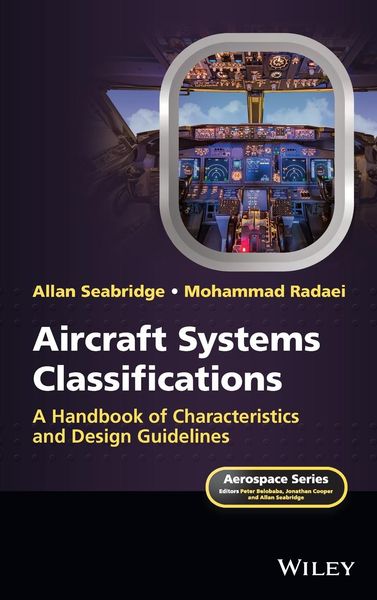
Aircraft Systems Classifications A Handbook of Characteristics and Design Guidelines
-
- Englisch ausgewählt
Fr. 209.00
inkl. gesetzl. MwSt.,
Beschreibung
Produktdetails
Einband
Gebundene Ausgabe
Erscheinungsdatum
25.04.2022
Herausgeber
Peter Belobaba + weitereVerlag
John Wiley & SonsSeitenzahl
384
Maße (L/B/H)
23.5/15.7/2.5 cm
Gewicht
454 g
Auflage
1. Auflage
Sprache
Englisch
ISBN
978-1-119-77184-5
Aircraft Systems Classifications
Enables aerospace professionals to quickly and accurately reference key information about all types of aircraft systems
Aircraft Systems Classifications: A Handbook of Characteristics and Design Guidelines provides comprehensive information on aircraft systems delivered in a concise, direct, and standardized way, allowing readers to easily find the information they need. The book presents a full set of characteristics and requirements for all types of aircraft systems, including avionic, mission, and supporting ground systems, in a single volume. Readers can delve further into specific topics by referencing the detailed glossary and bibliography.
To aid in reader comprehension, each aircraft system is broken down according to various criteria, such as:
* Purpose, description, and safety
* Integration with other systems
* Key interfaces and design drivers
* Modeling and simulation
* Best practices and future trends
Written for aerospace professionals, researchers, and advanced students with some existing knowledge of the aircraft industry, this book allows readers to quickly reference information on every aspect of aircraft systems.
Enables aerospace professionals to quickly and accurately reference key information about all types of aircraft systems
Aircraft Systems Classifications: A Handbook of Characteristics and Design Guidelines provides comprehensive information on aircraft systems delivered in a concise, direct, and standardized way, allowing readers to easily find the information they need. The book presents a full set of characteristics and requirements for all types of aircraft systems, including avionic, mission, and supporting ground systems, in a single volume. Readers can delve further into specific topics by referencing the detailed glossary and bibliography.
To aid in reader comprehension, each aircraft system is broken down according to various criteria, such as:
* Purpose, description, and safety
* Integration with other systems
* Key interfaces and design drivers
* Modeling and simulation
* Best practices and future trends
Written for aerospace professionals, researchers, and advanced students with some existing knowledge of the aircraft industry, this book allows readers to quickly reference information on every aspect of aircraft systems.
Kundinnen und Kunden meinen
Verfassen Sie die erste Bewertung zu diesem Artikel
Helfen Sie anderen Kund*innen durch Ihre Meinung