Beschreibung
Produktdetails
Einband
Taschenbuch
Erscheinungsdatum
28.01.2021
Herausgeber
Pietra Palazzolo + weitereVerlag
Bloomsbury USASeitenzahl
268
Maße (L/B/H)
23.4/15.6/1.4 cm
Gewicht
381 g
Sprache
Englisch
ISBN
978-1-350-21156-8
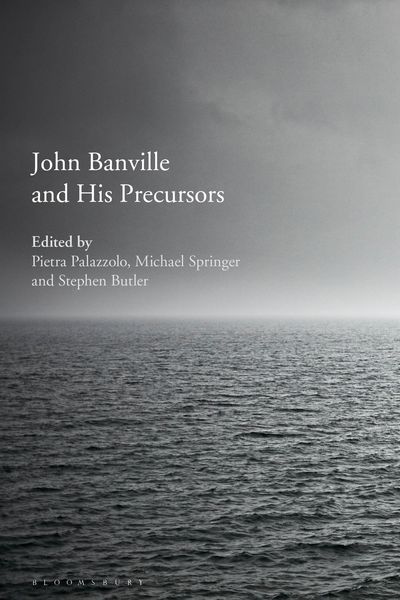
Bringing together leading international scholars, John Banville and His Precursors explores Booker and Franz Kafka prize-winning Irish author John Banville’s most significant intellectual influences. The book explores how Banville’s novels engage deeply with a wide range of sources, from literary figures such as Samuel Beckett, Heinrich von Kleist, Wallace Stevens, Rainer Maria Rilke, and Henry James, to thinkers such as Freud, Heidegger, and Blanchot. Reading the full range of Banville’s writings - from his Booker Prize-winning novel The Sea to his latest book, Mrs Osmond – John Banville and His Precursors reveals the richness of the author’s work. In this way, the book also raises questions about the contemporary moment’s relationship to a variety of intellectual and cultural traditions - Romanticism, Modernism, existentialism – and how the significance of these can be appreciated in new and often surprising ways.
Noch keine Bewertungen vorhanden
Verfassen Sie die erste Bewertung zu diesem Artikel
Helfen Sie anderen Kundinnen und Kunden durch Ihre Meinung.