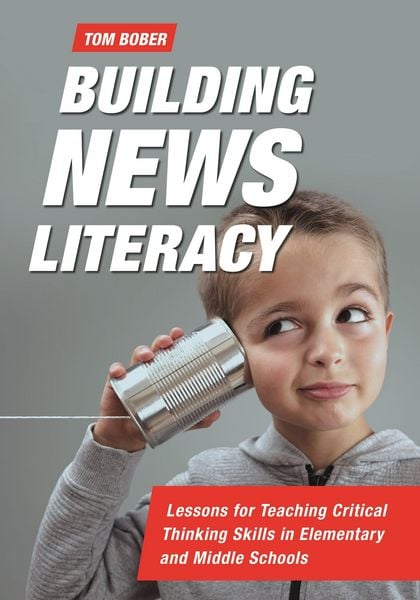
Produktbild: Building News Literacy

Building News Literacy Lessons for Teaching Critical Thinking Skills in Elementary and Middle Schools

Fr. 74.90

inkl. gesetzl. MwSt., Versandkostenfrei


Beschreibung

Produktdetails

Einband

Taschenbuch

Erscheinungsdatum

05.01.2021

Verlag

Bloomsbury Academic

Seitenzahl

182

Maße (L/B/H)

25.4/17.8/1 cm

Gewicht

227 g

Sprache

Englisch

ISBN

978-1-4408-7515-1

Beschreibung

Produktdetails

Einband

Taschenbuch

Erscheinungsdatum

05.01.2021

Verlag

Bloomsbury Academic

Seitenzahl

182

Maße (L/B/H)

25.4/17.8/1 cm

Gewicht

227 g

Sprache

Englisch

ISBN

978-1-4408-7515-1

Herstelleradresse

Libri GmbH
Europaallee 1
36244 Bad Hersfeld
DE

Email: gpsr@libri.de

Kundinnen und Kunden meinen

0 Bewertungen

Informationen zu Bewertungen

Zur Abgabe einer Bewertung ist eine Anmeldung im Konto notwendig. Die Authentizität der Bewertungen wird von uns nicht überprüft. Wir behalten uns vor, Bewertungstexte, die unseren Richtlinien widersprechen, entsprechend zu kürzen oder zu löschen.

Die Bewertungen sind nach Format, Anzahl Sterne und Datum sortiert.

Verfassen Sie die erste Bewertung zu diesem Artikel

Helfen Sie anderen Kund*innen durch Ihre Meinung

Kundinnen und Kunden meinen

0 Bewertungen filtern

Weitere Artikel finden Sie in

Die Leseprobe wird geladen.
  • Produktbild: Building News Literacy
  • Acknowledgments
    1-News Literacy in Elementary and Middle Schools?
    Where Do Elementary and Middle School Students Get Their News?
    Defining News
    By Format
    By Geography
    Hard News and Soft News
    By Creator or Reporter
    By Legitimacy
    Recruiting Everyone in the Effort
    What This Book Attempts to Do
    2-Challenges to Be Addressed by Developing News Literacy in Students
    Reading Digital vs. Print
    Trusting the Messenger and the Message
    Organizing Facts, Commentary, and Personal Reactions
    Instilling the Importance of Reliability and Credibility
    Making Sourcing and Contextualizing Automatic
    Abandoning Old Approaches to Information and News Literacy
    3-News Literacy: Tying Together Multiple Literacies Across Subjects
    News Literacy: Made Up of Many Parts
    Text Literacy
    Visual Literacy
    Audiovisual Literacy
    Graphic and Geographic Literacy
    Comparing News Literacy to Historical Literacy
    News Literacy Across the Subject Areas
    4-Lessons to Develop News Literacy
    Describing the News
    Lesson 1: Fact vs. Opinion
    Lesson 2: What Is News and What Isn't
    Lesson 3: Differentiating Between News and News Commentary
    Lesson 4: Reliability and Credibility
    News Analysis Strategies
    Lesson 5: Sourcing: Taking a First Look at New Information
    Lesson 6: Contextualizing: Placing News in the Moment
    Lesson 7: Close Reading: Uncovering the Story
    Lesson 8: Corroborating Information Across Multiple Sources
    Lesson 9: Asking Questions When Interacting with News
    Lesson 10: Word Choice in the News
    Lesson 11: Voices in the News: Finding Who Is Heard and Who Is Not
    Interacting with the News
    Lesson 12: Reading Across Headlines
    Lesson 13: Curating Sources: Expanding Beyond an Initial View
    Lesson 14: Going to the Source: Finding Primary Sources
    Lesson 15: Making Connections Between News Topics: Cause and Effect in the News
    Lesson 16: Stick with the Story: Following News over Time
    Lesson 17: The Quick Share: Sharing, Liking, and Commenting on News
    Understanding Oneself and Others as News Consumers
    Lesson 18: What Is My Opinion?: Being Aware of Our Own Biases
    Lesson 19: Rethinking Relationships: Reflecting on Affinities with News Sources
    Lesson 20: Interacting with and Reacting to Emotionally Charged News Topics
    Lesson 21: How Will Others Read This?: Predicting Audience Viewpoints
    References
    Index