• Produktbild: The Tax Law of Private Foundations
  • Produktbild: The Tax Law of Private Foundations

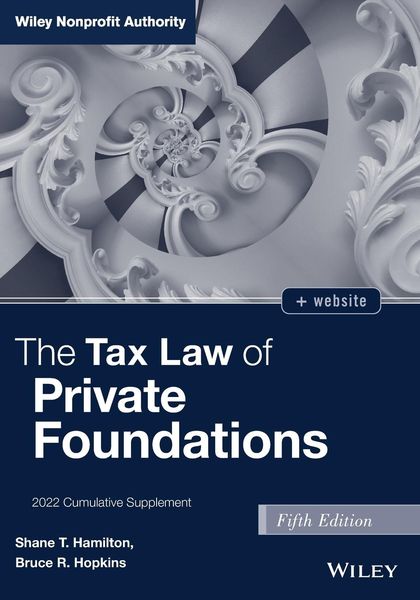
The Tax Law of Private Foundations 2022 Cumulative Supplement

Fr. 193.00

inkl. gesetzl. MwSt., Versandkostenfrei


Beschreibung

Produktdetails

Einband

Taschenbuch

Erscheinungsdatum

23.11.2022

Verlag

John Wiley & Sons

Seitenzahl

304

Maße (L/B/H)

25.4/17.8/1.6 cm

Gewicht

576 g

Auflage

5th edition

Sprache

Englisch

ISBN

978-1-119-93026-6

Beschreibung

Produktdetails

Einband

Taschenbuch

Erscheinungsdatum

23.11.2022

Verlag

John Wiley & Sons

Seitenzahl

304

Maße (L/B/H)

25.4/17.8/1.6 cm

Gewicht

576 g

Auflage

5th edition

Sprache

Englisch

ISBN

978-1-119-93026-6

Herstelleradresse

Libri GmbH
Europaallee 1
36244 Bad Hersfeld
DE

Email: gpsr@libri.de

Noch keine Bewertungen vorhanden

Verfassen Sie die erste Bewertung zu diesem Artikel

Helfen Sie anderen Kundinnen und Kunden durch Ihre Meinung.

Kundinnen und Kunden meinen

Bewertungen (0)

Die Leseprobe wird geladen.
  • Produktbild: The Tax Law of Private Foundations
  • Produktbild: The Tax Law of Private Foundations
  • Preface ix

    Book Citations xi

    1 Introduction to Private Foundations 1

    1.1 Private Foundations: Unique Organizations 1

    1.2 Definition of Private Foundation 2

    1.4 Private Foundation Law Primer 2

    1.5 Foundations in Overall Exempt Organizations Context 2

    1.6 Definition of Charity 2

    1.7 Operating for Charitable Purposes 3

    1.9 Private Foundation Sanctions 3

    1.10 Statistical Profile 12

    1.11 Private Foundations and Law 50 Years Later 12

    2 Starting, Funding, and Governing a Private Foundation 17

    2.1 Choice of Organizational Form 17

    2.3 Estate Planning Principles 17

    2.4 Foundations and Planned Giving 17

    2.5 Acquiring Recognition of Tax-Exempt Status 18

    2.6 Special Requirements for Charitable Organizations 19

    2.7 When to Report Back to the IRS 19

    3 Types of Private Foundations 21

    3.1 Private Operating Foundations 21

    3.3 Conduit Foundations 22

    3.4 Common Fund Foundations 23

    3.8 Split-Interest Trusts 23

    3.9 Foreign Private Foundations 23

    4 Disqualified Persons 25

    4.1 Substantial Contributors 25

    4.2 Foundation Managers 25

    4.3 Certain 20 Percent Owners 25

    4.4 Family Members 26

    4.5 Corporations or Partnerships 26

    4.6 Trusts or Estates 26

    5 Self-Dealing 27

    5.1 Private Inurement Doctrine 27

    5.2 Private Benefit Doctrine 28

    5.3 Definition of Self-Dealing 31

    5.3a Excess Compensation Tax 31

    5.4 Sale, Exchange, Lease, or Furnishing of Property 37

    5.5 Loans and Other Extensions of Credit 37

    5.6 Payment of Compensation 38

    5.8 Uses of Income or Assets by Disqualified Persons 39

    5.11 Indirect Self-Dealing 42

    5.12 Property Held by Fiduciaries 50

    5.14 Additional Exceptions 58

    5.15 Issues Once Self-Dealing Occurs 59

    6 Mandatory Distributions 65

    6.1 Distribution Requirements-in General 65

    6.2 Assets Used to Calculate Minimum Investment Return 66

    6.3 Determining Fair Market Value 66

    6.4 Distributable Amount 69

    6.5 Qualifying Distributions 70

    6.7 Satisfying the Distribution Test 75

    7 Excess Business Holdings 77

    7.1 General Rules 77

    7.2 Permitted and Excess Holdings 79

    7.3 Functionally Related Businesses 80

    7.7 Excise Taxes on Excess Holdings 80

    8 Jeopardizing Investments 81

    8.2 Prudent Investments 81

    8.3 Program-Related Investments 81

    8.4 Investment Frauds 82

    8.5 Excise Tax for Jeopardizing Investments 82

    9 Taxable Expenditures 83

    9.1 Legislative Activities 83

    9.2 Political Campaign Activities 84

    9.3 Grants to Individuals 84

    9.4 Grants to Public Charities 97

    9.6 Grants to Foreign Organizations 97

    9.7 Expenditure Responsibility 99

    9.8 Internet and Private Foundations 100

    9.9 Spending for Noncharitable Purposes 100

    9.10 Distributions to Certain Supporting Organizations 102

    9.10a Distributions to Group Exemption Organizations 102

    9.11 Excise Tax for Taxable Expenditures 104

    10 Tax on Investment Income 107

    10.1 Rate of Tax 107

    10.1A Payment of Tax 107

    10.2 Reducing Excise Tax 108

    10.3 Formula for Taxable Income 109

    10.4 Reductions to Gross Investment Income 109

    10.5 Foreign Foundations 109

    10.6 Exemption from Tax on Investment Income 110

    11 Unrelated Business Activity 111

    11.1 General Rules 111

    11.2 Exceptions 111

    11.3 Rules Specifically Applicable to Private Foundations 112

    11.4 Unrelated Debt-Financed Income Rules 113

    11.5 Calculating and Reporting the Tax 114
    12 Tax Compliance and Administrative Issues 121

    12.1 Form 990-PF 121

    12.2 Form 990-PF Penalties 124

    12.3 Automatic Revocation for Non-Filing 128

    12.4 Public Disclosure and Inspection of Returns 129

    12.5 Reporting and Payment of Excise Taxes 132

    13 Termination of Foundation Status 145

    13.1 Voluntary Termination 145

    13.3 Transfer of Assets to a Public Charity 146

    13.4 Operation as a Public Charity 147

    13.5 Mergers, Split-Ups, and Transfers Between Foundations 150

    13.5A Termination of Trusts Treated as Private Foundations 150

    14 Charitable Giving Rules 153

    14.1 Concept of Gift 153

    14.2 Basic Rules 154

    14.3 Gifts of Appreciated Property 155

    14.4 Deductibility of Gifts to Foundations 155

    14.5 Qualified Appreciated Stock Rule 155

    14.6 Deduction Reduction Rules 155

    14.7 Special Gift Situations 156

    14.8 Planned Giving Revisited 156

    14.9 Administrative Considerations 156

    15 Private Foundations and Public Charities 163

    15.1 Distinctions Between Public and Private Charities 163

    15.2 Evolution of Law of Private Foundations 164

    15.3 Organizations with Inherently Public Attributes 164

    15.4 Publicly Supported Organizations-Donative Entities 166

    15.5 Service Provider Organizations 167

    15.7 Supporting Organizations 169

    15.8 Change of Public Charity Category 169

    15.9 Noncharitable Supported Organizations 171

    15.14 Termination of Public Charity Status 172

    16 Donor-Advised Funds 173

    16.1 Basic Definitions 173

    16.3 Types of Donor Funds 173

    16.7 Public Charity Status of Funds 173

    16.8 Interrelationship of Private Foundation Rules 173

    16.9 Statutory Criteria 173

    16.9A Litigation 174

    16.12 Tax Regulations 176

    16.13 DAF Statistical Portrait 176

    16.14 Criticisms and Commentary 178

    16.15 Proposed Legislation 185

    17 Corporate Foundations 189

    17.2 Reasons for Establishment of a Corporate Foundation 189

    17.3 Private Inurement Doctrine 189

    17.3A Private Benefit Doctrine 189

    17.5 Self-Dealing Rules 190

    17.6 Other Private Foundations Rules 191

    17.7 Tax on Excess Compensation: Potentially Applicable Exceptions Illustrated 191

    Appendix A-Sources of the Law 197

    Appendix B-Internal Revenue Code Sections 223

    Table of Cases 227

    Table of IRS Revenue Rulings and Revenue Procedures 233

    Table of IRS Private Determinations Cited in Text 237

    Table of IRS Private Letter Rulings, Technical Advice Memoranda, and General Counsel Memoranda 245

    About the Authors 263

    About the Online Resources 265

    Cumulative Index 267