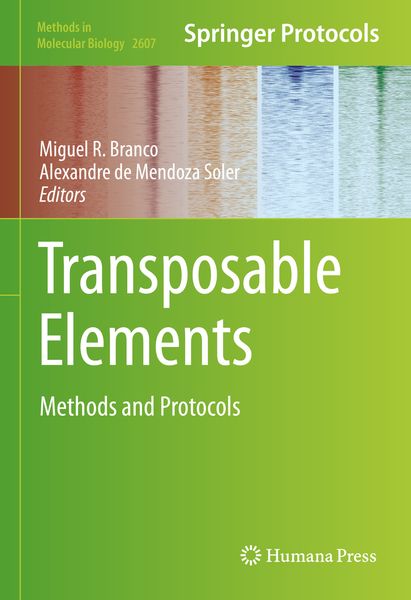
Transposable Elements Methods and Protocols
-
- Hardcover ausgewählt
- Taschenbuch
- eBook
-
Sprache:Englisch
Fr. 264.00
inkl. gesetzl. MwSt.,
Beschreibung
Produktdetails
Einband
Gebundene Ausgabe
Erscheinungsdatum
01.12.2022
Herausgeber
Miguel R. Branco + weitereVerlag
Springer UsSeitenzahl
382
Maße (L/B/H)
26/18.3/2.7 cm
Gewicht
940 g
Auflage
1st ed. 2023
Sprache
Englisch
ISBN
978-1-07-162882-9
The volume presents a small selection of state-of-the-art approaches for studying transposable elements(TE). Chapters guide readers through HTS-based approaches, bioinformatic tools, methods to studyTE protein complexes, and the functional impact on the host. Written in the successful Methods in Molecular Biology series format, chapters include introductions to their respective topics, lists of the necessary materials and reagents, step-by-step, readily reproducible protocols, and notes on troubleshooting and avoiding known pitfalls.
Authoritative and cutting-edge, Transposable Elements: Methods and Protocols aims to be a useful practical guide to researches to help further their study in this field.
Noch keine Bewertungen vorhanden
Verfassen Sie die erste Bewertung zu diesem Artikel
Helfen Sie anderen Kundinnen und Kunden durch Ihre Meinung.