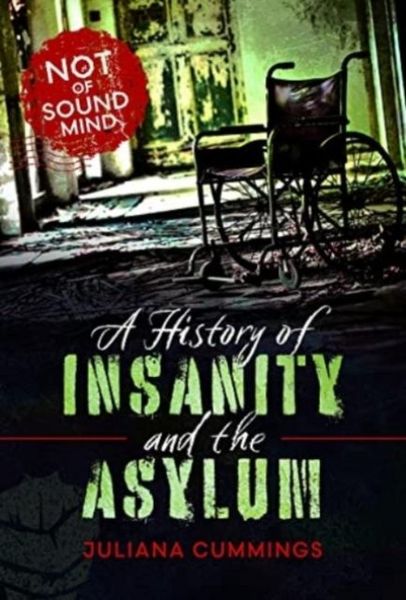
A History of Insanity and the Asylum Not of Sound Mind
Fr. 46.90
inkl. gesetzl. MwSt.,
Beschreibung
Produktdetails
Einband
Gebundene Ausgabe
Erscheinungsdatum
16.01.2023
Abbildungen
30 black and white illustrations
Verlag
Pen & Sword Books LtdSeitenzahl
232
Maße (L/B/H)
23.9/16.1/2.9 cm
Gewicht
594 g
Sprache
Englisch
ISBN
978-1-399-01214-0
An honest history of insane asylums, from the Middle Ages to the Victorian era and the twentieth century.
The iconic image of the lunatic asylum is one that often leaves us wondering what went on inside these imposing buildings.
In this new book, Juliana Cummings first questions what behaviors and characteristics define insanity and leads us through a comprehensive history of insanity and the asylum from the early treatment and care of mental illness in the Middle Ages and early modern period through to the closure of mental institutions in the twentieth century.
Throughout the years, we learn of how the treatments and institutional structures for caring for the mentally ill developed and changed. The Age of Enlightenment and the rise of humanitarian reform was followed by the emergence of the insane asylum in the 1800s, which saw the beginning of the widespread constructions of asylums.
We explore the different reasons for admittance, as well as the vast array of treatments. It shows that your treatment as an inmate of an asylum could vary depending on your gender and your social class.
Although once thought of as criminals, the mentally ill were gradually treated with care. Juliana discusses the different treatments used over time as attitudes towards the mentally ill changed, such as drug use, psychosurgery and insulin therapy. We learn of the regulations and reforms that led to the closure of asylums, how their closure affected society and consider how the mentally ill are treated today.
This insightful new history helps us to better understand the haunting past of the asylum and leads us down a fascinating road to where we come to an understanding of a time in history that is often mistaken.
Kundinnen und Kunden meinen
Verfassen Sie die erste Bewertung zu diesem Artikel
Helfen Sie anderen Kund*innen durch Ihre Meinung