Gutscheinbedingungen

*Gültig bis 21.06.2026 auf (fast) alles. Ausgeschlossen sind Smartboxen, Zeitschriften, Tickets, Lebensmittel, Gaming-Elektroartikel, Tinte/Toner, Gutscheine, Geschenkkarten, Blumen und Abos | Einlösbar in allen Buchhandlungen von Orell Füssli, Barth Bücher, Buchladen Rapunzel, Schuler Orell Füssli, Stauffacher und ZAP unter Vorweisung des Gutscheins, auf www.orellfüssli.ch durch Eingabe des Gutscheincodes. Beim Service „eBooks verschenken“ und bei eBook-Käufen via eReader nicht einlösbar | Mindesteinkaufswert: Fr. 30.- | Nicht mit anderen Rabatten kumulierbar.

  • Produktbild: Neural Repair
  • Produktbild: Neural Repair

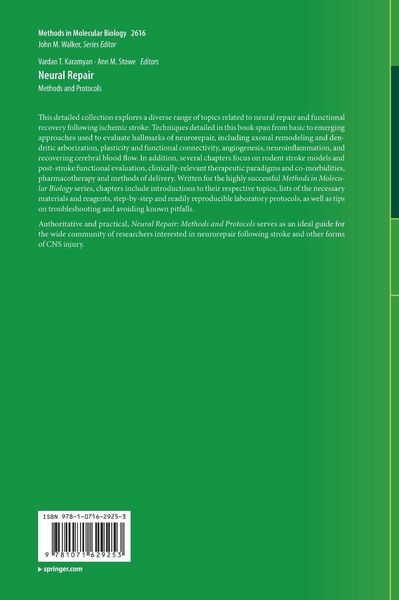
Neural Repair Methods and Protocols

Fr. 264.00

inkl. gesetzl. MwSt., Versandkostenfrei


Beschreibung

Produktdetails

Einband

Gebundene Ausgabe

Erscheinungsdatum

31.01.2023

Herausgeber

Vardan T. Karamyan + weitere

Verlag

Springer Us

Seitenzahl

492

Maße (L/B/H)

26/18.3/3.3 cm

Gewicht

1143 g

Auflage

1st ed. 2023

Sprache

Englisch

ISBN

978-1-07-162925-3

Beschreibung

Produktdetails

Einband

Gebundene Ausgabe

Erscheinungsdatum

31.01.2023

Herausgeber

Verlag

Springer Us

Seitenzahl

492

Maße (L/B/H)

26/18.3/3.3 cm

Gewicht

1143 g

Auflage

1st ed. 2023

Sprache

Englisch

ISBN

978-1-07-162925-3

Herstelleradresse

Libri GmbH
Europaallee 1
36244 Bad Hersfeld
DE

Email: gpsr@libri.de

Kundinnen und Kunden meinen

0 Bewertungen

Informationen zu Bewertungen

Zur Abgabe einer Bewertung ist eine Anmeldung im Konto notwendig. Die Authentizität der Bewertungen wird von uns nicht überprüft. Wir behalten uns vor, Bewertungstexte, die unseren Richtlinien widersprechen, entsprechend zu kürzen oder zu löschen.

Die Bewertungen sind nach Format, Anzahl Sterne und Datum sortiert.

Verfassen Sie die erste Bewertung zu diesem Artikel

Helfen Sie anderen Kund*innen durch Ihre Meinung

Kundinnen und Kunden meinen

0 Bewertungen filtern

  • Produktbild: Neural Repair
  • Produktbild: Neural Repair
  • Rodent Stroke Models to Study Functional Recovery and Neural Repair.- Subcortical White Matter Stroke in the Mouse: Inducing Injury and Tracking Cellular Proliferation.- A Low Budget Photothrombotic Rodent Stroke Model.- Photothrombotic Model to Create an Infarct in the Hippocampus.- Bilateral Carotid Artery Stenosis and Cerebral Blood Flow Outcomes.- Internal Carotid Artery Stenosis: A Surgical Mouse Model to Study Moyamoya Syndrome.- Modeling Distal Middle Cerebral Artery Occlusion in Neonatal Rodents with Magnetic Nanoparticles or Magnetized Red Blood Cells.- In Vivo Imaging of the Structural Plasticity of Cortical Neurons after Stroke.- Measurement of Uninterrupted Cerebral Blood Flow by Laser Speckle Contrast Imaging (LSCI) during the Mouse Middle Cerebral Artery Occlusion Model by an Inverted LSCI Setup.- Multi-Exposure Speckle Imaging for Quantitative Evaluation of Cortical Blood Flow.- Wide-Field Optical Imaging in Mouse Models of Ischemic Stroke.- Post-Mortem Magnetic Resonance Imaging of Degenerating and Reorganizing White Matter in Post-Stroke Rodent Brain.- Quantitative Spatial Mapping of Axons across Cortical Regions to Assess Axonal Sprouting after Stroke.- Quantitative Evaluation of Cerebral Microhemorrhages in the Mouse Brain.- In Vivo Evaluation of BBB Integrity in the Post-Stroke Brain.- High Resolution RNA Sequencing from PFA-Fixed Microscopy Sections.- FACS to Identify Immune Subsets in Mouse Brain and Spleen.- A Guide on Analyzing Flow Cytometry Data Using Clustering Methods and Non-Linear Dimensionality Reduction (tSNE or UMAP).- Co-Culturing Immune Cells and Mouse-Derived Mixed Cortical Cultures with Oxygen-Glucose Deprivation to In Vitro Simulate Neuroinflammatory Interactions after Stroke.- Assessing Depression and Cognitive Impairment Following Stroke and Neurotrauma: Behavioral Methods for Quantifying Impairment and Functional Recovery.- Use of an Automated Mouse Touchscreen Platform for Quantification of Cognitive Deficits after Central Nervous System Injury.- Using Operant Reach Chambers to Assess Mouse Skilled Forelimb Use after Stroke.- The Finer Aspects of Grid-Walking and Cylinder Tests for Experimental Stroke Recovery Studies in Mice.- Performing Enriched Environment Studies to Improve Functional Recovery.- Clinically-Applicable Experimental Design and Considerations for Stroke Recovery Preclinical Studies.- Hydrogels and Nanoscaffolds for Long-Term Intraparenchymal Therapeutic Delivery after Stroke.- Reverse Translation to Develop Post-Stroke Therapeutic Interventions during Mechanical Thrombectomy: Lessons from the BACTRAC Trial.- Methods to Study Drug Uptake at the Blood-Brain Barrier Following Experimental Ischemic Stroke: In Vitro and In Vivo Approaches.- Gene Silencing in the Brain with siRNA to Promote Long-Term Post-Stroke Recovery.- Diabetic Rodent Models for Chronic Stroke Studies.- Use of Conventional Cigarette Smoking and E-Cigarette Vaping for Experimental Stroke Studies in Mice.- Middle Cerebral Artery Occlusion in Aged Animal Model.- Acute Ischemic Stroke by Middle Cerebral Artery Occlusion in Rat Models of Diabetes: Importance of Pre-Op and Post-Op Care, Severity of Hyperglycemia, and Sex.- The DOCA-Salt Model of Hypertension for Studies of Cerebrovascular Function, Stroke, and Brain Health.