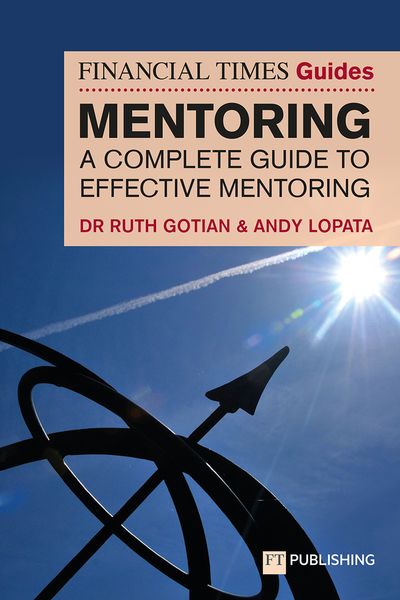
The Financial Times Guide to Mentoring: A complete guide to effective mentoring
-
- Taschenbuch ausgewählt
- eBook
-
Sprache:Englisch
Fr. 33.90
inkl. gesetzl. MwSt.,
Beschreibung
Produktdetails
Einband
Taschenbuch
Erscheinungsdatum
13.03.2024
Verlag
Pearson StudiumSeitenzahl
240
Maße (L/B/H)
23.4/15.6/1.4 cm
Gewicht
371 g
Auflage
1
Sprache
Englisch
ISBN
978-1-292-72668-7
2025 Thinkers 50 Coaching and Mentoring Award - Shortlist
Runner Up - Leadership Book of The Year (The Leadership Awards 2024)
The research on mentoring is clear. Those who are mentored, out-earn and outperform those who are not. They make higher salaries, get promoted more often, have greater job and career satisfaction and lower rates of burnout. For organisations that invest in mentoring their employees, they benefit from higher productivity and greater loyalty. Mentoring works as a great retention tool. But despite all this, only 76% of people understand the undisputed benefits of having a mentor, and only 37% of people actually have one.
But how do you do mentoring well, both as a mentor and in building a mentoring programme in your organisation? The Financial Times Guide to Mentoring gives you the tools you need to understand what mentoring is and its benefits, learn how to mentor effectively, and be mentored.
By breaking down each stage of the process, this book will enable senior and aspiring executives to both give the support they need to act as a mentor to future talent in their organisation and seek mentoring for themselves that they had thought no longer relevant but which will stretch them and fast track their further career progress. While it's likely that they will have been mentored at some point in their career, in our experience many senior executives turn at some point from being mentored to mentoring others.
Kundinnen und Kunden meinen
Verfassen Sie die erste Bewertung zu diesem Artikel
Helfen Sie anderen Kund*innen durch Ihre Meinung