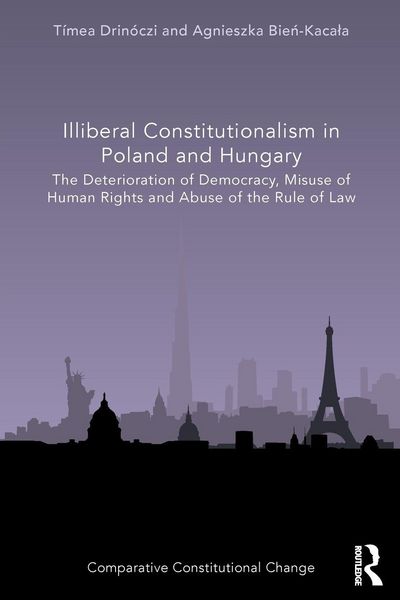
Illiberal Constitutionalism in Poland and Hungary The Deterioration of Democracy, Misuse of Human Rights and Abuse of the Rule of Law
-
- Hardcover
- Taschenbuch ausgewählt
- eBook
-
Sprache:Englisch
Fr. 79.90
inkl. gesetzl. MwSt.,
Beschreibung
Produktdetails
Einband
Taschenbuch
Erscheinungsdatum
31.05.2023
Abbildungen
schwarz-weiss Illustrationen, Zeichnungen, schwarz-weiss, Tabellen, schwarz-weiss
Verlag
Taylor & FrancisSeitenzahl
236
Maße (L/B/H)
23.4/15.6/1.3 cm
Gewicht
400 g
Sprache
Englisch
ISBN
978-1-03-200736-6
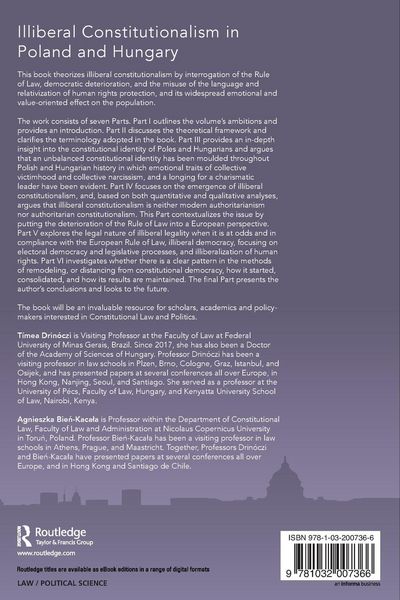
This book theorizes illiberal constitutionalism by interrogation of the Rule of Law, democratic deterioration, and the misuse of the language and relativization of human rights protection, and its widespread emotional and value-oriented effect on the population.
Noch keine Bewertungen vorhanden
Verfassen Sie die erste Bewertung zu diesem Artikel
Helfen Sie anderen Kundinnen und Kunden durch Ihre Meinung.