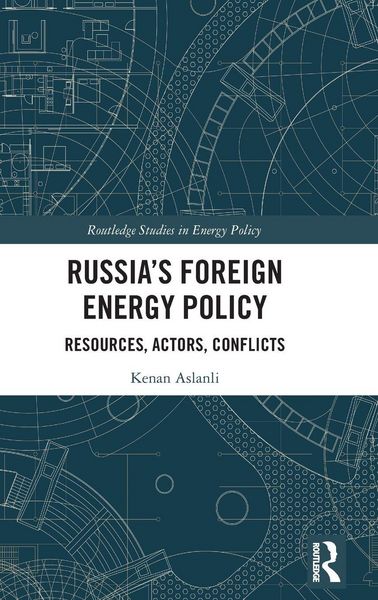

• Produktbild: Russia's Foreign Energy Policy
  • Produktbild: Russia's Foreign Energy Policy

Russia's Foreign Energy Policy Resources, Actors, Conflicts

Fr. 253.00

inkl. gesetzl. MwSt., Versandkostenfrei


Beschreibung

Produktdetails

Einband

Gebundene Ausgabe

Erscheinungsdatum

31.08.2023

Abbildungen

schwarz-weiss Illustrationen, Raster, schwarz-weiss, Zeichnungen, schwarz-weiss, Tabellen, schwarz-weiss

Verlag

Taylor & Francis

Seitenzahl

310

Maße (L/B/H)

24/16.1/2.1 cm

Gewicht

730 g

Sprache

Englisch

ISBN

978-1-03-252808-3

Beschreibung

Produktdetails

Einband

Gebundene Ausgabe

Erscheinungsdatum

31.08.2023

Abbildungen

schwarz-weiss Illustrationen, Raster, schwarz-weiss, Zeichnungen, schwarz-weiss, Tabellen, schwarz-weiss

Verlag

Taylor & Francis

Seitenzahl

310

Maße (L/B/H)

24/16.1/2.1 cm

Gewicht

730 g

Sprache

Englisch

ISBN

978-1-03-252808-3

Herstelleradresse

Libri GmbH
Europaallee 1
36244 Bad Hersfeld
DE

Email: gpsr@libri.de

Kundinnen und Kunden meinen

0 Bewertungen

Informationen zu Bewertungen

Zur Abgabe einer Bewertung ist eine Anmeldung im Konto notwendig. Die Authentizität der Bewertungen wird von uns nicht überprüft. Wir behalten uns vor, Bewertungstexte, die unseren Richtlinien widersprechen, entsprechend zu kürzen oder zu löschen.

Die Bewertungen sind nach Format, Anzahl Sterne und Datum sortiert.

Verfassen Sie die erste Bewertung zu diesem Artikel

Helfen Sie anderen Kund*innen durch Ihre Meinung

Kundinnen und Kunden meinen

0 Bewertungen filtern

Die Leseprobe wird geladen.
  • Produktbild: Russia's Foreign Energy Policy
  • Produktbild: Russia's Foreign Energy Policy
  • Contents

    LIST OF ABBREVIATIONS

    LIST OF FIGURES AND TABLES

    CHAPTER 1. INTRODUCTION

    1.1. Research Rationale, Problematization, and Theoretical Framework

    1.2. Research Design and Methodology

    1.3. Research Methods

    1.3.1. Semi-Structured Expert Interviews

    1.3.2. The Methodology of RECSID and Statistical Data Analysis

    1.3.3. Basic Content Analysis

    1.4. Research's Limitations and Challanges

    1.5. Contribution to the Existing Literature and Future Studies

    1.6. Short Outline of the Following Chapters of the Book

    CHAPTER 2. THEORETICAL FRAMEWORK

    2.1. Overview of Basic Literature on Russia’s Foreign Energy Policy

    2.2. The Relevance and Operationalization of Complex Interdependence Theory

    2.3. Review of the Alternative Theories on Russia’s FEP

    2.4. "Energy Weapon" and "Energy Superpower" Concepts

    CHAPTER 3. CONCEPTUAL FRAMEWORK: FOREIGN POLICY, FOREIGN ENERGY POLICY, AND ENERGY CONFLICTS

    3.1. Russia’s Foreign Energy Policy and Grand Strategy

    3.2. Russia’s Militarist Strategic Culture and Foreign Energy Policy

    3.3. Periods of Foreign Policy, Energy Dimension, and Domestic Conditions

    3.4. USSR’s FEP: Lesson Learnt for Russia

    3.5. Overview and Objectives of Russia’s FEP Pattern

    3.6. Russia’s Energy Conflicts and Tools of FEP

    CHAPTER 4. EMPIRICAL CONTENT: ECONOMIC PERFORMANCE AND ENERGY RESOURCES

    4.1. The Role of Energy in the Russian Economy and Economic Performance

    4.1.1. Russia’s economic growth and the share of oil-gas in GDP

    4.1.2. Oil-gas reliance of the export and fiscal system

    4.1.3. Forex reserves, debt, and FDI

    4.1.4. Social development indicators and regional disparities

    4.1.5. Russia's foreign trade and energy factor

    4.1.6. Russia’s foreign trade and technological backwardness

    4.2. Russia’s Energy Reserves and FEP

    4.2.1. Russia's oil reserves

    4.2.2. Russia’s oil production

    4.2.3. Russia’s crude oil and petroleum products export

    4.2.4. Russia’s gas reserves and gas production

    4.2.5. Russia’s gas export

    4.2.6. Coal reserves, production, and exports

    4.2.7. The energy balance and renewables in Russia

    CHAPTER 5. MAJOR ACTORS OF FEP: ENERGY COMPANIES, GOVERNMENT, AND STRATEGIC DOCUMENTS

    5.1. Russian Energy Companies: Profiles and Global Networks

    5.1.1. Gazprom

    5.1.2. Rosneft

    5.1.3. Lukoil

    5.1.4. Transneft

    5.1.5. Inter RAO UES

    5.1.6. Rosatom

    5.2. Concentration and Monopolization by the Russian Energy Companies

    5.3. Foreign Energy Companies Operating in Russia

    5.4. The Role of Government in the Russian FEP

    5.5. Russia’s Strategic Documents on Foreign and Energy Policy

    CHAPTER 6. RUSSIA’S ENERGY CONFLICTS AND SUPPLY INTERRUPTIONS DATASET (RECSID)

    6.1. Analysis of RECSID’s Main Findings on Energy Conflicts in Russia

    6.2. Russia’s Energy Conflicts and Energy Types Based on RECSID

    6.3. The Energy Conflicts, Oil Prices, and Domestic Politics Based on RECSID

    6.4. Energy Conflicts and Economic Interdependence Based on RECSID

    CHAPTER 7. MOTIVATIONS, DETERMINANTS, AND CONSTRAINTS OF RUSSIA’S FEP AND ENERGY CONFLICTS

    7.1. Russia’s Energy Conflicts with Major Energy Partners

    7.2. Motivations of Russia’s Energy Conflicts

    7.3. Rebalancing of the Interdependence: Energy Diversification and Sanctions

    7.4. Assumptions of Expert Interviews on Russia’s FEP and Energy Conflicts

    7.5. Basic Content Analysis of the Official Texts on the Russian FEP

    7.6. Determinants and Constraints of Russia’s Foreign Energy Policy

    CHAPTER 8. CONCLUSION AND POLICY IMPLICATIONS

    APPENDICES

    Appendix 1. Correlation Ratios of Energy Conflicts and Various Indicators

    Appendix 2. Indicators of the Energy Strategy of Russia for 2035

    Appendix 3. 10 Major Indicators for National (Economic & Military) Power (2019)

    Appendix 4. Examples from RECSID (Energy Conflict Tracker for Russia)

    Index