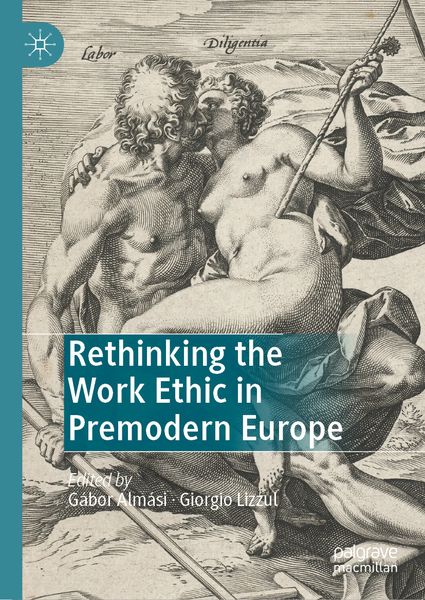
Rethinking the Work Ethic in Premodern Europe
-
- Hardcover ausgewählt
- Taschenbuch
- eBook
-
Sprache:Englisch
Fr. 191.00
inkl. gesetzl. MwSt.,
Beschreibung
Produktdetails
Einband
Gebundene Ausgabe
Erscheinungsdatum
15.11.2023
Herausgeber
Gábor Almási + weitereVerlag
SpringerSeitenzahl
336
Maße (L/B/H)
21.6/15.3/2.4 cm
Gewicht
563 g
Sprache
Englisch
ISBN
978-3-031-38091-4
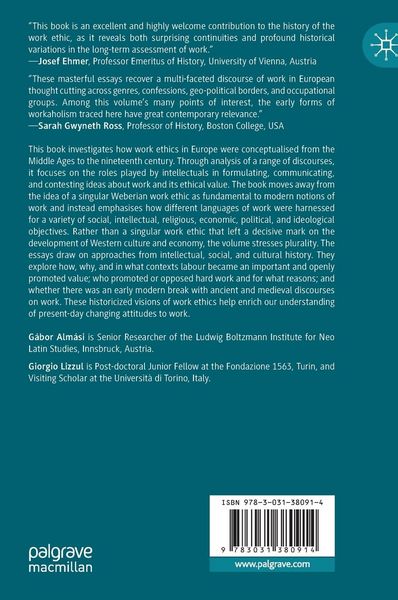
This book investigates how work ethics in Europe were conceptualised from the Middle Ages to the nineteenth century. Through analysis of a range of discourses, it focuses on the roles played by intellectuals in formulating, communicating, and contesting ideas about work and its ethical value. The book moves away from the idea of a singular Weberian work ethic as fundamental to modern notions of work and instead emphasises how different languages of work were harnessed for a variety of social, intellectual, religious, economic, political, and ideological objectives. Rather than a singular work ethic that left a decisive mark on the development of Western culture and economy, the volume stresses plurality. The essays draw on approaches from intellectual, social, and cultural history. They explore how, why, and in what contexts labour became an important and openly promoted value; who promoted or opposed hard work and for what reasons; and whether there was an early modern break with ancient and medieval discourses on work. These historicized visions of work ethics help enrich our understanding of present-day changing attitudes to work.
Noch keine Bewertungen vorhanden
Verfassen Sie die erste Bewertung zu diesem Artikel
Helfen Sie anderen Kundinnen und Kunden durch Ihre Meinung.