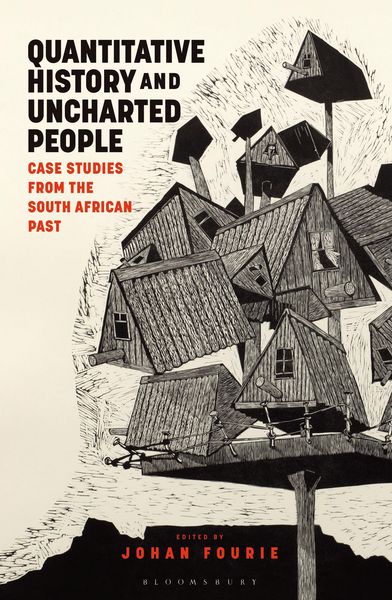
Quantitative History and Uncharted People Case Studies from the South African Past
-
- Hardcover
- Taschenbuch
- eBook ausgewählt
-
Form:Einzelkauf Download
-
Sprache:Englisch
-
eBook Format:PDF
- PDF Fr. 28.90 ausgewählt
- ePUB Fr. 28.90
Fr. 28.90
inkl. gesetzl. MwSt.Beschreibung
Produktdetails
Format
Kopierschutz
Ja
Family Sharing
Nein
Text-to-Speech
Nein
Erscheinungsdatum
10.08.2023
Herausgeber
Johan FourieVerlag
Bloomsbury eBooks UKSeitenzahl
384 (Printausgabe)
Auflage
1. Auflage
Sprache
Englisch
EAN
9781350331174
One of the biggest challenges in the study of history is the unreliable nature of traditional archival sources which omit histories of marginalised groups. This book makes the case that quantitative history offers a way to fill these gaps in the archive.
Showcasing 13 case studies from the South African past, it applies quantitative sources, tools and methods to social histories from below to uncover the experiences of unchartered peoples. Examining the occupations of slaves, victims of the Spanish flu, health of schoolchildren and more, it shows how quantitative tools can be particularly powerful in regions where historical records are preserved, but questions of bias and prejudice pervade. Applying methods such as GIS mapping, network analysis and algorithmic matching techniques it explores histories of indigenous peoples, women, enslaved peoples and other groups marginalised in South African history.
Connecting quantitative sources and new forms of data interpretation with a narrative social history, this book offers a fresh approach to quantitative methods and shows how they can be used to achieve a more complete picture of the past.
Showcasing 13 case studies from the South African past, it applies quantitative sources, tools and methods to social histories from below to uncover the experiences of unchartered peoples. Examining the occupations of slaves, victims of the Spanish flu, health of schoolchildren and more, it shows how quantitative tools can be particularly powerful in regions where historical records are preserved, but questions of bias and prejudice pervade. Applying methods such as GIS mapping, network analysis and algorithmic matching techniques it explores histories of indigenous peoples, women, enslaved peoples and other groups marginalised in South African history.
Connecting quantitative sources and new forms of data interpretation with a narrative social history, this book offers a fresh approach to quantitative methods and shows how they can be used to achieve a more complete picture of the past.
Kundinnen und Kunden meinen
Verfassen Sie die erste Bewertung zu diesem Artikel
Helfen Sie anderen Kund*innen durch Ihre Meinung