Gutscheinbedingungen

*Gültig bis 07.06.2026 auf (fast) alles. Ausgeschlossen sind Smartboxen, Zeitschriften, Tickets, Lebensmittel, Gaming-Elektroartikel, Tinte/Toner, Gutscheine, Geschenkkarten, Blumen und Abos | Einlösbar in allen Buchhandlungen von Orell Füssli, Barth Bücher, Buchladen Rapunzel, Schuler Orell Füssli, Stauffacher und ZAP unter Vorweisung des Gutscheins, auf www.orellfüssli.ch durch Eingabe des Gutscheincodes. Beim Service „eBooks verschenken“ und bei eBook-Käufen via eReader nicht einlösbar | Mindesteinkaufswert: Fr. 100.- | Nicht mit anderen Rabatten kumulierbar.

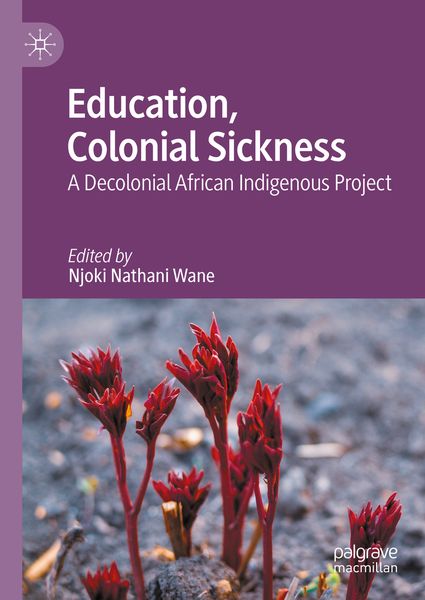
  • Produktbild: Education, Colonial Sickness
  • Produktbild: Education, Colonial Sickness

Education, Colonial Sickness A Decolonial African Indigenous Project

Fr. 191.00

inkl. gesetzl. MwSt., Versandkostenfrei


Beschreibung

Produktdetails

Einband

Gebundene Ausgabe

Erscheinungsdatum

19.03.2024

Herausgeber

Njoki Nathani Wane

Verlag

Springer

Seitenzahl

354

Maße (L/B/H)

21.6/15.3/2.6 cm

Gewicht

585 g

Sprache

Englisch

ISBN

978-3-031-40261-6

Beschreibung

Portrait

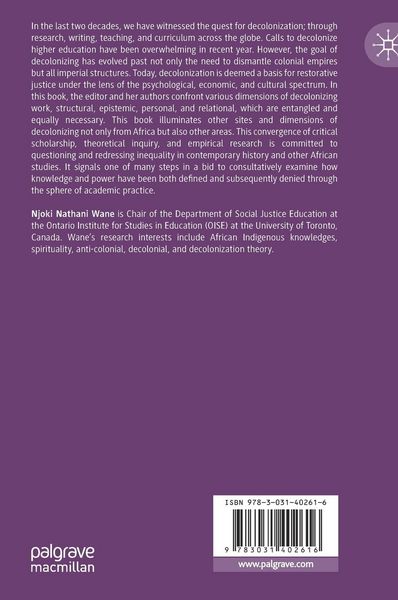
Njoki Nathani Wane is Chair of the Department of Social Justice Education at the Ontario Institute for Studies in Education (OISE) at the University of Toronto, Canada. Wane’s research interests include African Indigenous knowledges, spirituality, anti-colonial, decolonial, and decolonization theory.

Produktdetails

Einband

Gebundene Ausgabe

Erscheinungsdatum

19.03.2024

Herausgeber

Njoki Nathani Wane

Verlag

Springer

Seitenzahl

354

Maße (L/B/H)

21.6/15.3/2.6 cm

Gewicht

585 g

Sprache

Englisch

ISBN

978-3-031-40261-6

Herstelleradresse

Springer-Verlag GmbH
Tiergartenstr. 17
69121 Heidelberg
DE

Email: ProductSafety@springernature.com

Kundinnen und Kunden meinen

0 Bewertungen

Informationen zu Bewertungen

Zur Abgabe einer Bewertung ist eine Anmeldung im Konto notwendig. Die Authentizität der Bewertungen wird von uns nicht überprüft. Wir behalten uns vor, Bewertungstexte, die unseren Richtlinien widersprechen, entsprechend zu kürzen oder zu löschen.

Die Bewertungen sind nach Format, Anzahl Sterne und Datum sortiert.

Verfassen Sie die erste Bewertung zu diesem Artikel

Helfen Sie anderen Kund*innen durch Ihre Meinung

Kundinnen und Kunden meinen

0 Bewertungen filtern

  • Produktbild: Education, Colonial Sickness
  • Produktbild: Education, Colonial Sickness
  • 1. Introduction.- Part I Decolonizing History and Its impact on Education from K-12 and Beyond.- 2. Seafaring Africans and the Myth of Columbus: Reflecting on Fourteenth-Century Mali and the Prospect of Atlantic Voyages.- 3. Ubuntu : Social Justice Education, Governance, and Women Rights in Pre-colonial Africa.- 4. Women to Women Marriage, Social Justice and House Property System in the Precolonial Period: Implications for Educating the Youth.- 5. Back to the Roots: Reconnecting Africans in Diaspora Through Cultural Media, Education, and Personal Narratives.- 6. Ubuntu: An Educational Tool to Dismantle Patriarchy—Voices from the Women Community Elders.- Part II Identity and Ways of Knowing for the Educator and the Learner.- 7. Knowledge Production and Colonial Myths: Centring Indigenous Knowledges Through Decolonization.- 8. Seeking the African Indigenous Ways of Being in Academia: The Intersecting Journeys of Two Black Women from Different Historical Colonial Experiences—Part One.- 9. Seeking the African Indigenous Ways of Being in Academia: The Intersecting Journeys of Two Black Women from Different Historical Colonial Experiences—Part Two.- 10. Resistance, Reparation, and Education Awareness: Resurgence of African Identities.- 11. Cultural Genocide: The Miseducation of the African Child.- Part III Spirituality and Land-Based Education.- 12. Three Souls in Search for the Inner Peace and Spiritual Journey: Educational Moments.- 13. The Soul in Soul Music: Educational Tools for Decolonial Ruptures.- 14. Kumina: Kumina! Afro-Jamaican Religion, Education, and Practice: A Site Where Afrocentricity, 'Bodily Knowledge' and Spiritual Interconnection Are Activated, Negotiated, and Embodied.- 15. Land Teachings: Lessons from Keiyo Elders.- 16. Beyond Territory: Engendering Indigenous Philosophies of Land as Counter-hegemonic Resistance to Contemporary Framings of Land in Kenya.- 17. Conclusion.