Gutscheinbedingungen

*Gültig bis 07.06.2026 auf (fast) alles. Ausgeschlossen sind Smartboxen, Zeitschriften, Tickets, Lebensmittel, Gaming-Elektroartikel, Tinte/Toner, Gutscheine, Geschenkkarten, Blumen und Abos | Einlösbar in allen Buchhandlungen von Orell Füssli, Barth Bücher, Buchladen Rapunzel, Schuler Orell Füssli, Stauffacher und ZAP unter Vorweisung des Gutscheins, auf www.orellfüssli.ch durch Eingabe des Gutscheincodes. Beim Service „eBooks verschenken“ und bei eBook-Käufen via eReader nicht einlösbar | Mindesteinkaufswert: Fr. 100.- | Nicht mit anderen Rabatten kumulierbar.

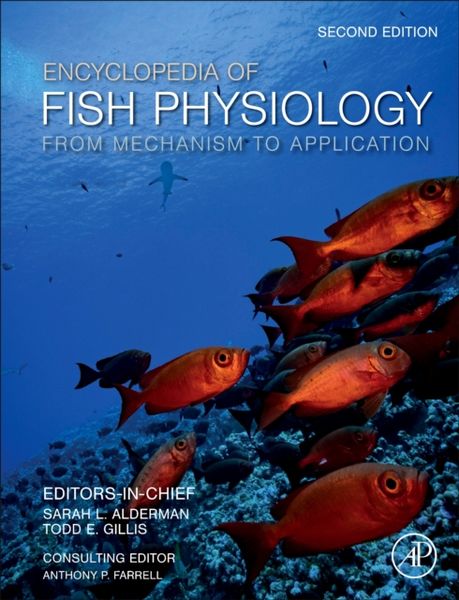
Produktbild: Encyclopedia of Fish Physiology

Encyclopedia of Fish Physiology

Fr. 2’293.00

inkl. gesetzl. MwSt., Versandkostenfrei


Beschreibung

Produktdetails

Einband

Taschenbuch

Erscheinungsdatum

19.03.2024

Verlag

Elsevier Science & Technology

Seitenzahl

2400

Maße (L/B)

27.6/21.6 cm

Gewicht

7870 g

Auflage

2. Auflage

Sprache

Englisch

ISBN

978-0-323-90801-6

Beschreibung

Produktdetails

Einband

Taschenbuch

Erscheinungsdatum

19.03.2024

Verlag

Elsevier Science & Technology

Seitenzahl

2400

Maße (L/B)

27.6/21.6 cm

Gewicht

7870 g

Auflage

2. Auflage

Sprache

Englisch

ISBN

978-0-323-90801-6

Kundinnen und Kunden meinen

0 Bewertungen

Informationen zu Bewertungen

Zur Abgabe einer Bewertung ist eine Anmeldung im Konto notwendig. Die Authentizität der Bewertungen wird von uns nicht überprüft. Wir behalten uns vor, Bewertungstexte, die unseren Richtlinien widersprechen, entsprechend zu kürzen oder zu löschen.

Die Bewertungen sind nach Format, Anzahl Sterne und Datum sortiert.

Verfassen Sie die erste Bewertung zu diesem Artikel

Helfen Sie anderen Kund*innen durch Ihre Meinung

Kundinnen und Kunden meinen

0 Bewertungen filtern

Weitere Artikel finden Sie in

  • Produktbild: Encyclopedia of Fish Physiology
  • The Encyclopedia is structured in 3 volumes with 4 major sections that group topics and chapters thematically. This mirrors the structure of the first edition, but some topics have been reorganized and some new topics introduced. * indicates a change from the original edition.

    Volume 1: The Senses, Integrating Systems*, Behaviour, and Reproduction - this volume is about how fish interface with the world - Sensing the Environment e.g. the brain and nervous system, vision, hearing and the lateral line, electroreception, olfaction - Endocrine and Immune* Systems e.g. introduction to major hormone systems and their role in regulating physiological processes - Behavioural Physiology e.g. predator/prey, reproductive behaviours*, dominance, schooling*, sleep, communication* - Reproduction e.g. reproductive strategies*, sex differentiation, early development*

    Volume 2: Gas and Ion Exchange, Circulatory System, Energetics*, and Movement* - this volume is about how fish function internally - Gas Exchange and Ion homeostasis e.g. respiration, osmoregulation, acid/base balance, structure and function of the gills and kidneys - The Heart, Vasculature, and Blood e.g. comparative morphology, regulation of heart function, retes, blood cells, Root effect - Energy Homeostasis e.g. food intake, digestive system, metabolism, excretion - Muscles and Movement e.g. musculoskeletal system, biomechanics of swimming, locomotion, migration

    Volume 3: Adaptations, Specializations, and Applications - this volume establishes the importance of fish physiology by placing it in the context of other disciplines - Responses and Adaptations to the Environment e.g. hypoxia, thermal acclimation, seawater transition, bioluminescence - Life in Extreme Environments* e.g. complete darkness (cavefish), subzero temperature (icefish), alkaline lakes (cichlids), intertidal fish - Physiological Specializations of Different Fish Groups e.g. deep sea fish, air-breathing fish, elasmobranchs - Applications of Fish Physiology e.g. biomedical applications (neuroscience*, regeneration*, disease models), food science* (aquaculture; petri dish sushi), toxicology, climate change*, conservation physiology*